
Moby-Dick’s fearsome image of America.
by Algis Valiunas – Summer 2026 – Claremont Review of Books (I’m a subscriber)
Herman Melville (1819–1891) was a prolific novelist and poet, but he is known today as the author of a single book. This is not altogether unjust, for Moby-Dick (1851) is the most extraordinary novel in English. It is extraordinary in all its parts, from the black-hearted majesty of its theme to the versatility of its startling prose. It is direct and unadorned when plain speaking and rough-edged humor are called for, yet shot through with Shakespearean lightning when high tragic solemnity sets the scene ablaze. Melville expounds with encyclopedic authority upon everything you might ever care (or not care) to know about whales and whaling. He showcases both the sheer cosmopolitan variety of American society and the riveting exploits of a few remarkable men, ruthless seekers after the supernatural amid the beauty and the terror of the natural world.
Melville had to endure seeing his masterpiece sell a few thousand copies and go out of print. He had not always been a commercial failure, or a critical one. Success came early to him with the publication of his first novel, Typee: A Peep at Polynesian Life (1846), a loosely autobiographical yarn based on his desertion from a whaleship and his sojourn on a South Pacific island among natives who, in the novel at least, eat human flesh. He became known, much to his displeasure, as the man who lived among the cannibals. That kind of sensationalism was too easy for him, he declared. By his own admission, he wanted to write the sort of books that don’t sell. And if that was what he was really after, the public was all too ready to oblige. After writing ten weighty novels in twelve frenetic years, he turned in 1857 to writing poetry instead, an activity that did not delude him with the hope of thereby earning a living.
Arrowhead—the handsome estate he had purchased in the Berkshires in 1850 with the help of his prosperous father-in-law, Massachusetts Supreme Court Chief Justice Lemuel Shaw—became a persistent drain on his pocket and his spirit. He missed mortgage payments (the lender was forgiving), had to sell off half his land, and buried himself deeper and deeper in debt. Eventually he would trade Arrowhead for his brother’s house in New York. These were the years in which he wrote one of his most famous minor works, “Bartleby, the Scrivener: A Story of Wall-Street” (1853), about a drudge who sits in a law office copying documents all day…until he simply decides to stop. His quiet signature demurral, “I would prefer not to,” is often construed by liberal admirers as the browbeaten wage slave’s rebellious last-ditch assertion of heroic manhood. But to a less enchanted reader, Bartleby’s decision to waste relentlessly away suggests that charity and philanthropy will not save a man determined to destroy himself.
A miniature self-portrait, perhaps. Poverty undermined what was left of Melville’s well-being. His tendency to depression became a near-irrevocable despondency; rumor (not entirely spurious) had it that he had gone insane. A granddaughter of his would later report that he had laid violent hands on his wife, who consequently stated her quite reasonable intention to leave him. She hung on, just barely, and a reprieve finally came: in 1866, Melville managed to secure a patronage job as a customs inspector on the Manhattan docks. But tragedy continued to dog him. In 1867 his eldest son, Malcolm, 18 years old, shot himself in bed. Nineteen years later, Malcolm’s younger brother, Stanwix, died alone in a San Francisco hotel room at 35, having failed at everything he had ever undertaken. No further information was available.
Bleakness of Vision
Melville bore these premature deaths as well as anyone could. America’s foremost literary genius kept to his appointed bureaucratic routine on the Hudson River waterfront for 19 years, six days a week for four dollars a day, until his wife came into a liberating inheritance. Free of financial peril for a change, Melville doted on his grandchildren (his daughters were more durable than his sons) and on the roses he grew in his garden. He happily spent his newfound money on books and on prints of whaling ships.
Yet from the rocky start to the placid finish of his career, Melville’s bleakness of vision remained his most striking quality. This is apparent in “Billy Budd,” his last work of prose fiction (posthumously published in 1924). It is a pointed fable: a repugnant superior conspires to ensnare the gleamingly virtuous title character in a false accusation; Billy strikes back and unintentionally kills his persecutor. This breach in the moral order proscribed onboard must be punished, however patently unjust the demands of the law. To the last, the condition of mankind struck Melville as a kind of tragedy.
Nature, he could certainly concede, was often wondrously sublime. But man was, for the most part, a blight upon it. “Never man instinctively hated human life, our human life, as we have it, more than Melville did,” wrote D.H. Lawrence. “And never was a man so passionately filled with the sense of vastness and mystery of life which is non-human…. He was not wrong in hating the world. Delenda est Chicago.” What Melville and Lawrence both hated was specifically the white man’s world, which they felt had committed the unpardonable sin of corrupting the simple and contented lives of the Pacific islanders. Lawrence had in mind Typee and its sequel Omoo: A Narrative of Adventures in the South Seas (1847). In each, the perversions of the “civilized” are at least as savage as those of the “primitive” natives.
In Omoo, the Tahitians’ clean and simple life is blackened by the imported sorrows of drunkenness, smallpox, and the disease too foul for Melville to name—syphilis, “which now taints the blood of at least two-thirds of the common people of the island.” Typee, by contrast, presents a native culture unspoiled by Western contact, on the island of Nukuheva. Tommo, Melville’s alter-ego, goggles at the physical excellence of the Typee, markedly superior in beauty and power to scrawny American specimens. The delectable erotic idyll he enjoys with the lovely Fayaway could never be equaled in pleasure by any American romance.
Yet Melville is too canny a pessimist not to acknowledge that primitive societies indulge in their own forms of grotesquerie: the Typee, it turns out, are the most congenial cannibals going. Tommo tries but fails to overcome his revulsion at this local custom. One day he happens upon the leavings of an unholy feast—“the disordered members of a human skeleton, the bones still fresh with moisture, and with particles of flesh clinging to them here and there!” The gruesome sight, so vividly rendered in its macabre brutality, is enough to send him fleeing to the embrace of the very civilization he has so thoroughly maligned.
There is plenty of abomination to go around, in other words. On balance, though, civilized men have devised the worst forms of evil—and none more ghastly than slavery. In Mardi: And, a Voyage Thither (1849), a fantastic voyage round an imaginary Pacific archipelago in the spirit of Jonathan Swift, Melville conjures the nation of Vivenza. Its blowhard citizens never tire of trumpeting their equality and freedom, but the southern provinces live off the agricultural labor of slaves. Melville’s revulsion at this hateful practice is unstinting: “a blot, foul as the crater-pool of hell; it puts out the sun at noon; it parches all fertility.”
Melville would feel the injustice of slavery burning close to home all his life: in 1850 his father-in-law played a key role in enforcing the Fugitive Slave Law, ordering slaves escaped to Boston returned to their owners. In Melville: His World and Work (2005), Columbia Professor Andrew Delbanco ably renders the attendant ethical imbroglio: “As Lincoln later wrote, ‘I hate to see the poor creatures hunted down, and caught, and carried back to their stripes, but I bite my lip and keep quiet.’ In Boston, the chief lip-biter was Judge Lemuel Shaw.” His son-in-law, fulminating so powerfully against those who would treat men as chattel, must have felt tainted by the familial connection.
Melville’s most famous cry of moral pain at the monstrosity of the slave trade comes in Benito Cereno, the 1855 novella about a Spanish slave ship taken over by the slaves in a bloody uprising and then restored to the status quo by a passing American ship. The captain remains deathly downcast even after being saved. When the American asks the Spaniard what has cast such a shadow upon him, Cereno replies succinctly, “The negro.” The evil done by slavery, Melville intimates, corrodes the well-being of all whom it touches—all who are compelled even just to think about it.
In 1850, Melville began a lasting friendship with Nathaniel Hawthorne, 15 years his senior and famous especially for his novel of that year, The Scarlet Letter. Days after they first met, Melville wrote the essay “Hawthorne and His Mosses,” nominally a review of a short story collection but really a cold plunge into the depths of Hawthorne’s psyche—and Melville’s own. “For spite of all the Indian-summer sunlight on the hither side of Hawthorne’s soul, the other side—like the dark half of the physical sphere—is shrouded in a blackness, ten times black.” As D.H. Lawrence recognized his soul’s likeness to Melville’s, so Melville honored his own intimate connection to Hawthorne. “Now it is that blackness in Hawthorne, of which I have spoken, that so fixes and fascinates me.” These reflections came to Melville as he was engaged in writing his own darkest and most penetrating work, his world-historical masterpiece. Moby-Dick; Or, The Whale traverses vast metaphysical expanses and forces its human characters into confrontations with the divine and hellish powers that lurk just beyond our ken.
Gods and Demons
The narrator, Ishmael, has a nearly fatal introduction to his savage Pacific islander bedfellow, the harpooner Queequeg. Lying in bed at a dockside inn, Ishmael sees his late-arriving roommate take from the pocket of his overcoat “a curious little deformed image with a hunch on its back, and exactly the color of a three days’ old Congo baby.” It is the idol Queequeg prays to. His oblations finished, Queequeg finds this stranger in his bed and threatens to kill him; the two men frighten each other, and the landlord enters the room just in time to avert mayhem. On waking the next morning, Ishmael finds Queequeg embracing him “in the most loving and affectionate manner.” The “strangeness” of the “pagan arm thrown round [him]” provokes the memory of a “supernatural hand” placed in his own when he was a small boy sent to bed early for misbehavior. An unearthly presence seals the tender encounter of future shipmates and fast friends, who represent the best of humanity from opposite sides of the globe.
Ishmael is susceptible to intimations of the invisible world. As he studies the marble tablets in the New Bedford Whaleman’s Chapel, memorializing those lost at sea, immortal longings invert the customary rank order of reality.
Methinks we have hugely mistaken this matter of Life and Death. Methinks that what they call my shadow here on earth is my true substance. Methinks that in looking at things spiritual, we are too much like oysters observing the sun through the water, and thinking that thick water the thinnest of air. Methinks my body is but the lees of my better being.
In the chapel, Ishmael and Queequeg listen to the redoubtable Father Mapple preach a rapturous sermon on the Biblical text of Jonah and the whale. Yet, when Ishmael and Queequeg return to the inn, the “wild idolator” coaxes the devotee of “the infallible Presbyterian Church” to join him in paying homage to his little wooden deity. Ishmael hesitates but gives in. He invokes the Golden Rule as definitive evidence of the will of God in this matter: as Ishmael had wished Queequeg would join him in sound Protestant observance, it is only right that Ishmael join Queequeg in his worship. “So I kindled the shavings; helped prop up the innocent little idol; offered him burnt biscuit with Queequeg; salamed before him twice or thrice; kissed his nose; and that done, we undressed and went to bed, at peace with our own consciences and all the world.” All available gods and demons have their moment in Melville’s universe. Depending on the fervor and the direction of the reader’s belief, Ishmael’s idolatry comes off as either the most admirable ecumenical brotherliness or the most preposterous multicultural grab-ass.
There is nothing preposterous, however, about Ishmael’s fundamental politico-theological belief—in “that abounding dignity” with which our Creator has endowed ordinary mankind.
Thou shalt see it shining in the arm that wields a pick or drives a spike; that democratic dignity which, on all hands, radiates without end from God; Himself! The great God absolute! The centre and circumference of all democracy! His omnipresence, our divine equality!
This commingled faith in God and the common man, familiar to all from the Declaration of Independence, is the foundation of American spiritual excellence.
Nevertheless, this hopeful faith shall be put to the most severe trial by the mad fury of Captain Ahab, who is animated by soul-ravaging hatred for the white whale that took his leg and contemptuous of ordinary men who feel no such ungodly passion. As Ishmael reflects, “crazy Ahab” has gathered in his tortured soul the colossal sum of “all the general rage and hate” that mankind has felt since Adam’s fall, and he has aimed the totality of that hatred at Moby Dick. It is not “a dumb brute” on which Ahab vows revenge, but rather “some unknown but still reasoning thing” behind the “pasteboard mask” of apparent innocent brutishness. “I see in him outrageous strength, with an inscrutable malice sinewing it. That inscrutable thing is chiefly what I hate; and be the white whale agent, or be the white whale principal, I will wreak that hate upon him. Talk not to me of blasphemy, man; I’d strike the sun if it insulted me.”
As Ahab presents a steaming brew for all the crew to drink, pledging their fealty and joining his insane mission to destroy Moby Dick, he flaunts his own diabolism: “‘Short draughts—long swallows, men; ‘tis hot as Satan’s hoof.’” Ahab is a tragic figure as willful and deluded as Oedipus or Lear. He flashes with that flawed magnificence of heroic soul which earlier tragedians bestowed on kings and demi-gods. Melville’s modern innovation is to bring this superb spiritual aristocrat, and dangerous madman, into an out-and-out clash with the expectations of democratic normalcy. The ultimate outcome—the death of all hands but Ishmael aboard the Pequod and her whaleboats, as the enraged Moby Dick annihilates his enemies—has the primordial epic flavor of cosmic justice, or at least retribution. Here is an ancient theme revived in an astonishingly modern setting: inhuman nature exacting an almost human vengeance.
The significance of the whole is perhaps best expressed by “the most insignificant of the Pequod’s crew,” the “poor little negro” Pip. A series of whaling mishaps either disorders his mind, or sanctifies it beyond ordinary human reckoning: “He saw God’s foot upon the treadle of the loom, and spoke it; and therefore his shipmates called him mad. So man’s insanity is heaven’s sense; and wandering from all mortal reason, man comes at last to that celestial thought, which, to reason, is absurd and frantic.” When Ishmael numbers the terrifying manifestations of whiteness that the whale recalls—“the white bear of the poles, and the white shark of the tropics,” the albino man “more strangely hideous than the ugliest abortion,” “the shrouded phantom of the whitened waters,” “the white depths of the milky way,” “a colourless, all-colour of atheism from which we shrink”—he does not mention the terror and hatred the slave-master’s skin inspires in the slave. But, in the sufferings of Pip, Melville draws attention to the most urgent moral and political matter in America at that time.
“I have written a wicked book, and feel spotless as the lamb.” So Melville wrote in November 1851 to Hawthorne, whose appreciation for Moby-Dick its author joyously accepted as his “glorious gratuity.” At 72 he died at home of a worn-out heart. His two-line bare-bones obituary in Harper’s Magazine was squeezed between the somewhat longer death notices for a superintendent of public schools and a Belgian general. No mention of Moby-Dick or any books at all. Yet Hawthorne—his fellow dark genius, his bosom friend—understood what he had done. He heard Melville invoking the mysterious powers of creation and destruction in human and inhuman nature, which contrived the deaths of a crew of ordinary sailors and their demon-ridden commander. Before anyone else recognized it as the masterpiece it is, Hawthorne saw the terrifying grandeur of Moby-Dick—Melville’s vision of a nation wracked by ancestral guilt, straining fanatically toward violent redemption, hoping against hope to do battle with history and nature and emerge purified. It is the most fearsome, the most beautiful, the most irresistible image of America ever painted. It is an image of Herman Melville’s soul, and of ours.
Algis Valiunas is a fellow at the Ethics and Public Policy Center and a contributing editor of The New Atlantis.
=================================================
AI Overview
Herman Melville and Nathaniel Hawthorne did not have a confirmed physical or homosexual relationship, though their intense 19th-century friendship and emotional correspondence have fueled long-standing scholarly debate.
Nature of Their Relationship
- The Meeting: The two authors met on August 5, 1850, during a picnic in the Berkshires of Massachusetts and quickly formed a deep, passionate literary bond.
Sara Smollett +1
- Melville’s Letters: Melville wrote to Hawthorne using high-emotion, deeply affectionate, and sometimes metaphor-rich or homoerotic language, describing shared souls and an “infinite fraternity”. Los Angeles Review of Books +2
- Hawthorne’s Response: Much of Hawthorne’s side of the correspondence was lost, destroyed, or unpreserved, making a complete two-sided picture difficult to assess. Los Angeles Review of Books
- Family Context: Both men married women, fathered children, and lived conventional 19th-century domestic lives alongside their wives.
sixgen.org +1
- Scholarly Debate: Historians and literary critics remain divided. Some view Melville’s letters and writings (such as the symbolic relationship between Ishmael and Queequeg in Moby-Dick) as expressions of queer or romantic desire, while others warn against projecting modern sexual identities and 19th-century romantic friendship conventions onto historical figures. Medium·Penguin Random House +5
Would you like to explore:
Specific excerpts or examples from Melville’s letters to Hawthorne?
How Melville’s writing in Moby-Dick reflects 19th-century male intimacy?
=================================================
Hawthorne – or, ‘Girl, please, call me Ishmael!’
Posted on by Trixie Starr – trixieslist.com
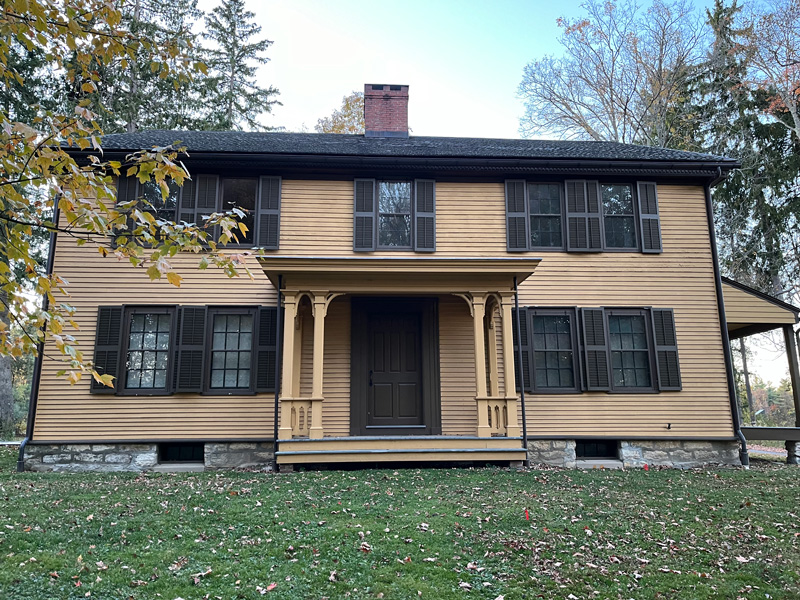
Melville’s Arrowhead
Nary a week passes without someone asking me, “Trixie, were Herman Melville and Nathaniel Hawthorne just friends or were they lovers?” My usual response is, “I don’t know, I wasn’t there.”
However, last month, I was there. I stood inside Herman Melville’s study in his house, Arrowhead, right outside Pittsfield, Massachusetts, where he wrote Moby Dick.
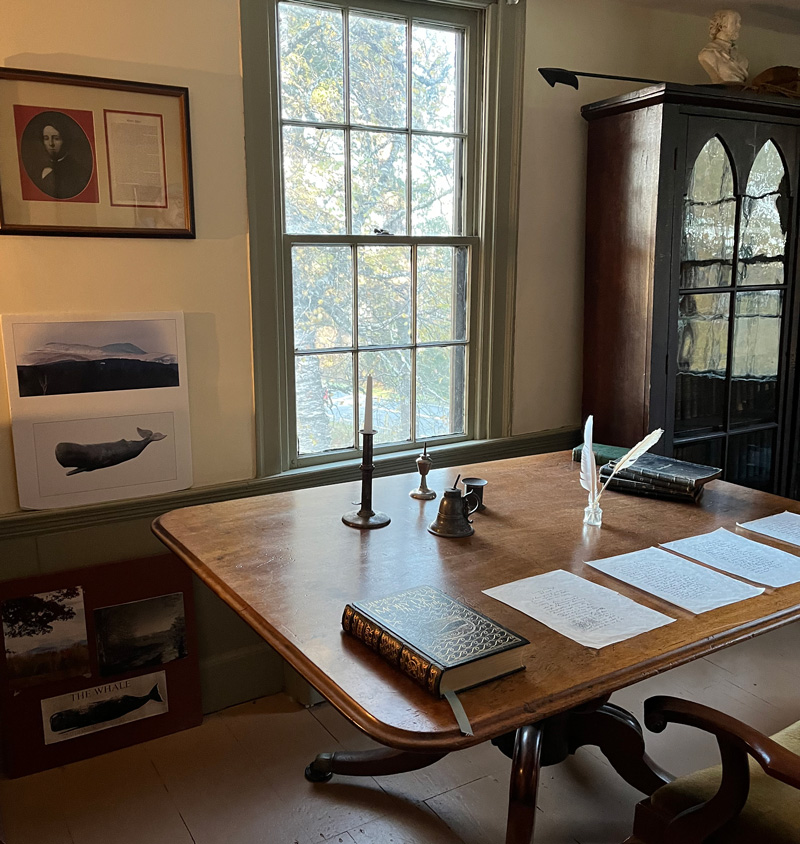
Herman Melville’s study and desk
I decided to take a tour with Q-MOB (Queer Men of the Berkshires) of Herman Melville’s house about an hour from Hudson. The tour gave a new perspective to the 19th century suspected bromance.
One would think that Melville wrote Moby Dick in a small shack on Cape Cod. Actually, Herman Melville wrote Moby Dick (1850-1851) in his studio in the Berkshires, overlooking Mount Greylock (some say the mountain looks like a whale breaching the water, but that’s a stretch).

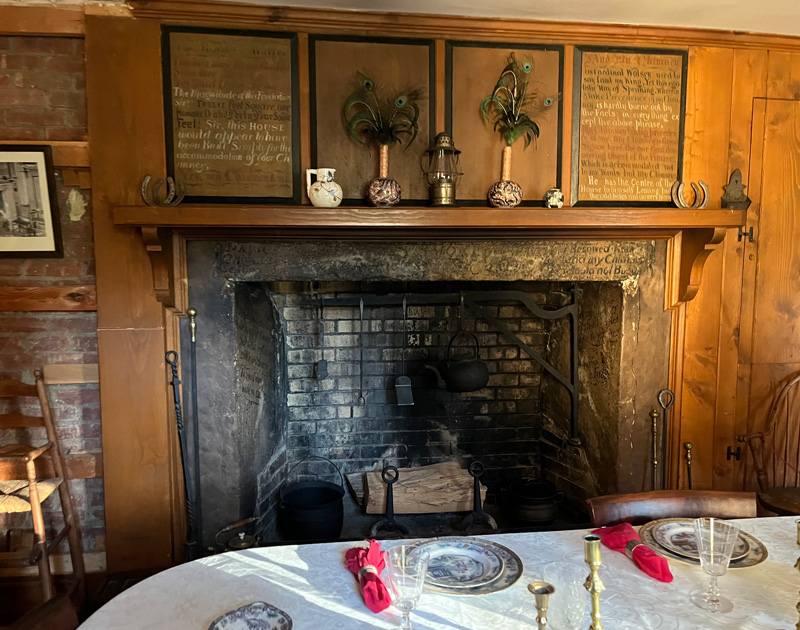
As I was standing in Melville’s living room, looking at the engravings in his chimney from one of his short stories, the guide started talking about the nature of the relationship between Herman Melville and Nathaniel Hawthorne. Each man was married to a woman and had kids. The hot goss on Melville and Hawthorne is that they were very close friends who spent many nights together in the loft of Melville’s barn, drinking brandy and smoking. Hawthorne had a guest bed right off Melville’s study. When they first met, they challenged each other to a footrace, in front of their wives.
There are hundreds of letters between Melville and Hawthorne, extolling their deep friendship and love for one another. Nathaniel Hawthorne was strikingly attractive and known for being an extreme introvert (he hid in bushes to avoid people). By the time he met Melville, Hawthorne had published The Scarlet Letter in 1850 and was a successful author. Melville, on the other hand, had limited success. In the 1850s, the general public did not know how to react to Moby Dick. The reviews were not good, and Melville ultimately gave up writing, moved to New York, and worked as a customs officer.
Were the two gay? Maybe. It’s hard to say.
In the mid-1800s, there was little social construct or even language or terminology for homosexual relationships. The word, homosexual, itself did not exist until the late 1860s. Back then, male bonding just happened. It’s not like today. They were not going to a Subaru dealership together, cosigning on a new Outback.
Herman Melville spent years on all-male whaling vessels (wink, wink). There are passages in Moby Dick that raise a queer eyebrow, like this one in Chapter 11:
“We had lain thus in bed, chatting and napping at short intervals, and Queequeg now and then affectionately throwing his brown tattooed legs over mine, and then drawing them back; so entirely sociable and free and easy were we…”
- Moby Dick
Melville did have children, and later grandchildren. His granddaughter, Eleanor, inherited his estate and found the unpublished and unfinished manuscript Billy Budd in a breadbox. The book was published in 1924, which gave Melville some much-deserved, however posthumous, notoriety. In the 1920s, people reread Moby Dick.
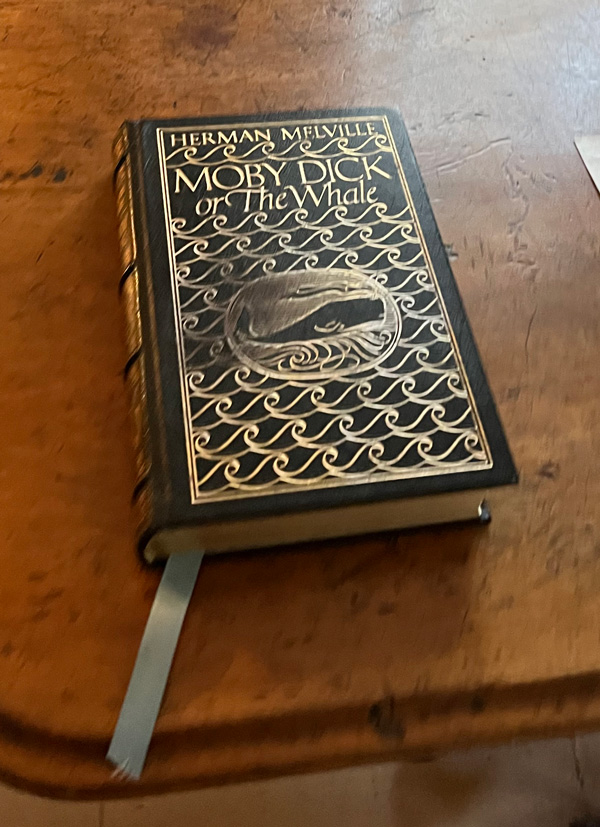
As I listened to the stories, I thought to myself, ‘Wait. Herman Melville – didn’t he write all those poems about young semi-naked working class men?’
After a quick google search in Herman Melville’s dining room, I realized that I was confusing Herman Melville with Walt Whitman, who was totally gay!
On Long Island, there’s a Walt Whitman High School and a Walt Whitman Mall, now Walt Whitman Shops. They might be one of the few high schools and malls in the country named after a gay man.
Here’s a sample of Walt Whitman’s poetry:
The young men float on their backs, their white bellies bulge to the sun, they do not ask who seizes fast to them,
They do not know who puffs and declines with pendant and bending arch,
They do not think whom they souse with spray.
The butcher-boy puts off his killing-clothes, or sharpens his knife at the stall in the market,
I loiter enjoying his repartee and his shuffle and break-down.
Blacksmiths with grimed and hairy chests environ the anvil,
Each has his main-sledge, they are all out, there is a great heat in the fire.
From the cinder-strew’d threshold I follow their movements,
The lithe sheer of their waists plays even with their massive arms,
Overhand the hammers swing, overhand so slow, overhand so sure,
They do not hasten, each man hits in his place.
- Walt Whitman
Oh Trixie, he just appreciated the male physique. You’re reading too much into it!
Yeah, whatever. If you do not believe that Walt Whitman was gay, then we cannot even talk about Gertrude Stein.
There ain't no answer. There ain't gonna be any answer. There never has been an answer.
That's the answer.
-Gertrude Stein
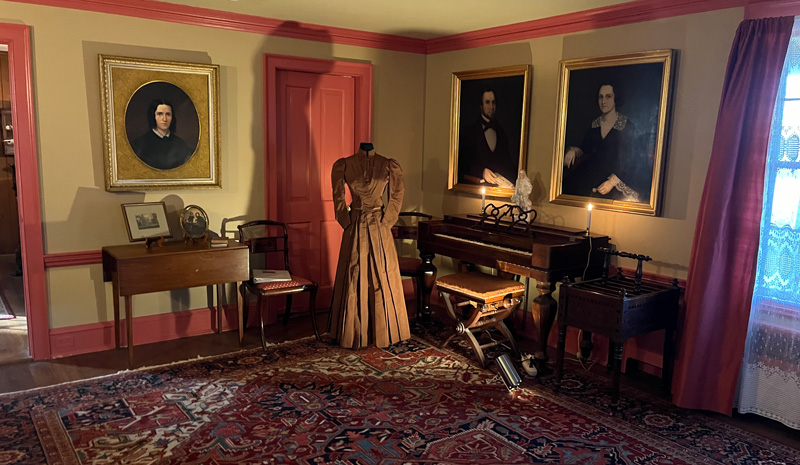
In Melville’s house, I could not help but imagine a group of authors in one room, at a cocktail party – something similar to a Parisian-style salon, hosted by Gertrude Stein and Alice B. Toklas.
Oscar Wilde would be invited. He and Truman Capote would totally hit it off. They would be in the corner chatting. They had all the good dirt on everyone. Socially-awkward Nathaniel Hawthorne would stand there, in the corner, by himself, all prim and proper, eating chips and dip. Herman Melville with a few drinks in him, the scallywag, would be telling the same whaling stories they’ve all heard before.
They would invite Mark Twain, as a tolkien heterosexual, because he’d be fun at parties. You want someone at a party to tell a good story. James Baldwin would sit there, not amused by all this tomfoolery, and might have a few notes for Mark Twain about Huck Finn. (The tolkien hetero used to be Ernest Hemingway, because he had a big house in Key West. They had to stop inviting him because he was no fun when he was drunk).
Mid-way into the cocktail party, people would wonder where was Walt Whitman? Oh, Walt? He’s been in the kitchen for the past hour, chatting with the boys on the catering staff.
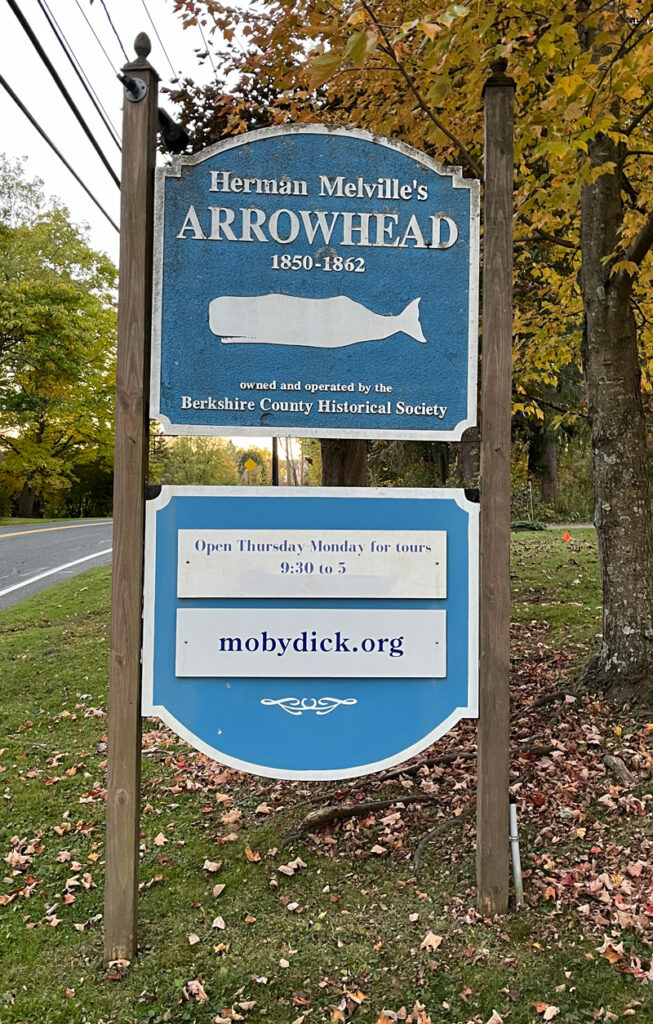
If you get the chance, visit the Herman Melville house, Arrowhead. It’s a fun trip. Who knows? Maybe you’ll be inspired to write a great whale novel, too.
2 thoughts on “The Bromance of Herman Melville and Nathaniel Hawthorne – or, ‘Girl, please, call me Ishmael!’”
- John Eichelberge rsays: Excellent article! I live in Hudson and am a docent at Arrowhead, giving tours each Saturday during the high season. I can’t wait to share this with my fellow docents! Thanks for spotlighting Arrowhead! I too would love to be a guest at your imaginary literary party.
- SandRa says: Fun article! Loved the inclusion of a sample of Whitman’s homoerotic poetry and the comparison of what bromancers did not do together back in them whalin’ days!
==========================================================
5 Reasons to Believe Herman Melville Loved Nathaniel Hawthorne
Penguin Random House – 6 min read – Jul 5, 2016
Scholars have long acknowledged the profound influence Nathaniel Hawthorne had on Herman Melville. The two lived near one another in western Massachusetts in 1850–51, while Melville was writing Moby-Dick, and they had many conversations during that time about literature, religion, and life. Both men were deep thinkers, subtle conversationalists, and ambitious writers who found, in each other, sympathetic conspirators against the Calvinist conventions of their time.
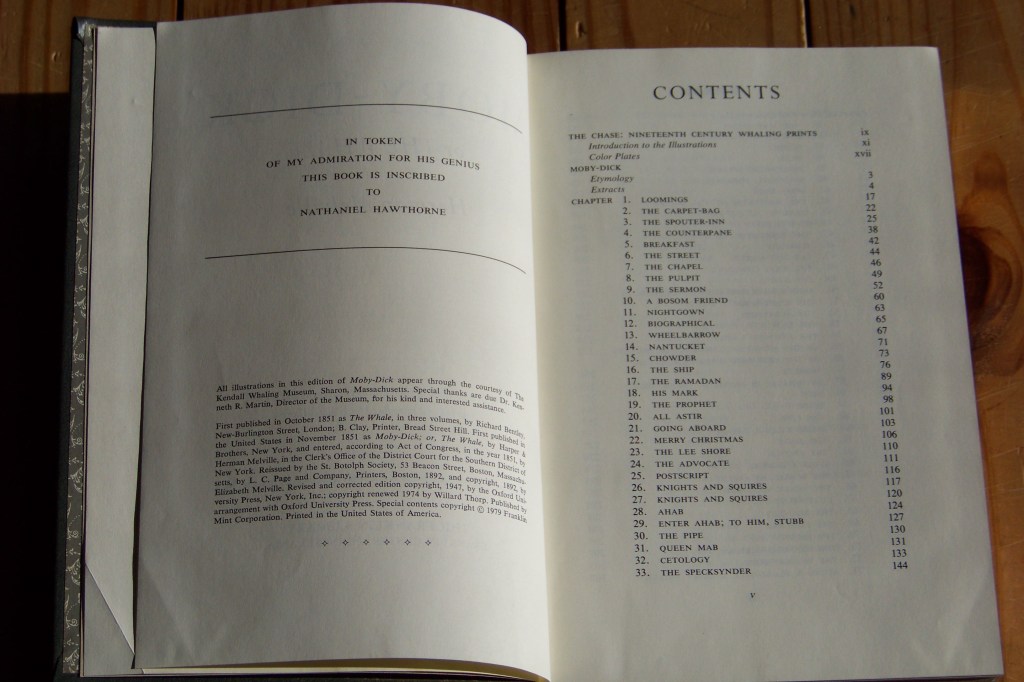
Melville dedicated Moby-Dick to Hawthorne — “In Token of My Admiration for His Genius” — and Hawthorne’s genius was not the only thing that Melville admired. Melville fell in love with the dashingly handsome older author the first time they met, and his forbidden passion drove him to create the symbol of impossible longing that now represents American literature to the rest of the world: the white whale.
Moby-Dick has never before been considered a work of romantic longing, but here are five reasons to believe that Melville’s masterpiece is a profound statement of love denied.

One: The Symbol
The idea that Moby-Dick expresses Melville’s impossible love for Hawthorne explains many otherwise perplexing features of the novel.Moby-Dick contains scores of homoerotic images and scenes, including the wedding of Ishmael and Queequeg in the Chapter called “A Bosom Friend.” Same-sex relationships were illegal at the time in the United States — punishable by exile, jail, or even death — and same-sex marriage was literally unthinkable to mainstream American society, so the marriage of Ishmael and Queequeg and the bawdy homoerotic puns throughoutMoby-Dick would have been curious things to write, indeed, for a heterosexual married man.
For all of the interpretations of the white whale that critics have offered in the past, no one has ever really asked what it might have meant, personally, to the man who created it: what impossible thing might Melville have longed for, which he might have wished to express openly but could not? What desire might he have had that could destroy everything in his life, the way the white whale destroyed everything in his novel?
Two: The Letters
Most of the letters that Melville wrote to Hawthorne during this time were love letters. His affection was veiled, but very thinly so. Here are just a few of the romantic things he wrote to the older author:
“If the world was entirely made up of Magians, I’ll tell you what I should do. I should have a paper-mill established at one end of the house, and so have an endless riband of foolscap rolling in upon my desk; and upon that endless riband I should write a thousand — a million — billion thoughts, all under the form of a letter to you. The divine magnet is on you, and my magnet responds. Which is the biggest? A foolish question — they are One.”
“Whence come you, Hawthorne? By what right do you drink from my flagon of life? And when I put it to my lips — lo, they are yours and not mine.”
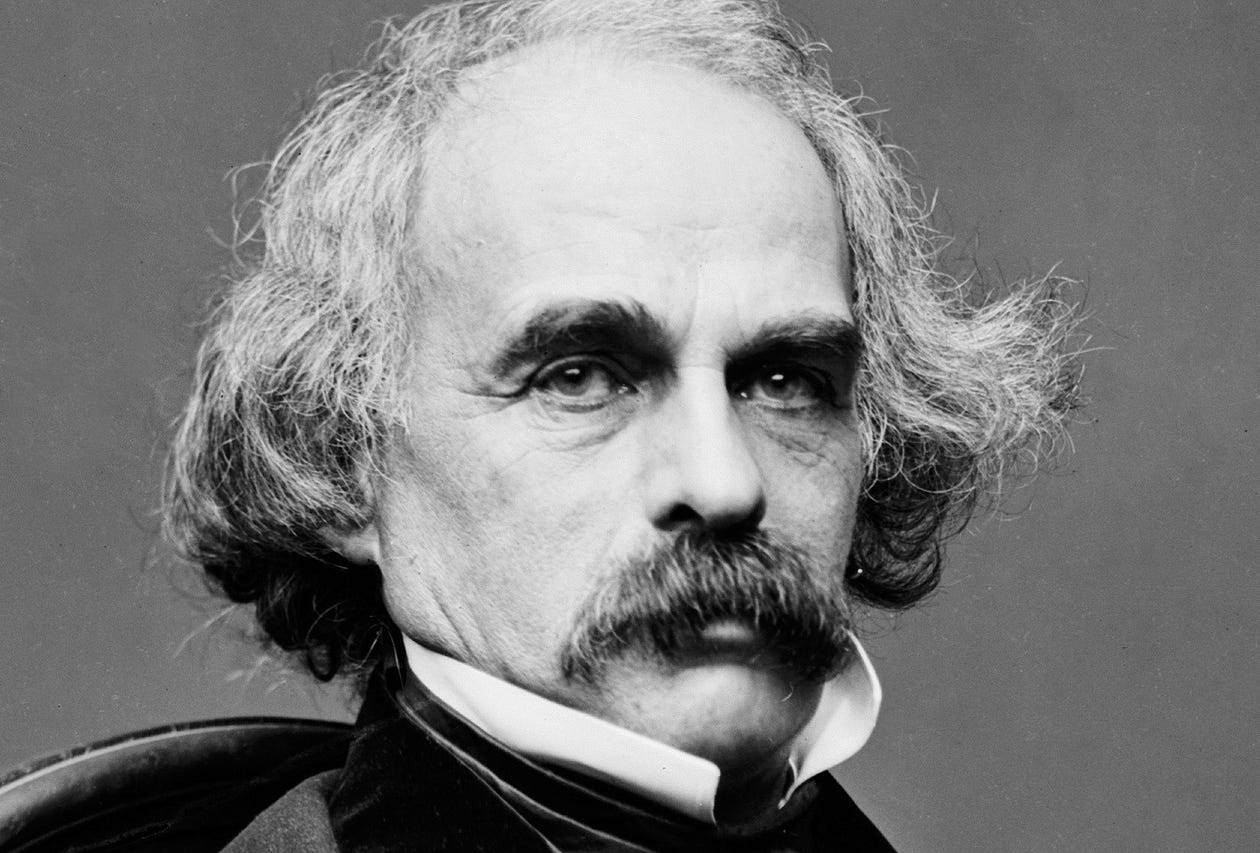
In a letter inviting Hawthorne to visit his home for a few days, Melville wrote:
“You may do what you please — say or say not what you please. And if you feel any inclination for that sort of thing — you may spend the period of your visit in bed, if you like — every hour of your visit.” (Melville’s emphasis)
We don’t have Hawthorne’s letters in response, because Melville “scrupulously destroyed them” (as he reported late in his life to Hawthorne’s son Julian) — an act that suggests the erasure of a painful memory and/or the destruction of implicating evidence.
Three: The ‘Review’
Immediately after meeting Hawthorne, at a picnic in 1850, Melville wrote a magazine review of Hawthorne’s short story collection Mosses from an Old Manse. The scholar David B. Kesterson has called the article “a letter in the form of a review,” and here are just a couple of the many excerpts that show why it’s Melville’s first love letter to Hawthorne — a public declaration whose secret meanings are hidden in plain sight:
“I have just returned from the hay mow, charged more and more with love and admiration of Hawthorne.”
“I feel that this Hawthorne has dropped germinous seeds into my soul. He expands and deepens down, the more I contemplate him; and further, and further, shoots his strong New-England roots into the hot soil of my Southern soul.”
Four: The Body of Work
Melville and Hawthorne wrote about each other in novels and poems after they parted. In Hawthorne’s novel The Blithedale Romance, which he wrote after he abruptly moved away from the Berkshires in 1851, the narrator Coverdale has an erotically charged relationship with a character named Hollingsworth, whose physical appearance resembles Melville’s. When Hollingsworth asks Coverdale to run away with him, Coverdale rejects him but reports that “the heart-pang was not merely figurative, but an absolute torture of the breast.”
Hawthorne-like figures would appear in Melville’s writing for the rest of his life, most notably in the characters of Charlie Noble in The Confidence Man and Vine in the book-length poem Clarel, a sustained meditation on the intersection of erotic and spiritual longing.
Five: The Dirge
On the occasion of Hawthorne’s death in 1864, Melville wrote the following poem. The poem was not published until after Melville’s own death, in 1891:
To have known him, to have loved him
After loneness long;
And then to be estranged in life,
And neither in the wrong;
And now for death to set his seal —
Ease me, a little ease, my song!
By wintry hills his hermit-mound
The sheeted snow-drifts drape,
And houseless there the snow-bird flits
Beneath the fir-trees’ crape:
Glazed now with ice the cloistral vine
That hid the shyest grape.
By channeling his forbidden longing for Hawthorne into Moby-Dick, Melville transformed a private tragedy into a strange, thrilling work of art. He would live another forty years with his love burning in his chest like one of Hawthorne’s scarlet letters; and in his lifetime Moby-Dick would be forgotten, so he could not have imagined that his greatest passion would outlive him. The white whale shook free of Ahab’s harpoon, but tens of millions of readers around the world continue to find the captain’s quest cathartic.
I doubt that even Melville could have dreamed a better tribute to the man he loved.
This article originally appeared on Signature.
==========================================================
Nathaniel Hawthorne
You know Nathaniel Hawthorne as the author of The Scarlet Letter, The House of Seven Gables, and Mosses from an Old Manse (if you don’t know the last one, it’s ok, we’re gonna talk about it). He also had a collection of shorts called, Twice Told Tales, which annoys me because that’s what I wanted to call my publishing house, and he beat me to it by like 150 years. I mean, it is a Shakespeare reference, so hardly original to either of us, but still. (We’re gonna talk about Shakespeare, too.)
Hathorne [sic] was born in 1804 in Salem, Massachusetts, to a family prominent in US history. Most notably of these was his great-great-grandfather, John Hathorne, who was a judge during the Salem Witch Trials. This Puritan heritage informed much of his writing, especially evident in his most famous works. Indeed, he added the w sometime in his early 20’s, probably to distance himself from the family reputation.
When he was 12, his family boarded with some farmers in Maine, and when he was 16, he hand wrote and published a little newsletter, which he delivered to family members. At 17, he attended Bowdoin College, where he met future president Franklin Pearce and my personal favourite poet, Henry Wadsworth Longfellow. He described himself as an idle student, preferring to study his own interests than the curriculum.
In 1828, he started self-publishing his early work, which didn’t sell well. That’s fine, though. We love a self-published king. He also served as editor of the American Magazine of Entertaining and Useful Knowledge, which is an objectively awesome title. He also accepted a job as a weigher and gauger in the Boston Custom House and roomed with some movers and shakers, like poets, congressmen, and naval officers. What a time to be alive.
In 1841, he joined a Utopian society so he could marry Sophia Peabody, a transcendentalist illustrator. The couple married in 1842 and moved into Old Manse, a historical house, where one of their neighbours was Ralph Waldo Emerson. The two were deeply in love and compatible and had three children, Una, Julian, and Rose, very quickly together.
Mosses from an Old Manse is a collection of 23 previously-published short stories that Hawthorne compiled and named in honour of this house. Many of these stories were already known, so it enjoyed some commercial success. He sent a copy to Poe because he literally lived my dream, and Poe was like, ‘the guy is a genius writer, but his friends suck,’ and then Emerson wrote his own review, declaring that Hawthorne was underpaid. Looks like he was paid $75 in 1846, which would have been $2,902.69, by 2022 money. So, yeah, that’s not much. But the real meat about this book is Melville’s response.
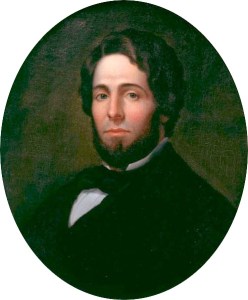
Herman Melville
You recognise Herman Melville as the author of Moby-Dick (yes, hyphenated), ‘Bartleby the Scrivener,’ and ‘Benito Cereno.’ I recently read the last one, and if you haven’t, holy shit, you should. It’s good, y’all. Like, genuinely genius (though, content warning for fairly racist language, because it was 1855).
Melville was born in 1819 in New York City, to an equally prestigious family. Both of his grandfathers, Major Thomas Melvill and General Peter Gansevoort, fought during the Revolution, with Melvill participating in the Boston Tea Party, and Gansevoort defending Fort Stanwix in 1777.
A mediocre student, though a good writer from an early age, Melville dropped out early, most due to his father’s poor money management. He went through a series of jobs, including as a bank clerk, working at his father’s fur store, and as a teacher, all the while trying to continue his studies, where he could. Eventually, the need for more gainful employment led him to the sea.
In 1839, he got a job on a merchant vessel, St Lawrence, from New York to Liverpool. He briefly returned to teaching, but didn’t get paid, so he joined on with the whaling ship, Acushnet. Much of his work concerning sailing was inspired by this job. In 1842, he and another crew mate jumped ship, participated in a mutiny, was jailed, and broke out. In August of 1843, he joined the US Navy, and was discharged in October.
So, from all of this, he developed a mistrust of authority, a drive for freedom, and a deep self confidence, with the feeling that life and the universe had imposed unnecessary hardships on him, which held him back from achieving his full potential.
In 1845, he began writing, starting with Typee, which was inspired by that time he and a buddy jumped ship in Nuku Hiva. Notably, this book drew the attention of one Nathaniel Hawthorne, who heaped upon it glowing praise.
In 1847, Melville married Elizabeth Knapp Shaw, who he had only known a few months, and in 1849, their first child, Malcolm, was born.
Their friendship
In August of 1850, the two crossed paths at a picnic in Pittsfield, Massachusetts. While other famous people were also in attendance, Hawthorne and Melville found themselves caught in the rain, took shelter together, and had a deep and personal conversation.
Melville had been given a copy of Mosses from an Old Manse, though he hadn’t read it. But after meeting Hawthorne, he read the book and published an anonymous review, titled, ‘Hawthorne and His Mosses,’ where he heaped purple praise on his new friend. Hawthorne did write a review of Typee, but I can’t find a date for that, so I don’t know if he wrote it before or after they met.
About Mosses, Melville revels in Hawthorne’s ‘blackness,’ or seldom-seen dark side, which ‘so fixes and fascinates’ him. He also openly compares him to Shakespeare, while offering very vague and surface level criticism of the actual pieces. It very much reads like doing your buddy a solid and leaving a 5-star review because you love them SO FUCKING MUCH. (Btw, if any of you feel compelled to do that for me, I will absolutely write you a sickly-sweet love letter)
About Typee, Hawthorne praised the youth and vigour of the writing, as well as the sumptuous setting details, and the delicacy with which Melville handles cultural portrayals. Hawthorne himself recognises that American and European society wasn’t ready for the way that Melville dealt with the people of Nuku Hiva, and lifted him up for it. It also very much reads as ‘my buddy is so cool and smart, you gotta read this book!’
Their personal correspondence was constant and fervent, and they visited each other often, with and without their families, and often without warning. From their first meeting in 1850 to their last in 1864, they each would have a huge impact on the other. During these years, they both published their biggest works. Indeed, Moby-Dick is dedicated to Nathaniel Hawthorne, and many have speculated that in addition to being inspired by real life events, the white whale himself represents Melville’s obsession with Hawthorne.
It’s not hard to imagine what the two saw in each other. Hawthorne was fifteen years older, plagued by a family curse and surrounded by artistic and political luminaries. Possessing a sensitive and poetic nature, and described by Melville as being beautiful almost beyond belief, he was a true tragic romantic hero in the style that any Bronte would approve. Melville, by contrast, had lived a life of adventure. The grandson of two heroes of the Revolution, he had lived a life on the sea, from which he developed a dashing, adventurous nature. Yet, he was also an accomplished poet, who, like Hawthorne, had eschewed the structure of a formal education in favour of artistic freedom. Both men were progressive, in their own way, for the time. The Scarlet Letter is lauded as a proto-feminist novel, and Typee seemed to be an early attempt at anthropology.
Other keyboards will speculate on the exact nature of their relationship, whether it was romantic and sexual, or simply a deep and profound platonic friendship. I personally cannot say, and it feels inappropriate for me to do so. They certainly lavished affection on each other, but as we only have letters for evidence, and people did write like that in the 1800s, it doesn’t feel like strong enough proof for me. Whatever the relationship, it was strong and beautiful, and they made no attempt to hide it, and I love that for them.
But I promised you letters, so here are a few. Unfortunately, I can only find Melville’s letters to Hawthorne, and none from Hawthorne, from a book called, Divine Magnet, compiled by Mark Niemeyer. However, I have to assume they were equally rapturous, given that Hawthorne is the one who held onto his. Read them to whoever you love.


Leave a Reply