By Brett Waite December 7, 2023 – Hillsdale College
My cmnt: Remember the Founding Fathers used euphemisms that clearly (to them and their constituents) stood for specific things. Providence meant the God of the bible, moral meant the Ten Commandments and religion meant Christianity (or at least the Judeo-Christian heritage). They were even loath to refer to chattel slavery by name.
Google Ai:
The original 1787 U.S. Constitution never explicitly uses the words “slave” or “slavery,” though it protects the institution. Instead, the framers used indirect phrasing to refer to enslaved individuals. [1, 2, 3]
The three distinct formulations used are:
- “Three fifths of all other Persons”
(Article I, Section 2, Clause 3)
This is the Three-Fifths Compromise, which determined how enslaved individuals would be counted for both taxation and congressional representation. - “such Persons as any of the States now existing shall think proper to admit”
(Article I, Section 9, Clause 1)
Known as the Slave Trade Clause, this protected the international importation of enslaved people until at least 1808. - “a Person held to Service or Labour in one State, under the Laws thereof”
(Article IV, Section 2, Clause 3)
This refers to the Fugitive Slave Clause, which required states to return escaped enslaved people to their owners. [1, 2, 3, 4, 5, 6]
The word “slavery” does not appear in the text until the ratification of the Thirteenth Amendment in 1865, which abolished the institution
Google Ai:
In American history, “that peculiar institution” was a euphemism to describe slavery in the American South. [1, 2]
Coined in the 1830s by influential South Carolina democratic politician John C. Calhoun, the phrase has two distinct meanings: [1, 2]
- Distinctive or Unique: In the 19th century, the word “peculiar” did not mean strange. It meant “one’s own” or something characteristic of a specific place or people. By calling it a peculiar institution, white Southerners were emphasizing that the system of chattel slavery belonged exclusively to their region, setting them apart from the North and the rest of the Western world.
- A Political Euphemism: It was used to sanitize the brutal reality of human bondage. White Southerners wanted to avoid using the word “slavery,” framing the labor system instead as an essential, foundational pillar of the Southern economy and way of life. [1, 2, 3, 4, 5]
The phrase gained widespread popularity during the decades leading up to the Civil War as abolitionists began to fiercely attack the morality of slavery, and Southerner democrats needed a defense mechanism to legitimize the institution.
================================================
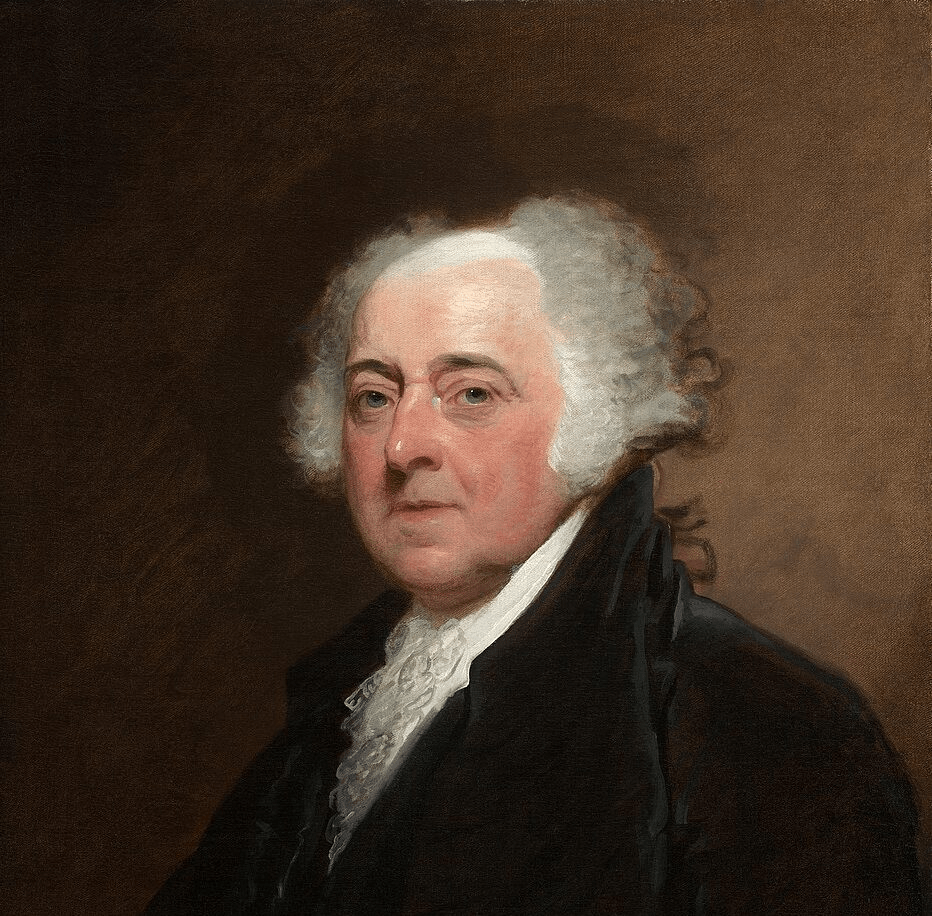
On October 11, 1798, John Adams wrote to the Massachusetts Militia that
Because We have no Government armed with Power capable of contending with human Passions unbridled by morality and Religion. Avarice, Ambition, Revenge or Gallantry, would break the strongest Cords of our Constitution as a Whale goes through a Net. Our Constitution was made only for a moral and religious people. It is wholly inadequate to the government of any other.
Would John Adams think that Americans today are still “a moral and religious people” in the way that he meant it in 1798? In “The Real American Founding: A Conversation,” professors of politics David Azerrad and Thomas West give their perspective on that question.
In the fifth lecture of that course, professors Azerrad and West discuss the idea that government always legislates morality, but what that morality consists of depends on the beliefs of those who make the laws. The nature of legislative power is to dictate to people what they can and cannot do.
The Founders believed that government ought to support morality and virtue grounded in the laws of nature and of nature’s God as they understood them, from which they derived man’s natural rights and duties, as accorded with their Christian beliefs. The American government, they claimed, ought not to be hostile to Christianity, but rather should support it with laws that are friendly to it and encourage its flourishing among the citizenry.
For example, in Washington’s Farewell Address, he advises that
Of all the dispositions and habits which lead to political prosperity, Religion and morality are indispensable supports. In vain would that man claim the tribute of Patriotism, who should labor to subvert these great Pillars of human happiness, these firmest props of the duties of Men and citizens. The mere Politician, equally with the pious man, ought to respect and to cherish them. A volume could not trace all their connections with private and public felicity. Let it simply be asked where is the security for property, for reputation, for life, if the sense of religious obligation deserts the oaths, which are the instruments of investigation in Courts of Justice? And let us with caution indulge the supposition, that morality can be maintained without religion. Whatever may be conceded to the influence of refined education on minds of peculiar structure, reason and experience both forbid us to expect that National morality can prevail in exclusion of religious principle.
Washington was claiming that without religion and morality—with the former supporting the latter—the courts of justice become spurious because oaths cannot be trusted. Property, reputation, and life will not be protected. Washington, therefore, warns his fellow citizens to be on their guard against those who “should labor to subvert these great pillars of human happiness.”
Professor Azerrad believes that America’s elites—those in positions of authority—have abandoned the Founders’ belief that Christianity ought to be encouraged to flourish in America. He claims,
The consensus elite view is that religion—and Christianity in particular—is dangerous. You shouldn’t talk about it; you shouldn’t subsidize it. Whereas the secular religions of the age get subsidized, promoted, and pushed everywhere.
Professor West agrees and believes that the change “didn’t really happen until post-World War II.” West continues, “And the reason why is because those in positions of authority had a different understanding of justice and morality than the Founders.” According to West, “the post-war elite” no longer viewed the purpose of government as securing the rights of citizens:
They wanted to get people away from the idea that somehow or other property rights are to be respected and defended, in order to justify the new orientation towards property. . . . As that becomes more and more important to the elites of our society, in the ’40s and ’50s and ’60s, then Christianity came to be seen as the enemy.
Azerrad and West contend that there is a stark contrast between the world of today and the one inhabited by the Founders, particularly in terms of the laws they implemented versus those we live under today. If America is no longer “a moral and religious people,” as they argue, and if Adams’ statement above is correct, then does America still live under the same Constitution? With the rise of the Progressive Era and the implementation of bureaucratic government, followed by the radical movements of the 1960s, Azerrad and West conclude that the American government has undergone a significant transformation. They observe that by not entirely and overtly discarding the Constitution, the revolutionaries pulled off a clever coup by grasping authority under the guise of legitimacy.


Leave a comment