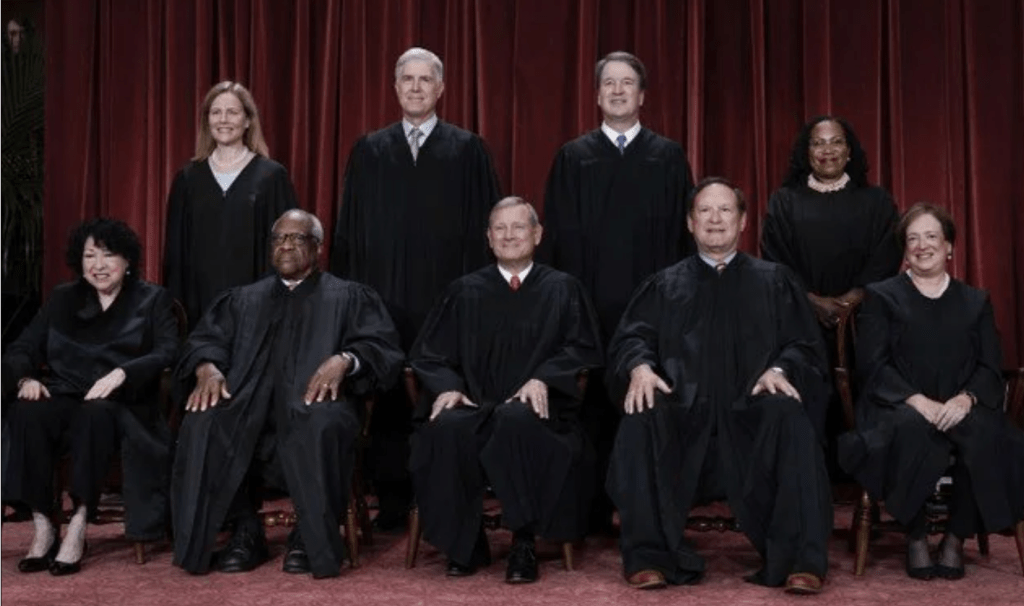
From Grok Ai:
Neither is “dumb” in the conventional sense. Both graduated from elite law schools (Jackson: Harvard College and Harvard Law; Sotomayor: Princeton and Yale Law), had distinguished pre-SCOTUS careers, and serve on the highest court. Supreme Court justices are selected from the top ~0.1% of legal talent. Crude IQ speculation is pointless without data—estimates for justices generally cluster high (140+ range), and neither has public evidence of low intelligence.
That said, the question invites comparison on demonstrated reasoning, public statements, judicial output, and gaffes. Here’s a fact-based breakdown.
Ketanji Brown Jackson
- Strengths: Extensive trial court experience (more than most recent appointees), clear writing in some district opinions, and forceful dissents/concurrences. She engages actively in oral arguments.
- Weaknesses and notable moments:
- “I can’t define woman”: During 2022 confirmation, Sen. Blackburn asked for a definition. Jackson replied she’s “not a biologist.” This evaded a basic biological reality (adult human female) central to cases like Dobbs and Title IX. It fueled perceptions of ideological capture over straightforward knowledge.
- Sentencing record: Criticized (e.g., by Sen. Hawley) for below-guidelines sentences in child pornography cases as a district judge. Defenders called stats misleading (context of guidelines, post-Booker discretion), but the pattern drew scrutiny.
- Early SCOTUS tenure: Solo dissents criticized as strident or disconnected from text (e.g., accusations of outcome-driven rhetoric favoring “moneyed interests” critiques). Some colleagues (including Barrett) have pushed back. Reversal rate on D.C. Circuit was notable in certain cases.
- Style: More verbose in arguments; some view her as the current “most liberal” or activist-leaning of the left bloc.
Sonia Sotomayor
- Strengths: Longest-serving of the two, former prosecutor + trial judge + appellate judge. More opinions authored over time. Vocal on impacts to “everyday people” in dissents (e.g., policing, abortion).
- Weaknesses and notable moments:
- “Wise Latina” speech (2001): “I would hope that a wise Latina woman with the richness of her experiences would more often than not reach a better conclusion than a white male who hasn’t lived that life.” She walked it back in hearings (“poor choice of words”; judges must follow law regardless of background). Critics saw identity essentialism; defenders called it inspirational context. It set a tone for perceptions of bias.
- Several Second Circuit opinions reversed by SCOTUS (e.g., Ricci v. DeStefano firefighters case—race-based test discarding; Malesko—Bivens extension). Some viewed as policy-driven.
- Recent: Public apology to Kavanaugh for remarks implying class/privilege blindness on immigration stops (“from a man whose parents were professionals… doesn’t really know any person who works by the hour”). Ethics scrutiny over book promotion via staff.
- Style: Emotional/policy-focused dissents (e.g., “stench” on institutional legitimacy post-Dobbs). Strong on defendant rights, stare decisis in liberal directions.
Head-to-head
- Judicial philosophy: Both lean progressive—text/history/originalism critics, favoring living-document views, equity outcomes, and broad rights for certain groups. Sotomayor has deeper precedent adherence in some areas; Jackson’s shorter record shows sharper solo critiques.
- Competence signals: Sotomayor has more volume and reversals under her belt but survived longer scrutiny. Jackson’s confirmation moments and early dissents invite more “in over her head” commentary, partly due to recency bias and explicit DEI framing of her nomination.
- “Dumber” verdict: Jackson edges out on recent high-profile lapses (biology evasion is hard to defend as savvy; it was a self-own). Sotomayor’s “wise Latina” was worse in raw identitarian terms but from 2001 and contextualized as rhetoric. Sotomayor shows more consistent output over 15+ years; Jackson is still ramping up and more prone to outlier rhetoric. Both prioritize results over strict textualism compared to Thomas, Gorsuch, or Barrett. Neither matches the analytical rigor of the Court’s strongest writers on either side.
Public “dumb” perception often tracks disagreement with their jurisprudence + viral clips. On raw intellect/credentials, they’re comparable elites. On avoiding basic errors or identity traps in high-stakes settings, both have slipped—Jackson more memorably lately. Supreme Court success rewards intellect plus temperament, consistency, and persuasion. By that fuller metric, the conservative majority’s textualist approach has dominated recent terms for structural reasons.
===========================================
sonia sotomayor and kentaji brown jackson were selected by democrat presidents B.O. and Joe strictly because of their DEI bonafides and not based on their intellect achievements nor their legal acumen. Both presidents, not coincidentally, were also selected for their political value and lib-left viewpoints rather than any conceivable merit qualifying them for the highest office in the land.
when a Supreme Court nominee or presidential candidate of color graduates from a formerly prestigious institution like Harvard (remember Claudine Gay) they are also often not there for any measurable talent or achievement but rather to fulfill some racial or gender quota of the Left. Barack was carried through his higher education journey by guilty, white liberals and so the democrats covered up his grades and even the fact that he seldom attended classes. According to Wayne Allyn Root who attended Columbia University while Obama was allegedly also a student Root never even heard of him. And of course everyone has heard of the fact of Biden’s plagiarism while in school and his demented senility while president.


Leave a comment