- Susan du Plessis
- October 14, 2022
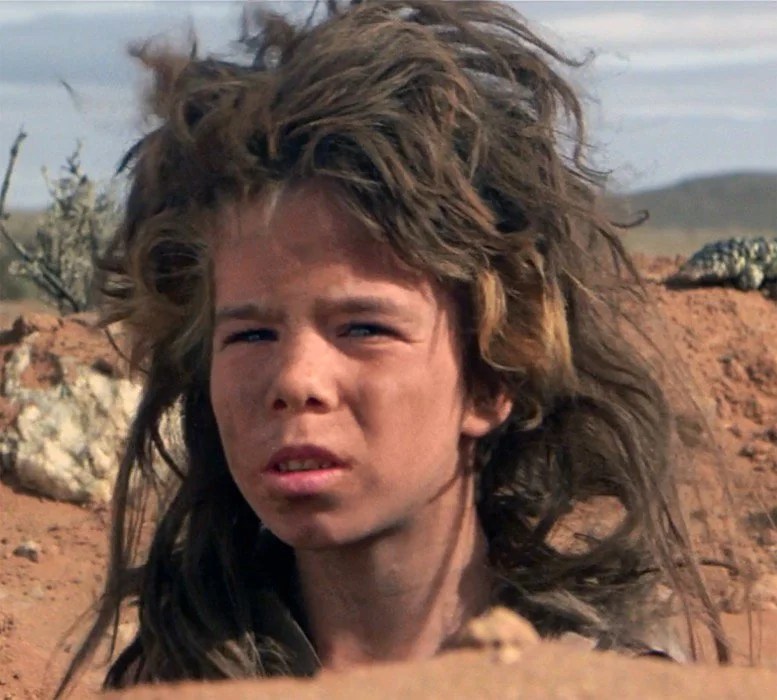
A feral child is a human child who has lived away from human contact from a very young age and has little or no experience of human care, loving or social behavior, and, crucially, human language. Feral children are confined by humans (often parents), raised by animals, or isolated in the wild.
Raised by wolves
Probably the best-known story of feral children is that of two girls, Amala and Kamala, who were raised by a she-wolf.
In 1920, as the story goes, Reverend J. A. L. Singh saw a mother wolf and cubs, two of whom had long, matted hair and looked human. After considerable preparations and difficulties, the two human creatures were captured. They turned out to be two girls whose ages were assessed by Singh at about eight years and one and a half years.
Acting like wolves
The creatures were taken to an orphanage in Midnapore, India, where the Reverend and his wife were stationed. Singh described them as “wolfish” in appearance and behavior. They walked on all fours and had calluses on their knees and palms from doing so. They were fond of raw meat and stole it when the occasion offered. They licked all liquids with their tongues and ate their food in a crouched position. Their tongues permanently hung out of their thick, red lips, and they panted just like wolves. They never slept after midnight and prowled and howled at night.
They could move very fast, just like squirrels, and it was difficult to overtake them. They shunned human society altogether. If approached, they made faces and sometimes bared their teeth. Singh noted that their hearing was very acute and that they could smell meat at a great distance. Furthermore, while they could not see well during the day, they could orient themselves very well at night. In September 1921, both girls became ill, and Amala, the younger, died.
Kamala learns to be human
Through intimate and devoted contact with Kamala, by softening her skin with oil and massaging her, by feeding and caressing her, Mrs. Singh was able to win her confidence and create the conditions in which Kamala would be willing to learn from her.
After five years at the orphanage, Kamala demonstrated some intellectual functions. She knew some of the names of the babies housed there; she understood the concept of color; she accepted food only from her plate and knew her glass from among the others.
As far as language development is concerned, a visitor, Bishop H. Pakenham-Walsh, provides an outsider’s description of this aspect of her progress: “When I saw Kamala she could speak, quite clearly and distinctly, about thirty words; when told to say what a certain object was, she would name it, but she never used her words in a spontaneous way. … I saw her again two years later … and she had learned a good many more words.”
Kamala dies unexpectedly
By now, Kamala’s (and the Singhs’) fame had spread. An invitation arrived from the Psychological Society of New York in 1928, offering to take Kamala to the United States, where she could be presented to the public. However, the invitation could not be considered as Kamala grew weak. Her health grew less secure throughout the year, and somewhat unexpectedly, she died on the fourteenth morning of November 1929.
There are many other stories of feral children in the literature, amongst others the story of a boy who lived in Syria, who ate grass and could leap like an antelope, as well as of a girl who lived in the forests in Indonesia for six years after she had fallen into a river. She walked like an ape, and her teeth were as sharp as a razor.
Watch this video about Amala and Kamala and nine other cases of children raised by animals:
What Are Feral Children?
- Susan du Plessis
- May 4, 2023
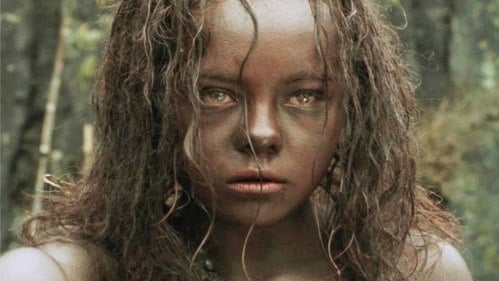
A feral child is a human who has lived away from human contact from a very young age and has little or no experience of human care, loving or social behavior, and, crucially, human language. Feral children are confined by humans (often parents), raised by animals (often wolves), or somehow survived on their own in the wild.
What we learn from feral children
These stories do far more than just confirm the importance of education. They show that a human being can and must be nurtured, educated and acclimated by other people to become a fully functional and actualized human being.
Most of the higher animals, birds and mammals, have to learn how to hunt, build nests and survive from their mothers. So whether man, bear or a feathered fowl we learn a lot from others of our kind, especially the socialization skills needed to navigate group settings. However cats will try (not very successfully) to act like dogs if raised by them, and dogs will attempt to act like their human masters, and young children raised by animals will often (very successfully) imitate their furry surrogate parents.
However no animal, man nor beast, is a blank slate ready to be imprinted absolutely anyway the Darwinist-materialist imagines. Boys will act like boys, girls will act like girls, and grown men and women especially voluntarily accept different roles in society suited to their innate, genetic dispositions. But if mistreated or abused or misdirected – or raised by monkeys – a human person can become deformed from their natural state and become like a wild animal never reaching or even approaching their full potential.


Leave a Reply