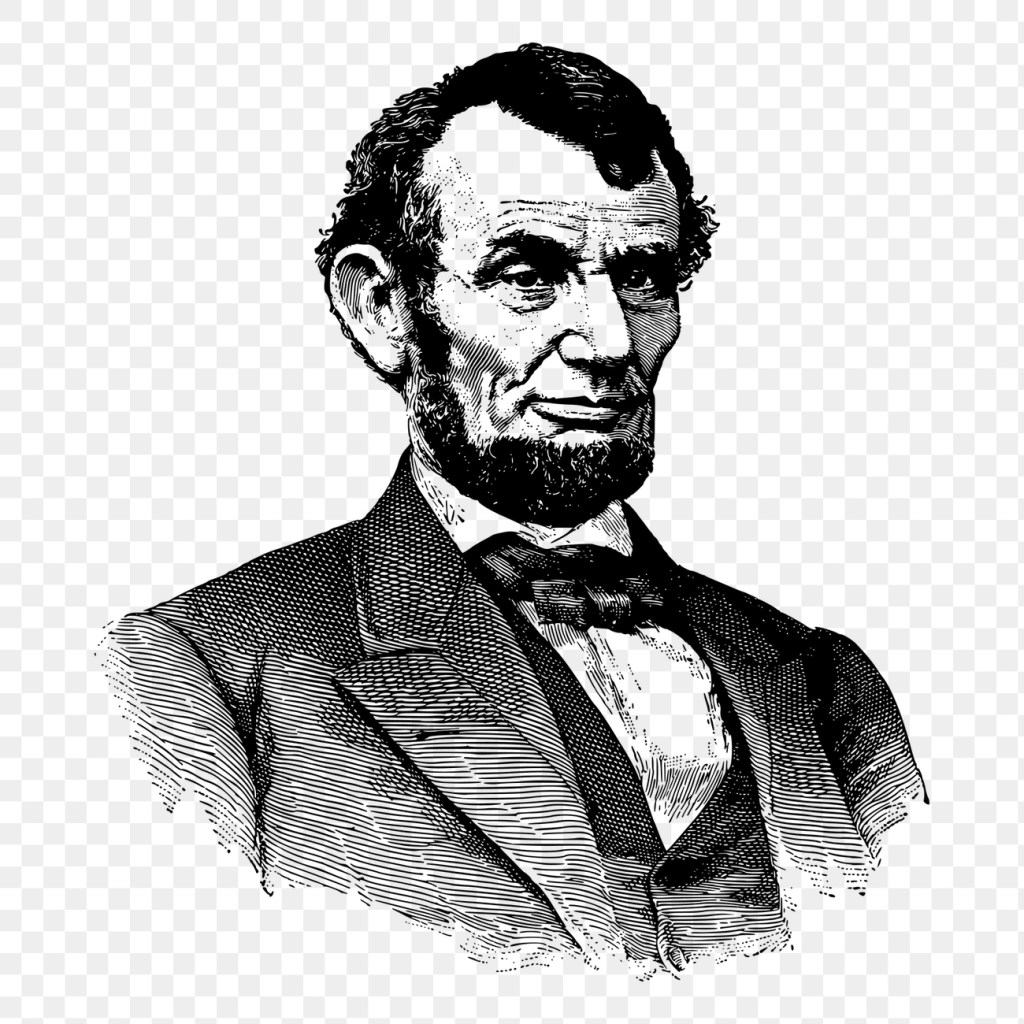
 | Cooper Union Address New York, New York February 27, 1860 |
My cmnt: The gist of this great speech, the substance and essential point Lincoln is making here is this: Great social divides are NOT political, they have always been and will always be moral. The question is not how to limit slavery in the national territories or even in the South but rather is slavery a moral evil or a moral good?
My cmnt: The South argues that slavery is in fact a moral good and should be declared so by the North. Nothing else will satisfy them. And once the North has acknowledged not only that slavery is right, just and good they must also assist in its spread throughout the nation. Anything short of this is obfuscation, recalcitrance and evil and must be stamped out and destroyed.
My cmnt: This is exactly how the Lib-Left led by the democratic party argue about global warming, homosexuality, pedophilia, pornography, abortion, socialism, rule by the elite, Darwinism, advocating childhood transgenderism and men pretending to be women so they can dominate women’s sports. They constantly seek to normalize these practices and delegitimize those who oppose them.
My cmnt: We are all familiar with Leftist catch phrases: While trying to help our communist enemies in Vietnam: Make Love not War; While trying to destroy the free flow of oil at market prices: No Blood for Oil; While trying to hurt our war efforts to set up a democratic republic in Iraq: Bush lied and People Died; While burning and looting our cities: Defund the Police; While helping the Islamists kill Jews: From the River to the Sea; When we peaceably disagree with them: Silence is Violence. Notice in Lincoln’s own words below: Silence will not be tolerated.
My cmnt: It is not enough that people with a Judeo-Christian worldview accept the right of individuals to worship what they will, love what they will, practice sex as they will, abort what they will, and believe whatever they will – the Biblical ethicists must also denounce their own beliefs and admit them to be both wrong and evil and acknowledge the beliefs, practices and worldviews of the democrat-Left to be both correct, beneficial and morally good.
Hear Lincoln’s words:
The question recurs, what will satisfy them? Simply this: We must not only let them alone, but we must somehow, convince them that we do let them alone. This, we know by experience, is no easy task. We have been so trying to convince them from the very beginning of our organization, but with no success. In all our platforms and speeches we have constantly protested our purpose to let them alone; but this has had no tendency to convince them. Alike unavailing to convince them, is the fact that they have never detected a man of us in any attempt to disturb them.
These natural, and apparently adequate means all failing, what will convince them?
This, and this only: cease to call slavery wrong, and join them in calling it right. And this must be done thoroughly – done in acts as well as in words. Silence will not be tolerated – we must place ourselves avowedly with them. Senator Douglas’ new sedition law must be enacted and enforced, suppressing all declarations that slavery is wrong, whether made in politics, in presses, in pulpits, or in private. We must arrest and return their fugitive slaves with greedy pleasure. We must pull down our Free State constitutions. The whole atmosphere must be disinfected from all taint of opposition to slavery, before they will cease to believe that all their troubles proceed from us.
===========================================================
In October 1859 Abraham Lincoln accepted an invitation to lecture at Henry Ward Beecher’s church in Brooklyn, New York, and chose a political topic which required months of painstaking research. His law partner William Herndon observed, “No former effort in the line of speech-making had cost Lincoln so much time and thought as this one,” a remarkable comment considering the previous year’s debates with Stephen Douglas.
The carefully crafted speech examined the views of the 39 signers of the Constitution. Lincoln noted that at least 21 of them — a majority — believed Congress should control slavery in the territories, rather than allow it to expand. Thus, the Republican stance of the time was not revolutionary, but similar to the Founding Fathers, and should not alarm Southerners, for radicals had threatened to secede if a Republican was elected President.
When Lincoln arrived in New York, the Young Men’s Republican Union had assumed sponsorship of the speech and moved its location to the Cooper Institute in Manhattan. The Union’s board included members such as Horace Greeley and William Cullen Bryant, who opposed William Seward for the Republican Presidential nomination. Lincoln, as an unannounced presidential aspirant, attracted a capacity crowd of 1,500 curious New Yorkers.
An eyewitness that evening said, “When Lincoln rose to speak, I was greatly disappointed. He was tall, tall, — oh, how tall! and so angular and awkward that I had, for an instant, a feeling of pity for so ungainly a man.” However, once Lincoln warmed up, “his face lighted up as with an inward fire; the whole man was transfigured. I forgot his clothes, his personal appearance, and his individual peculiarities. Presently, forgetting myself, I was on my feet like the rest, yelling like a wild Indian, cheering this wonderful man.”
Herndon, who knew the speech but was not present, said it was “devoid of all rhetorical imagry.” Rather, “it was constructed with a view to accuracy of statement, simplicity of language, and unity of thought. In some respects like a lawyer’s brief, it was logical, temperate in tone, powerful — irresistibly driving conviction home to men’s reasons and their souls.”
The speech electrified Lincoln’s listeners and gained him important political support in Seward’s home territory. Said a New York writer, “No man ever before made such an impression on his first appeal to a New York audience.” After being printed by New York newspapers, the speech was widely circulated as campaign literature.
Easily one of Lincoln’s best efforts, it revealed his singular mastery of ideas and issues in a way that justified loyal support. Here we can see him pursuing facts, forming them into meaningful patterns, pressing relentlessly toward his conclusion.
With a deft touch, Lincoln exposed the roots of sectional strife and the inconsistent positions of Senator Stephen Douglas and Chief Justice Roger Taney. He urged fellow Republicans not to capitulate to Southern demands to recognize slavery as being right, but to “stand by our duty, fearlessly and effectively.”
=======================================================
Mr. President and fellow citizens of New York: –
The facts with which I shall deal this evening are mainly old and familiar; nor is there anything new in the general use I shall make of them. If there shall be any novelty, it will be in the mode of presenting the facts, and the inferences and observations following that presentation.
In his speech last autumn, at Columbus, Ohio, as reported in “The New-York Times,” Senator Douglas said:
“Our fathers, when they framed the Government under which we live, understood this question just as well, and even better, than we do now.”
I fully indorse this, and I adopt it as a text for this discourse. I so adopt it because it furnishes a precise and an agreed starting point for a discussion between Republicans and that wing of the Democracy headed by Senator Douglas. It simply leaves the inquiry: “What was the understanding those fathers had of the question mentioned?”
What is the frame of government under which we live?
The answer must be: “The Constitution of the United States.” That Constitution consists of the original, framed in 1787, (and under which the present government first went into operation,) and twelve subsequently framed amendments, the first ten of which were framed in 1789.
Who were our fathers that framed the Constitution? I suppose the “thirty-nine” who signed the original instrument may be fairly called our fathers who framed that part of the present Government. It is almost exactly true to say they framed it, and it is altogether true to say they fairly represented the opinion and sentiment of the whole nation at that time. Their names, being familiar to nearly all, and accessible to quite all, need not now be repeated.
I take these “thirty-nine,” for the present, as being “our fathers who framed the Government under which we live.”
What is the question which, according to the text, those fathers understood “just as well, and even better than we do now?”
It is this: Does the proper division of local from federal authority, or anything in the Constitution, forbid our Federal Government to control as to slavery in our Federal Territories?
Upon this, Senator Douglas holds the affirmative, and Republicans the negative. This affirmation and denial form an issue; and this issue – this question – is precisely what the text declares our fathers understood “better than we.”
Let us now inquire whether the “thirty-nine,” or any of them, ever acted upon this question; and if they did, how they acted upon it – how they expressed that better understanding?
In 1784, three years before the Constitution – the United States then owning the Northwestern Territory, and no other, the Congress of the Confederation had before them the question of prohibiting slavery in that Territory; and four of the “thirty-nine” who afterward framed the Constitution, were in that Congress, and voted on that question. Of these, Roger Sherman, Thomas Mifflin, and Hugh Williamson voted for the prohibition, thus showing that, in their understanding, no line dividing local from federal authority, nor anything else, properly forbade the Federal Government to control as to slavery in federal territory. The other of the four – James M’Henry – voted against the prohibition, showing that, for some cause, he thought it improper to vote for it.
In 1787, still before the Constitution, but while the Convention was in session framing it, and while the Northwestern Territory still was the only territory owned by the United States, the same question of prohibiting slavery in the territory again came before the Congress of the Confederation; and two more of the “thirty-nine” who afterward signed the Constitution, were in that Congress, and voted on the question. They were William Blount and William Few; and they both voted for the prohibition – thus showing that, in their understanding, no line dividing local from federal authority, nor anything else, properly forbids the Federal Government to control as to slavery in Federal territory. This time the prohibition became a law, being part of what is now well known as the Ordinance of ’87.
The question of federal control of slavery in the territories, seems not to have been directly before the Convention which framed the original Constitution; and hence it is not recorded that the “thirty-nine,” or any of them, while engaged on that instrument, expressed any opinion on that precise question.
In 1789, by the first Congress which sat under the Constitution, an act was passed to enforce the Ordinance of ’87, including the prohibition of slavery in the Northwestern Territory. The bill for this act was reported by one of the “thirty-nine,” Thomas Fitzsimmons, then a member of the House of Representatives from Pennsylvania. It went through all its stages without a word of opposition, and finally passed both branches without yeas and nays, which is equivalent to a unanimous passage. In this Congress there were sixteen of the thirty-nine fathers who framed the original Constitution. They were John Langdon, Nicholas Gilman, Wm. S. Johnson, Roger Sherman, Robert Morris, Thos. Fitzsimmons, William Few, Abraham Baldwin, Rufus King, William Paterson, George Clymer, Richard Bassett, George Read, Pierce Butler, Daniel Carroll, James Madison.
This shows that, in their understanding, no line dividing local from federal authority, nor anything in the Constitution, properly forbade Congress to prohibit slavery in the federal territory; else both their fidelity to correct principle, and their oath to support the Constitution, would have constrained them to oppose the prohibition.
Again, George Washington, another of the “thirty-nine,” was then President of the United States, and, as such approved and signed the bill; thus completing its validity as a law, and thus showing that, in his understanding, no line dividing local from federal authority, nor anything in the Constitution, forbade the Federal Government, to control as to slavery in federal territory.
No great while after the adoption of the original Constitution, North Carolina ceded to the Federal Government the country now constituting the State of Tennessee; and a few years later Georgia ceded that which now constitutes the States of Mississippi and Alabama. In both deeds of cession it was made a condition by the ceding States that the Federal Government should not prohibit slavery in the ceded territory. Besides this, slavery was then actually in the ceded country. Under these circumstances, Congress, on taking charge of these countries, did not absolutely prohibit slavery within them. But they did interfere with it – take control of it – even there, to a certain extent. In 1798, Congress organized the Territory of Mississippi. In the act of organization, they prohibited the bringing of slaves into the Territory, from any place without the United States, by fine, and giving freedom to slaves so bought. This act passed both branches of Congress without yeas and nays. In that Congress were three of the “thirty-nine” who framed the original Constitution. They were John Langdon, George Read and Abraham Baldwin. They all, probably, voted for it. Certainly they would have placed their opposition to it upon record, if, in their understanding, any line dividing local from federal authority, or anything in the Constitution, properly forbade the Federal Government to control as to slavery in federal territory.
In 1803, the Federal Government purchased the Louisiana country. Our former territorial acquisitions came from certain of our own States; but this Louisiana country was acquired from a foreign nation. In 1804, Congress gave a territorial organization to that part of it which now constitutes the State of Louisiana. New Orleans, lying within that part, was an old and comparatively large city. There were other considerable towns and settlements, and slavery was extensively and thoroughly intermingled with the people. Congress did not, in the Territorial Act, prohibit slavery; but they did interfere with it – take control of it – in a more marked and extensive way than they did in the case of Mississippi. The substance of the provision therein made, in relation to slaves, was:
First. That no slave should be imported into the territory from foreign parts.
Second. That no slave should be carried into it who had been imported into the United States since the first day of May, 1798.
Third. That no slave should be carried into it, except by the owner, and for his own use as a settler; the penalty in all the cases being a fine upon the violator of the law, and freedom to the slave.
This act also was passed without yeas and nays. In the Congress which passed it, there were two of the “thirty-nine.” They were Abraham Baldwin and Jonathan Dayton. As stated in the case of Mississippi, it is probable they both voted for it. They would not have allowed it to pass without recording their opposition to it, if, in their understanding, it violated either the line properly dividing local from federal authority, or any provision of the Constitution.
In 1819-20, came and passed the Missouri question. Many votes were taken, by yeas and nays, in both branches of Congress, upon the various phases of the general question. Two of the “thirty-nine” – Rufus King and Charles Pinckney – were members of that Congress. Mr. King steadily voted for slavery prohibition and against all compromises, while Mr. Pinckney as steadily voted against slavery prohibition and against all compromises. By this, Mr. King showed that, in his understanding, no line dividing local from federal authority, nor anything in the Constitution, was violated by Congress prohibiting slavery in federal territory; while Mr. Pinckney, by his votes, showed that, in his understanding, there was some sufficient reason for opposing such prohibition in that case.
The cases I have mentioned are the only acts of the “thirty-nine,” or of any of them, upon the direct issue, which I have been able to discover.
To enumerate the persons who thus acted, as being four in 1784, two in 1787, seventeen in 1789, three in 1798, two in 1804, and two in 1819-20 – there would be thirty of them. But this would be counting John Langdon, Roger Sherman, William Few, Rufus King, and George Read each twice, and Abraham Baldwin, three times. The true number of those of the “thirty-nine” whom I have shown to have acted upon the question, which, by the text, they understood better than we, is twenty-three, leaving sixteen not shown to have acted upon it in any way.
Here, then, we have twenty-three out of our thirty-nine fathers “who framed the government under which we live,” who have, upon their official responsibility and their corporal oaths, acted upon the very question which the text affirms they “understood just as well, and even better than we do now;” and twenty-one of them – a clear majority of the whole “thirty-nine” – so acting upon it as to make them guilty of gross political impropriety and willful perjury, if, in their understanding, any proper division between local and federal authority, or anything in the Constitution they had made themselves, and sworn to support, forbade the Federal Government to control as to slavery in the federal territories. Thus the twenty-one acted; and, as actions speak louder than words, so actions, under such responsibility, speak still louder.
Two of the twenty-three voted against Congressional prohibition of slavery in the federal territories, in the instances in which they acted upon the question. But for what reasons they so voted is not known. They may have done so because they thought a proper division of local from federal authority, or some provision or principle of the Constitution, stood in the way; or they may, without any such question, have voted against the prohibition, on what appeared to them to be sufficient grounds of expediency. No one who has sworn to support the Constitution can conscientiously vote for what he understands to be an unconstitutional measure, however expedient he may think it; but one may and ought to vote against a measure which he deems constitutional, if, at the same time, he deems it inexpedient. It, therefore, would be unsafe to set down even the two who voted against the prohibition, as having done so because, in their understanding, any proper division of local from federal authority, or anything in the Constitution, forbade the Federal Government to control as to slavery in federal territory.
The remaining sixteen of the “thirty-nine,” so far as I have discovered, have left no record of their understanding upon the direct question of federal control of slavery in the federal territories. But there is much reason to believe that their understanding upon that question would not have appeared different from that of their twenty-three compeers, had it been manifested at all.
For the purpose of adhering rigidly to the text, I have purposely omitted whatever understanding may have been manifested by any person, however distinguished, other than the thirty-nine fathers who framed the original Constitution; and, for the same reason, I have also omitted whatever understanding may have been manifested by any of the “thirty-nine” even, on any other phase of the general question of slavery. If we should look into their acts and declarations on those other phases, as the foreign slave trade, and the morality and policy of slavery generally, it would appear to us that on the direct question of federal control of slavery in federal territories, the sixteen, if they had acted at all, would probably have acted just as the twenty-three did. Among that sixteen were several of the most noted anti-slavery men of those times – as Dr. Franklin, Alexander Hamilton and Gouverneur Morris – while there was not one now known to have been otherwise, unless it may be John Rutledge, of South Carolina.
The sum of the whole is, that of our thirty-nine fathers who framed the original Constitution, twenty-one – a clear majority of the whole – certainly understood that no proper division of local from federal authority, nor any part of the Constitution, forbade the Federal Government to control slavery in the federal territories; while all the rest probably had the same understanding. Such, unquestionably, was the understanding of our fathers who framed the original Constitution; and the text affirms that they understood the question “better than we.”
But, so far, I have been considering the understanding of the question manifested by the framers of the original Constitution. In and by the original instrument, a mode was provided for amending it; and, as I have already stated, the present frame of “the Government under which we live” consists of that original, and twelve amendatory articles framed and adopted since. Those who now insist that federal control of slavery in federal territories violates the Constitution, point us to the provisions which they suppose it thus violates; and, as I understand, that all fix upon provisions in these amendatory articles, and not in the original instrument. The Supreme Court, in the Dred Scott case, plant themselves upon the fifth amendment, which provides that no person shall be deprived of “life, liberty or property without due process of law;” while Senator Douglas and his peculiar adherents plant themselves upon the tenth amendment, providing that “the powers not delegated to the United States by the Constitution” “are reserved to the States respectively, or to the people.”
Now, it so happens that these amendments were framed by the first Congress which sat under the Constitution – the identical Congress which passed the act already mentioned, enforcing the prohibition of slavery in the Northwestern Territory. Not only was it the same Congress, but they were the identical, same individual men who, at the same session, and at the same time within the session, had under consideration, and in progress toward maturity, these Constitutional amendments, and this act prohibiting slavery in all the territory the nation then owned. The Constitutional amendments were introduced before, and passed after the act enforcing the Ordinance of ’87; so that, during the whole pendency of the act to enforce the Ordinance, the Constitutional amendments were also pending.
The seventy-six members of that Congress, including sixteen of the framers of the original Constitution, as before stated, were pre- eminently our fathers who framed that part of “the Government under which we live,” which is now claimed as forbidding the Federal Government to control slavery in the federal territories.
Is it not a little presumptuous in any one at this day to affirm that the two things which that Congress deliberately framed, and carried to maturity at the same time, are absolutely inconsistent with each other? And does not such affirmation become impudently absurd when coupled with the other affirmation from the same mouth, that those who did the two things, alleged to be inconsistent, understood whether they really were inconsistent better than we – better than he who affirms that they are inconsistent?
It is surely safe to assume that the thirty-nine framers of the original Constitution, and the seventy-six members of the Congress which framed the amendments thereto, taken together, do certainly include those who may be fairly called “our fathers who framed the Government under which we live.” And so assuming, I defy any man to show that any one of them ever, in his whole life, declared that, in his understanding, any proper division of local from federal authority, or any part of the Constitution, forbade the Federal Government to control as to slavery in the federal territories. I go a step further. I defy any one to show that any living man in the whole world ever did, prior to the beginning of the present century, (and I might almost say prior to the beginning of the last half of the present century,) declare that, in his understanding, any proper division of local from federal authority, or any part of the Constitution, forbade the Federal Government to control as to slavery in the federal territories. To those who now so declare, I give, not only “our fathers who framed the Government under which we live,” but with them all other living men within the century in which it was framed, among whom to search, and they shall not be able to find the evidence of a single man agreeing with them.
Now, and here, let me guard a little against being misunderstood. I do not mean to say we are bound to follow implicitly in whatever our fathers did. To do so, would be to discard all the lights of current experience – to reject all progress – all improvement. What I do say is, that if we would supplant the opinions and policy of our fathers in any case, we should do so upon evidence so conclusive, and argument so clear, that even their great authority, fairly considered and weighed, cannot stand; and most surely not in a case whereof we ourselves declare they understood the question better than we.
If any man at this day sincerely believes that a proper division of local from federal authority, or any part of the Constitution, forbids the Federal Government to control as to slavery in the federal territories, he is right to say so, and to enforce his position by all truthful evidence and fair argument which he can. But he has no right to mislead others, who have less access to history, and less leisure to study it, into the false belief that “our fathers who framed the Government under which we live” were of the same opinion – thus substituting falsehood and deception for truthful evidence and fair argument. If any man at this day sincerely believes “our fathers who framed the Government under which we live,” used and applied principles, in other cases, which ought to have led them to understand that a proper division of local from federal authority or some part of the Constitution, forbids the Federal Government to control as to slavery in the federal territories, he is right to say so. But he should, at the same time, brave the responsibility of declaring that, in his opinion, he understands their principles better than they did themselves; and especially should he not shirk that responsibility by asserting that they “understood the question just as well, and even better, than we do now.”
But enough! Let all who believe that “our fathers, who framed the Government under which we live, understood this question just as well, and even better, than we do now,” speak as they spoke, and act as they acted upon it. This is all Republicans ask – all Republicans desire – in relation to slavery. As those fathers marked it, so let it be again marked, as an evil not to be extended, but to be tolerated and protected only because of and so far as its actual presence among us makes that toleration and protection a necessity. Let all the guarantees those fathers gave it, be, not grudgingly, but fully and fairly, maintained. For this Republicans contend, and with this, so far as I know or believe, they will be content.
And now, if they would listen – as I suppose they will not – I would address a few words to the Southern people.
I would say to them: – You consider yourselves a reasonable and a just people; and I consider that in the general qualities of reason and justice you are not inferior to any other people. Still, when you speak of us Republicans, you do so only to denounce us a reptiles, or, at the best, as no better than outlaws. You will grant a hearing to pirates or murderers, but nothing like it to “Black Republicans.” In all your contentions with one another, each of you deems an unconditional condemnation of “Black Republicanism” as the first thing to be attended to. Indeed, such condemnation of us seems to be an indispensable prerequisite – license, so to speak – among you to be admitted or permitted to speak at all. Now, can you, or not, be prevailed upon to pause and to consider whether this is quite just to us, or even to yourselves? Bring forward your charges and specifications, and then be patient long enough to hear us deny or justify.
You say we are sectional. We deny it. That makes an issue; and the burden of proof is upon you. You produce your proof; and what is it? Why, that our party has no existence in your section – gets no votes in your section. The fact is substantially true; but does it prove the issue? If it does, then in case we should, without change of principle, begin to get votes in your section, we should thereby cease to be sectional. You cannot escape this conclusion; and yet, are you willing to abide by it? If you are, you will probably soon find that we have ceased to be sectional, for we shall get votes in your section this very year. You will then begin to discover, as the truth plainly is, that your proof does not touch the issue. The fact that we get no votes in your section, is a fact of your making, and not of ours. And if there be fault in that fact, that fault is primarily yours, and remains until you show that we repel you by some wrong principle or practice. If we do repel you by any wrong principle or practice, the fault is ours; but this brings you to where you ought to have started – to a discussion of the right or wrong of our principle. If our principle, put in practice, would wrong your section for the benefit of ours, or for any other object, then our principle, and we with it, are sectional, and are justly opposed and denounced as such. Meet us, then, on the question of whether our principle, put in practice, would wrong your section; and so meet it as if it were possible that something may be said on our side. Do you accept the challenge? No! Then you really believe that the principle which “our fathers who framed the Government under which we live” thought so clearly right as to adopt it, and indorse it again and again, upon their official oaths, is in fact so clearly wrong as to demand your condemnation without a moment’s consideration.
Some of you delight to flaunt in our faces the warning against sectional parties given by Washington in his Farewell Address. Less than eight years before Washington gave that warning, he had, as President of the United States, approved and signed an act of Congress, enforcing the prohibition of slavery in the Northwestern Territory, which act embodied the policy of the Government upon that subject up to and at the very moment he penned that warning; and about one year after he penned it, he wrote LaFayette that he considered that prohibition a wise measure, expressing in the same connection his hope that we should at some time have a confederacy of free States.
Bearing this in mind, and seeing that sectionalism has since arisen upon this same subject, is that warning a weapon in your hands against us, or in our hands against you? Could Washington himself speak, would he cast the blame of that sectionalism upon us, who sustain his policy, or upon you who repudiate it? We respect that warning of Washington, and we commend it to you, together with his example pointing to the right application of it.
But you say you are conservative – eminently conservative – while we are revolutionary, destructive, or something of the sort. What is conservatism? Is it not adherence to the old and tried, against the new and untried? We stick to, contend for, the identical old policy on the point in controversy which was adopted by “our fathers who framed the Government under which we live;” while you with one accord reject, and scout, and spit upon that old policy, and insist upon substituting something new. True, you disagree among yourselves as to what that substitute shall be. You are divided on new propositions and plans, but you are unanimous in rejecting and denouncing the old policy of the fathers.
Some of you are for reviving the foreign slave trade; some for a Congressional Slave-Code for the Territories; some for Congress forbidding the Territories to prohibit Slavery within their limits; some for maintaining Slavery in the Territories through the judiciary; some for the “gur-reat pur-rinciple” that “if one man would enslave another, no third man should object,” fantastically called “Popular Sovereignty;” but never a man among you is in favor of federal prohibition of slavery in federal territories, according to the practice of “our fathers who framed the Government under which we live.” Not one of all your various plans can show a precedent or an advocate in the century within which our Government originated. Consider, then, whether your claim of conservatism for yourselves, and your charge or destructiveness against us, are based on the most clear and stable foundations.
Again, you say we have made the slavery question more prominent than it formerly was. We deny it. We admit that it is more prominent, but we deny that we made it so. It was not we, but you, who discarded the old policy of the fathers. We resisted, and still resist, your innovation; and thence comes the greater prominence of the question. Would you have that question reduced to its former proportions? Go back to that old policy. What has been will be again, under the same conditions. If you would have the peace of the old times, readopt the precepts and policy of the old times.
You charge that we stir up insurrections among your slaves. We deny it; and what is your proof? Harper’s Ferry! John Brown!! John Brown was no Republican; and you have failed to implicate a single Republican in his Harper’s Ferry enterprise. If any member of our party is guilty in that matter, you know it or you do not know it. If you do know it, you are inexcusable for not designating the man and proving the fact. If you do not know it, you are inexcusable for asserting it, and especially for persisting in the assertion after you have tried and failed to make the proof. You need to be told that persisting in a charge which one does not know to be true, is simply malicious slander.
=========================================================
A Look Back at John Brown
Spring 2011, Vol. 43, No. 1 – National Archives
By Paul Finkelman
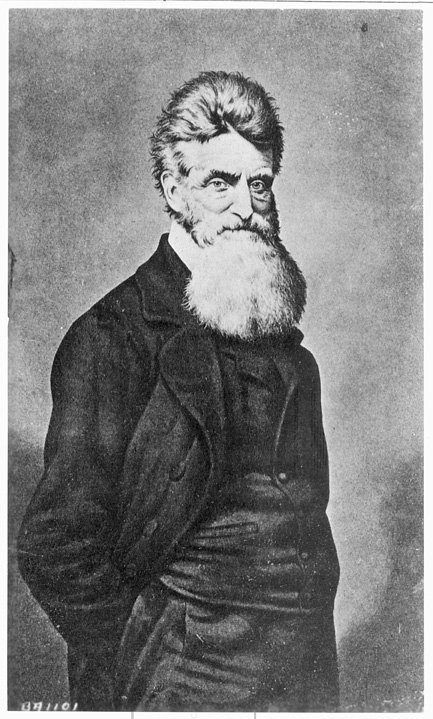
For Southerners, Brown was the embodiment of all their fear—a white man willing to die to end slavery. For many Northerners, he was a prophet of righteousness. (111-BA-1101)
As we celebrate the beginning of the sesquicentennial of the American Civil War, it is worthwhile to remember, and contemplate, the most important figure in the struggle against slavery immediately before the war: John Brown.
When Brown was hanged in 1859 for his raid on Harpers Ferry, Virginia, many saw him as the harbinger of the future. For Southerners, he was the embodiment of all their fears—a white man willing to die to end slavery—and the most potent symbol yet of aggressive Northern antislavery sentiment. For many Northerners, he was a prophet of righteousness, bringing down a terrible swift sword against the immorality of slavery and the haughtiness of the Southern master class.
My cmnt: Click the link above to read the whole, very informative article. In his speech Lincoln did not want to add any fire to Southern rhetoric and fears incited by John Brown.
In the end, we properly view Brown with mixed emotions: admiring him for his dedication to the cause of human freedom, marveling at his willingness to die for the liberty of others, yet uncertain about his methods, and certainly troubled by his incompetent tactics at Harpers Ferry.
Perhaps we end up accepting the argument of the abolitionist lawyer and later governor of Massachusetts, John A. Andrew, who declared “whether the enterprise of John Brown and his associates in Virginia was wise or foolish, right or wrong; I only know that, whether the enterprise itself was the one or the other, John Brown himself is right.”
============================================================
Some of you admit that no Republican designedly aided or encouraged the Harper’s Ferry affair, but still insist that our doctrines and declarations necessarily lead to such results. We do not believe it. We know we hold to no doctrine, and make no declaration, which were not held to and made by “our fathers who framed the Government under which we live.” You never dealt fairly by us in relation to this affair. When it occurred, some important State elections were near at hand, and you were in evident glee with the belief that, by charging the blame upon us, you could get an advantage of us in those elections. The elections came, and your expectations were not quite fulfilled.
Every Republican man knew that, as to himself at least, your charge was a slander, and he was not much inclined by it to cast his vote in your favor. Republican doctrines and declarations are accompanied with a continual protest against any interference whatever with your slaves, or with you about your slaves. Surely, this does not encourage them to revolt. True, we do, in common with “our fathers, who framed the Government under which we live,” declare our belief that slavery is wrong; but the slaves do not hear us declare even this. For anything we say or do, the slaves would scarcely know there is a Republican party. I believe they would not, in fact, generally know it but for your misrepresentations of us, in their hearing. In your political contests among yourselves, each faction charges the other with sympathy with Black Republicanism; and then, to give point to the charge, defines Black Republicanism to simply be insurrection, blood and thunder among the slaves.
Slave insurrections are no more common now than they were before the Republican party was organized. What induced the Southampton insurrection, twenty-eight years ago, in which, at least three times as many lives were lost as at Harper’s Ferry? You can scarcely stretch your very elastic fancy to the conclusion that Southampton was “got up by Black Republicanism.” In the present state of things in the United States, I do not think a general, or even a very extensive slave insurrection is possible. The indispensable concert of action cannot be attained. The slaves have no means of rapid communication; nor can incendiary freemen, black or white, supply it. The explosive materials are everywhere in parcels; but there neither are, nor can be supplied, the indispensable connecting trains.
Much is said by Southern people about the affection of slaves for their masters and mistresses; and a part of it, at least, is true. A plot for an uprising could scarcely be devised and communicated to twenty individuals before some one of them, to save the life of a favorite master or mistress, would divulge it. This is the rule; and the slave revolution in Hayti was not an exception to it, but a case occurring under peculiar circumstances. The gunpowder plot of British history, though not connected with slaves, was more in point. In that case, only about twenty were admitted to the secret; and yet one of them, in his anxiety to save a friend, betrayed the plot to that friend, and, by consequence, averted the calamity. Occasional poisonings from the kitchen, and open or stealthy assassinations in the field, and local revolts extending to a score or so, will continue to occur as the natural results of slavery; but no general insurrection of slaves, as I think, can happen in this country for a long time. Whoever much fears, or much hopes for such an event, will be alike disappointed.
In the language of Mr. Jefferson, uttered many years ago, “It is still in our power to direct the process of emancipation, and deportation, peaceably, and in such slow degrees, as that the evil will wear off insensibly; and their places be, pari passu, filled up by free white laborers. If, on the contrary, it is left to force itself on, human nature must shudder at the prospect held up.”
Mr. Jefferson did not mean to say, nor do I, that the power of emancipation is in the Federal Government. He spoke of Virginia; and, as to the power of emancipation, I speak of the slaveholding States only. The Federal Government, however, as we insist, has the power of restraining the extension of the institution – the power to insure that a slave insurrection shall never occur on any American soil which is now free from slavery.
John Brown’s effort was peculiar. It was not a slave insurrection. It was an attempt by white men to get up a revolt among slaves, in which the slaves refused to participate. In fact, it was so absurd that the slaves, with all their ignorance, saw plainly enough it could not succeed. That affair, in its philosophy, corresponds with the many attempts, related in history, at the assassination of kings and emperors. An enthusiast broods over the oppression of a people till he fancies himself commissioned by Heaven to liberate them. He ventures the attempt, which ends in little else than his own execution. Orsini’s attempt on Louis Napoleon, and John Brown’s attempt at Harper’s Ferry were, in their philosophy, precisely the same. The eagerness to cast blame on old England in the one case, and on New England in the other, does not disprove the sameness of the two things.
And how much would it avail you, if you could, by the use of John Brown, Helper’s Book, and the like, break up the Republican organization? Human action can be modified to some extent, but human nature cannot be changed. There is a judgment and a feeling against slavery in this nation, which cast at least a million and a half of votes. You cannot destroy that judgment and feeling – that sentiment – by breaking up the political organization which rallies around it. You can scarcely scatter and disperse an army which has been formed into order in the face of your heaviest fire; but if you could, how much would you gain by forcing the sentiment which created it out of the peaceful channel of the ballot-box, into some other channel? What would that other channel probably be? Would the number of John Browns be lessened or enlarged by the operation?
But you will break up the Union rather than submit to a denial of your Constitutional rights.
That has a somewhat reckless sound; but it would be palliated, if not fully justified, were we proposing, by the mere force of numbers, to deprive you of some right, plainly written down in the Constitution. But we are proposing no such thing.
When you make these declarations, you have a specific and well-understood allusion to an assumed Constitutional right of yours, to take slaves into the federal territories, and to hold them there as property. But no such right is specifically written in the Constitution. That instrument is literally silent about any such right. We, on the contrary, deny that such a right has any existence in the Constitution, even by implication.
Your purpose, then, plainly stated, is that you will destroy the Government, unless you be allowed to construe and enforce the Constitution as you please, on all points in dispute between you and us. You will rule or ruin in all events.
This, plainly stated, is your language. Perhaps you will say the Supreme Court has decided the disputed Constitutional question in your favor. Not quite so. But waiving the lawyer’s distinction between dictum and decision, the Court have decided the question for you in a sort of way. The Court have substantially said, it is your Constitutional right to take slaves into the federal territories, and to hold them there as property. When I say the decision was made in a sort of way, I mean it was made in a divided Court, by a bare majority of the Judges, and they not quite agreeing with one another in the reasons for making it; that it is so made as that its avowed supporters disagree with one another about its meaning, and that it was mainly based upon a mistaken statement of fact – the statement in the opinion that “the right of property in a slave is distinctly and expressly affirmed in the Constitution.”
An inspection of the Constitution will show that the right of property in a slave is not “distinctly and expressly affirmed” in it. Bear in mind, the Judges do not pledge their judicial opinion that such right is impliedly affirmed in the Constitution; but they pledge their veracity that it is “distinctly and expressly” affirmed there – “distinctly,” that is, not mingled with anything else – “expressly,” that is, in words meaning just that, without the aid of any inference, and susceptible of no other meaning.
If they had only pledged their judicial opinion that such right is affirmed in the instrument by implication, it would be open to others to show that neither the word “slave” nor “slavery” is to be found in the Constitution, nor the word “property” even, in any connection with language alluding to the things slave, or slavery; and that wherever in that instrument the slave is alluded to, he is called a “person;” – and wherever his master’s legal right in relation to him is alluded to, it is spoken of as “service or labor which may be due,” – as a debt payable in service or labor. Also, it would be open to show, by contemporaneous history, that this mode of alluding to slaves and slavery, instead of speaking of them, was employed on purpose to exclude from the Constitution the idea that there could be property in man.
To show all this, is easy and certain.
When this obvious mistake of the Judges shall be brought to their notice, is it not reasonable to expect that they will withdraw the mistaken statement, and reconsider the conclusion based upon it?
And then it is to be remembered that “our fathers, who framed the Government under which we live” – the men who made the Constitution – decided this same Constitutional question in our favor, long ago – decided it without division among themselves, when making the decision; without division among themselves about the meaning of it after it was made, and, so far as any evidence is left, without basing it upon any mistaken statement of facts.
Under all these circumstances, do you really feel yourselves justified to break up this Government unless such a court decision as yours is, shall be at once submitted to as a conclusive and final rule of political action? But you will not abide the election of a Republican president! In that supposed event, you say, you will destroy the Union; and then, you say, the great crime of having destroyed it will be upon us! That is cool. A highwayman holds a pistol to my ear, and mutters through his teeth, “Stand and deliver, or I shall kill you, and then you will be a murderer!”
To be sure, what the robber demanded of me – my money – was my own; and I had a clear right to keep it; but it was no more my own than my vote is my own; and the threat of death to me, to extort my money, and the threat of destruction to the Union, to extort my vote, can scarcely be distinguished in principle.
A few words now to Republicans. It is exceedingly desirable that all parts of this great Confederacy shall be at peace, and in harmony, one with another. Let us Republicans do our part to have it so. Even though much provoked, let us do nothing through passion and ill temper. Even though the southern people will not so much as listen to us, let us calmly consider their demands, and yield to them if, in our deliberate view of our duty, we possibly can. Judging by all they say and do, and by the subject and nature of their controversy with us, let us determine, if we can, what will satisfy them.
Will they be satisfied if the Territories be unconditionally surrendered to them? We know they will not. In all their present complaints against us, the Territories are scarcely mentioned. Invasions and insurrections are the rage now. Will it satisfy them, if, in the future, we have nothing to do with invasions and insurrections? We know it will not. We so know, because we know we never had anything to do with invasions and insurrections; and yet this total abstaining does not exempt us from the charge and the denunciation.
The question recurs, what will satisfy them? Simply this: We must not only let them alone, but we must somehow, convince them that we do let them alone. This, we know by experience, is no easy task. We have been so trying to convince them from the very beginning of our organization, but with no success. In all our platforms and speeches we have constantly protested our purpose to let them alone; but this has had no tendency to convince them. Alike unavailing to convince them, is the fact that they have never detected a man of us in any attempt to disturb them.
These natural, and apparently adequate means all failing, what will convince them?
This, and this only: cease to call slavery wrong, and join them in calling it right. And this must be done thoroughly – done in acts as well as in words. Silence will not be tolerated – we must place ourselves avowedly with them. Senator Douglas’ new sedition law must be enacted and enforced, suppressing all declarations that slavery is wrong, whether made in politics, in presses, in pulpits, or in private. We must arrest and return their fugitive slaves with greedy pleasure. We must pull down our Free State constitutions. The whole atmosphere must be disinfected from all taint of opposition to slavery, before they will cease to believe that all their troubles proceed from us.
I am quite aware they do not state their case precisely in this way. Most of them would probably say to us, “Let us alone, do nothing to us, and say what you please about slavery.” But we do let them alone – have never disturbed them – so that, after all, it is what we say, which dissatisfies them. They will continue to accuse us of doing, until we cease saying.
I am also aware they have not, as yet, in terms, demanded the overthrow of our Free-State Constitutions. Yet those Constitutions declare the wrong of slavery, with more solemn emphasis, than do all other sayings against it; and when all these other sayings shall have been silenced, the overthrow of these Constitutions will be demanded, and nothing be left to resist the demand. It is nothing to the contrary, that they do not demand the whole of this just now. Demanding what they do, and for the reason they do, they can voluntarily stop nowhere short of this consummation.
Holding, as they do, that slavery is morally right, and socially elevating, they cannot cease to demand a full national recognition of it, as a legal right, and a social blessing.
Nor can we justifiably withhold this, on any ground save our conviction that slavery is wrong.
If slavery is right, all words, acts, laws, and constitutions against it, are themselves wrong, and should be silenced, and swept away. If it is right, we cannot justly object to its nationality – its universality; if it is wrong, they cannot justly insist upon its extension – its enlargement. All they ask, we could readily grant, if we thought slavery right; all we ask, they could as readily grant, if they thought it wrong. Their thinking it right, and our thinking it wrong, is the precise fact upon which depends the whole controversy. Thinking it right, as they do, they are not to blame for desiring its full recognition, as being right; but, thinking it wrong, as we do, can we yield to them?
Can we cast our votes with their view, and against our own? In view of our moral, social, and political responsibilities, can we do this?
Wrong as we think slavery is, we can yet afford to let it alone where it is, because that much is due to the necessity arising from its actual presence in the nation; but can we, while our votes will prevent it, allow it to spread into the National Territories, and to overrun us here in these Free States? If our sense of duty forbids this, then let us stand by our duty, fearlessly and effectively. Let us be diverted by none of those sophistical contrivances wherewith we are so industriously plied and belabored – contrivances such as groping for some middle ground between the right and the wrong, vain as the search for a man who should be neither a living man nor a dead man – such as a policy of “don’t care” on a question about which all true men do care – such as Union appeals beseeching true Union men to yield to Disunionists, reversing the divine rule, and calling, not the sinners, but the righteous to repentance – such as invocations to Washington, imploring men to unsay what Washington said, and undo what Washington did.
Neither let us be slandered from our duty by false accusations against us, nor frightened from it by menaces of destruction to the Government nor of dungeons to ourselves. LET US HAVE FAITH THAT RIGHT MAKES MIGHT, AND IN THAT FAITH, LET US, TO THE END, DARE TO DO OUR DUTY AS WE UNDERSTAND IT.


 Lord Buckbeak: "Will you come into my parlor?," said the Spider to the Fly.
Leave a comment