Diplomacy failed to stop Pyongyang from getting the bomb. Trump didn’t make the same mistake.
By The Editorial Board – April 3, 2026 at 5:44 pm ET – Wall Street Journal – (6 min)
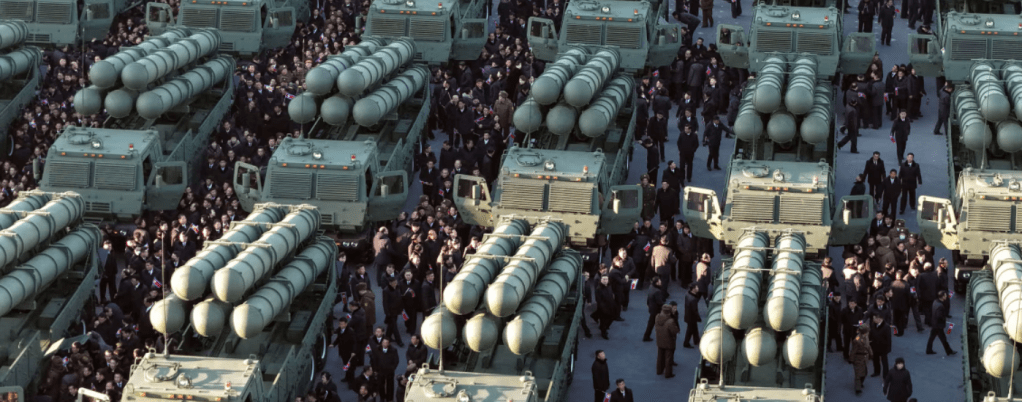
This photo provided by the North Korean government shows new launch vehicles for nuclear-capable short-range missiles during a military ceremony in Pyongyang in February. KOREAN CENTRAL NEWS AGENCY/KOREA NEWS SERVICE/ASSOCIATED PRESS
President Trump decided to use military force to stop Iran from getting a nuclear weapon after diplomacy failed. This was a choice, as critics are quick to note, and a risky one. But the strangely forgotten U.S. experience with North Korea suggests the alternatives were even riskier.
That history is worth recounting today to show the limits of nuclear diplomacy with a determined foe, as well as what happens when the U.S. puts conflict-avoidance above all else.
In 1984 the CIA warned that North Korea could pursue weapons-grade plutonium. Under global pressure, dictator Kim Il Sung joined the Nuclear Non-Proliferation Treaty (NPT) the next year. This was seen as a sign of Pyongyang’s peaceful intent, even as it delayed adopting nuclear safeguards.
North Korea continued to advance its nuclear program. In 1993 it denied inspectors access to camouflaged nuclear sites, leaving the world to guess whether it had separated plutonium for bombs. Facing tough questions, Pyongyang announced it would withdraw from the NPT.
The Clinton Administration was able to talk Kim down for a time, but Pyongyang quarreled with the International Atomic Energy Agency and in 1994 unloaded spent fuel rods from its Yongbyon reactor without IAEA monitoring. Would the fuel next be reprocessed to produce bomb-grade plutonium? No one knew.
Bill Clinton threatened sanctions. The U.S. military drew up plans for strikes on nuclear installations, and Defense Secretary Bill Perry presented a plan for a large military buildup in the region. Mr. Clinton canceled talks and deployed Patriot missile-defense systems to South Korea. John McCain backed the use of force from the Senate, and the White House was trending toward military options.
Enter Jimmy Carter. The former President informed the Clinton Administration that he intended to take up a prior offer from the North Koreans to visit and try to defuse the situation. Mr. Clinton decided to let Carter proceed as a private citizen, thinking it might give Kim a chance to back down. Instead Mr. Clinton found himself cornered politically.
Carter feared conflict above all and even opposed sanctions. He went beyond what he had been authorized by Mr. Clinton to discuss and announced a tentative agreement with Kim—on CNN. The press and foreign-policy establishment hailed nuclear peace in our time.
Military options came off the table and Mr. Clinton embraced the deal, which became the 1994 Agreed Framework. North Korea consented to freeze its illicit nuclear work and eventually allow full inspections in exchange for a multibillion-dollar package of civilian nuclear power and oil. The U.S. set aside the question of whether North Korea had a bomb’s worth of plutonium and ignored its NPT violations. The regime would mellow over time with economic engagement, some said. Besides, who wanted another Korean war?
For a time the deal seemed to work. Yet in 1996 rogue Pakistani nuclear scientist A.Q. Khan visited Pyongyang to help with uranium enrichment, an alternative path to a bomb that North Korea pursued covertly. Weaponization research continued on the sly. The regime’s intent to build a bomb never changed.
In 2002 the George W. Bush Administration confronted North Korea over its enrichment program, and Pyongyang reneged on the Agreed Framework. Kim Jong Il, the son of Kim Il Sung, expelled inspectors, withdrew from the NPT and resumed plutonium work. Mr. Bush employed threats, sanctions and diplomacy but ultimately ruled out the use of force. North Korea quadrupled its plutonium stockpile and in 2006 conducted its first nuclear test.
After that, U.S. military options became riskier. North Korea pressed on. It is now believed to possess some 50 warheads, and it tests ICBMs that will one day be able to reach the continental U.S. The latest missile test came Sunday.
The lesson is that U.S. Presidents waited too long to stop North Korea. The risks of war were always said to be too high, it was never a good time, and there was always another diplomatic option to exhaust. North Korea is now a nuclear power, which means it could escalate to devastating effect in any conflict.
***
This is more or less the path at least four Presidents took with Iran. Talks, deals, and economic relief were in ample evidence, with sanctions used as a negotiating tactic but without a credible threat of force. Like Pyongyang, Tehran agreed to a deal that didn’t require it to come clean about past nuclear activities and left nuclear infrastructure intact for the future. Iran’s regime never stopped pursuing the bomb.
Donald Trump is the only President who had the courage to attack Iran’s nuclear program and allow Israel to do so, in June’s 12-day war. The Iranian missile arsenal he now acts to degrade has its parallel in North Korea’s artillery, which deterred U.S. action against Pyongyang’s nuclear program by aiming at Seoul.
Also on the U.S. target list are Iran’s buried stockpiles of fissile material and its construction site beneath Pickaxe Mountain, where it later hopes to enrich the material. The former perhaps can be watched, but it would be a mistake to end the war with the latter intact.
We don’t know how the current Iran conflict will end, but we do know Iran’s radical regime will not have a nuclear program when it’s over. This has made the world a safer place.
 Lord Buckbeak: "Will you come into my parlor?," said the Spider to the Fly.
Leave a comment