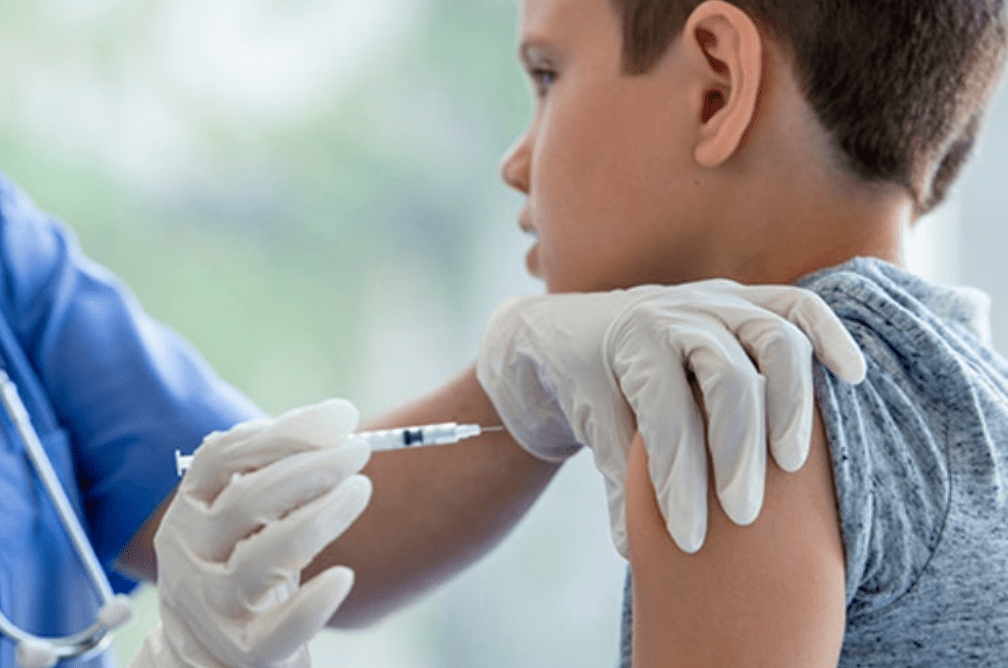
Even their FAVORED studies suggest influenza “vaccines” (they’re not vaccines, they don’t provide immunity) are a terrible bet.
Alex Berenson – Mar 26, 2026 – his substack (i’m a subscriber)
One child experienced nephrotic syndrome 13 days after the second vaccine dose; the child subsequently developed anaphylactic shock and venous thrombosis as iatrogenic events that occurred during hospitalization.1
Flu shots are safe for kids.
Except when they’re not.
Faced with massive parental resistance, health bureaucrats and the pediatricians who love them have largely stopped pushing mRNA Covid jabs. But (at least in the United States), they keep pressing for inactivated virus flu “vaccines.”
Unfortunately, the evidence for flu jabs is far weaker than parents — and physicians — realize. In January 2023, Dr. Anthony S. Fauci (yes, THAT Dr. Anthony S. Fauci) wrote they probably shouldn’t be licensed. No exaggeration.
Fauci’s exact words, which I reported in a 2023 article:
“After more than 60 years of experience with influenza vaccines, very little improvement in vaccine prevention of infection has been noted… our best approved influenza vaccines would be inadequate for licensure for most other vaccine-preventable diseases.” [emphasis added]
—
(Never inadequate. Always fighting for the truth. With your help.)
Or support work like this with a one-time donation
—
Yet public health experts will not drop what is now a failed, decades-long experiment to push the shots on children, including healthy kids at very low risk from influenza.
They won a dubious victory last week when a Biden-appointed federal judge in Boston blocked Robert F. Kennedy Jr. and the Trump administration from removing flu jabs from the federally recommended childhood vaccine schedule.
Why?
The flu vaccine — like the Covid vaccine — does not really qualify as a vaccine at all. At best, it provides temporary and partial protection from a illness that nearly all kids beat after a couple of days without needing more than rest, fluids, and possibly over-the-counter fever-reducing medicines.
Yes, in very, very rare cases, influenza can send healthy children to the hospital or even kill them. But no one really knows why or what kids are at risk. And because those cases are so rare, we don’t have proof from clinical trials that flu shots reduce serious complications of influenza or hospitalizations in kids.
At most, the trials tend to show that the shots reduce the risk of mild or moderate influenza — at a cost of serious side effects.
—
(This won’t hurt a bit. Okay it might.)

—
A recent trial that flu shot advocates point to as evidence for the shots proves the point.
Between 2011 and 2014, the giant British drugmaker GlaxoSmithKline tested its flu shot in 12,000 toddlers aged 6 to 36 months. About 6,000 kids received the shot, while another 6,000 received a different vaccine. (Notably, the trial was not truly placebo-controlled, making it impossible to define the shot’s side effects compared to a placebo.)
In 2018, the researchers reported the results of the trial. They called it a success. About 90 kids who got the shot suffered “moderate-to-severe” influenza — compared to 240 who didn’t, implying the vaccine offered about 63 percent protection.
That 63 percent figure seems decent, though it is far below the 95 percent protection the Covid jabs seemed to offer in their clinical trials (a figure that turned out to be a fantasy), or the near-complete lifetime protection that vaccines like measles offer.
But the devil is in the details.
Only five of the 12,000 toddlers had severe cases of flu; two were jabbed, three were not. Not one flu case required intensive care.
On the other hand, the researchers reported six serious health crises likely caused by the vaccines, including “facial paralysis,” autoimmune-caused platelet destruction, and “nephrotic syndrome,” essentially partial kidney failure. And in a footnote on page 22 of the 23-page appendix to the trial, the researchers disclosed that the kidney crisis had led to “anaphylactic shock and venous thrombosis.”
—
The real picture was even grimmer.
The 2018 paper focused only on flu diagnoses. But in a followup 2019 paper, the researchers disclosed all “influenza-like episodes” in both groups — in other words, all episodes of fever and cough that parents reported.
Even though the flu shot provided some protection from influenza, it made essentially no difference to overall respiratory sickness in these toddlers. Whether they received the shot or not, the kids had about a 50-50 chance of getting sick (and those got sick had about a 50-50 chance of being sick more than once).
Remember, only about 4 percent of the toddlers in the unvaccinated group suffered “moderate-to-severe” flu (compared to 1.5 percent in the vaccinated group). Kids are germ factories, as every parent knows. Even eliminating all flu wouldn’t have mattered to their overall health.
—
(Stop licking your hands, junior!)

ILE: Influenza-like episode (as opposed to a confirmed case of flu).
IIV4: the flu vaccine.
(SOURCE)
—
One final point that flu jab advocates seem to ignore.
Vaccines for illnesses like measles offer decades-long or lifelong protection. The flu shot, at best, offers a few months.
And so Jab fans typically recommend yearly shots for almost everyone under 18 and over 50, translating into over 40 jabs at 75. But no one gets the flu every year — the Centers for Disease Control’s own statistics suggest that in an average year, the risk is about 10 percent.
That’s a (near) 100 percent chance of side effects against an illness that you — or your child — probably won’t get before the protection fades. Why take that bet?
—
(Helping even the odds. For pennies a day.)
Or, if subscriptions aren’t your thing, just donate!
—
Meanwhile, as far as I know, drugmakers have never examined the potential harms of receiving annual near-identical immunogenic shots starting as an infant and continuing for decades.
This isn’t even a close call. Even a tiny risk of severe side effects is too much, given the essentially non-existent benefits of these jabs. Pushing them on healthy kids benefits no one except the companies that make them (and, to a lesser extent, the offices that administer them).
If public health groups and pediatricians really want to regain the confidence of parents, they need to admit the truth — and stop pushing flu shots on healthy kids.
From an appendix to a 2018 paper on the clinical trial of a GlaxoSmithKline flu shot for toddlers aged 6-36 months. The child was not further identified.
Discussion about this post
At the risk of redundancy because I have posted this previously, I am 79 and never took the Covid shot and only once had a flu shot–the year our middle grandson was born with serious heart defects–and doctors said we could not be around him unless we were protected. By the way, he is going to be 21 and has been perfectly healthy since he had open heart surgery at the age of eight months. I have watched friends and family members who religiously get all the shots the doctors recommend–some are still getting Covid shots–get sick time and time again while my husband, who is 80, and I, just keep chugging along. So I guess my bottom line is that there are some situations where we need doctors such as our grandson’s surgery, but for the most part, I just want them to leave me alone–especially at my age.
You are so close to seeing the truth, but for some reason it evades you, Alex. Two reasons for this:
1. The manufacturers of the shot get complete liability protection.
2. Money: Manufacturers make a ton, a small part of which is used to payoff the so-called regulators. Even backdoor payoffs, such as lucrative jobs after government service, are sufficient to make the system completely corrupt.
The closest you come is when you write “Pushing them on healthy kids benefits no one except the companies that make them.” Yes, the benefits are counted in the billions (of dollars), combined with the complete lack of responsibility or liability for any harms.
 Lord Buckbeak: "Will you come into my parlor?," said the Spider to the Fly.
Leave a comment