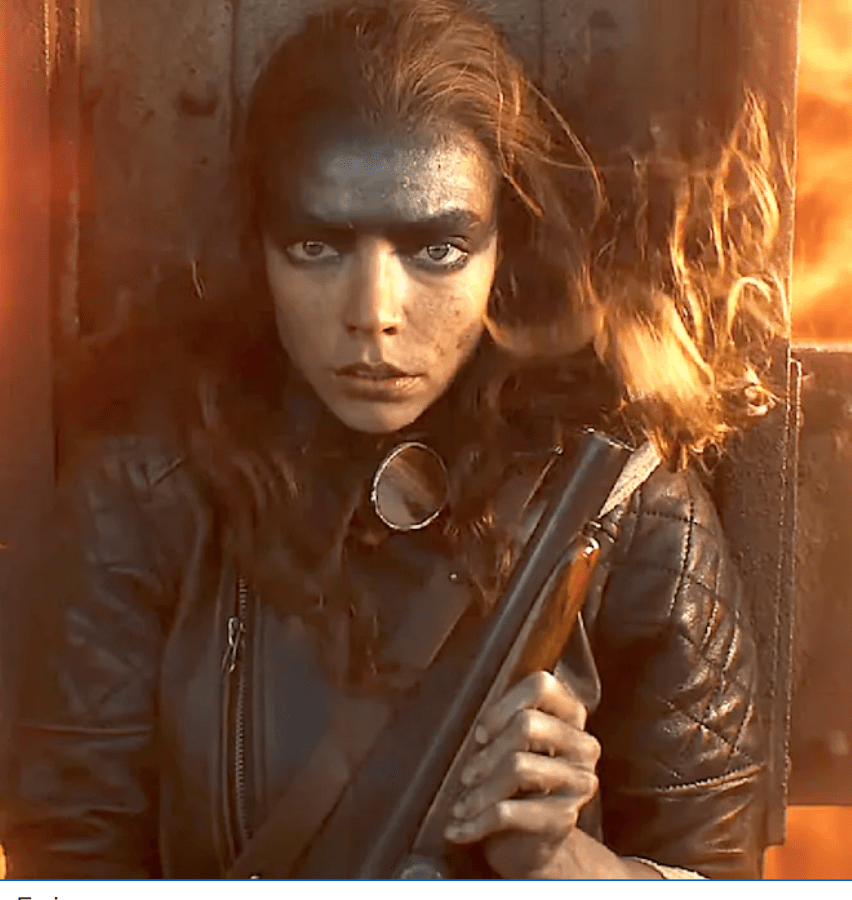
Furiosa: A Mad Max Saga received an R rating from the Motion Picture Association (MPA) primarily for sequences of strong violence and grisly images. As a prequel to Mad Max: Fury Road, it maintains the gritty, post-apocalyptic tone of the franchise, which often features intense, graphic action and mature themes.
Specific reasons for the R rating include:
- Intense Action and Violence: The film features relentless, high-speed vehicular chases, brutal hand-to-hand combat, and scenes of torture.
- Grisly Images: The film contains disturbing visual elements, including, but not limited to, severed limbs, characters with gaping, bloody wounds, and scenes involving maggots on decaying flesh.
- Mature Themes: The storyline includes dark, mature subject matter such as the implication of child abuse, kidnapping, and the societal degradation of a wasteland society.
- Contextual Brutality: The world depicted in Furiosa is one where life is cheap, resulting in a dark and often disturbing atmosphere that is not considered suitable for children.
While the film has minimal sexual content and mild profanity, the intense nature of the violence and the graphic nature of the imagery are the primary drivers of the R rating.
Furiosa: A Mad Max Saga


148 minutes ‧ R ‧ 2024
June 17, 2024 – 5 min read – Roger Ebert Film Reviews

My cmnt: I was going to write a review of this flic but having read the following review I think it will do.
My cmnt: I will add some caveats à la Robin Williams’ Genie in Aladdin: a few provisos, a couple of quid pro quos (specific stipulations, conditions, or limitations.) I thought “Mad Max: Fury Road” was gross, boring, slightly disgusting and fairly ridiculous. I would not recommend Fury Road to anyone. This prequel to Fury Road is more believable and a much better film in virtually every aspect.
My cmnt: Women cannot and will never be able to compete with men physically. Charlize Theron’s character does so (and is therefore unbelievable) whereas Anya Taylor-Joy‘s character competes by outsmarting most of the men, quick thinking on her feet, dexterity, gun play and her ability to endure suffering.
My cmnt: The movie is too long and loses steam in a few places. I would edit down a few spots to leave more room to develop the love story between Furiosa and Praetorian Jack which actually had great potential to add depth to both characters. Quoting critic Anthony Whyte: A bigger issue is the love story subplot. Furiosa gets a love interest, but the whole thing feels kinda forced. Maybe it’s because we already know where Furiosa’s heart lies (hint: it ain’t with some dude). The romance subplot feels like a detour that takes away from the main story. It’s not terrible, but it doesn’t quite land.
My cmnt: When the movie gives a quick overview of war it tries to insinuate that religion and Christianity caused the worst of the world’s war. It completely ignores Greece, Rome, Persia and the Mongols. While Islam is guilty of a 1400 year Jihad in attempting to found a worldwide caliphate the worst of the world’s wars are due to either quests to enslave the conquered or attempts to expand an empire’s territory. Christian America is the ONLY country in the history of the world to forgive, rebuild and make friends with two evil, aggressor nations it vanquished in war.
“The question is, do you have what it takes to make it epic,” says an undaunted Chris Hemsworth. It’s a call to action that comes toward the end of “Furiosa: A Mad Max Saga,” George Miller’s apocalyptic epic western prequel to “Mad Max: Fury Road” that could, of course, be directed at Miller himself. Because this film is here to give you more: more gravity-defying chases, more high-flying stunts, more deeply felt pathos, and, somehow, an even greater spirit to push the limits of what the frame can hold—employing Christian iconography and Arthurian legend to craft an entrancing story that still manages to surprise, even if we already know of the bleak future its guiding us toward. It’s simply one of the best prequels ever made.
Broken into five chapters, each denser than the last, the film begins with a very young Furiosa (Alyla Browne) picking fruit from a tree near her bucolic homeland “The Green Place.” A biker gang arrives to forage the land. And though Furiosa ably attempts to sabotage their bikes, she is captured, causing her mother (Charlee Fraser) to venture out into the desert wasteland to retrieve her. A crazed chase ensues, one of the film’s many expansive set pieces, that sees Furiosa’s mother pursuing her daughter’s kidnappers over sand dunes and through a sandstorm, to the steps of a hideout belonging to the messianic figure Dementus (Chris Hemsworth). This is the beginning of a decade-long feud between Furiosa and Dementus that involves revenge, grief, and the desire to return home.
To do any further summarizing would, of course, not only spoil the film, but would also say that the narrative beats are necessary. They’re not. That doesn’t mean “Furiosa” is illogical, rather that, more than anything, Miller is telling an emotional story of how a once virtuous child became a hardened woman. That kind of arc matches well with the film’s operatic sensibilities as we’re introduced to the origins of wasteland fortresses like Gas Town and Bullet Farm, and taken to the Citadel helmed by a younger, more imposing Immortan Joe (Lachy Hulme). Other characters like Immortan Joe’s bumbling sons Rictus (Nathan Jones) and Scrotus (Josh Helmen) return, and tips of the hat are given to fan favorites from “Fury Road.”
Surprisingly, the older Furiosa (a striking Anya Taylor-Joy) doesn’t appear until an hour or so in the film. That might inspire immediate disappointment in some, but it shouldn’t: Because Alyla Browne as the adolescent Furiosa is so absorbing, often recalling a young Jodie Foster in her mixture of otherworldly intelligence and relentless confidence. The groundwork she lays is so seamless that by the time we leap forward to Taylor-Joy’s take on the character, it required a few beats before I could tell the difference between the two actresses.
Miller is so assured at reading an audience, he even crafts an elongated chase that sees Furiosa driving across the wasteland with Praetorian Jack (Tom Burke) on an oil run that gives Taylor-Joy and the character the perfect entrance: a hard-push in for a worthy close-up. Though Burke is on screen for a relatively short time, he and Taylor-Joy build quick chemistry as two lost souls who believe that paradise still exists somewhere in the world if they follow the map of stars tattooed on Furiosa’s forearm.
If it feels like Hemsworth is an also-ran, he isn’t. Which is odd to say because he is saddled with a terrible wig and an obtrusive prosthetic nose, and even disappears for long stretches. Still, whenever he does show up, he might be the best part of “Furiosa.” He doesn’t just get the best, more instantly quotable lines. He has never been more physically commanding, first as a poised messiah and swindler, then as a blow-hard politician, then as an emperor with no clothes on. The combination of Dementus’ wit, callousness, and cold calculations is a persona Hemsworth has worked on for some time and it all comes together here for an unforgettable villain turn.
I can certainly nitpick about what elements I prefer in “Fury Road” as opposed to “Furiosa.” There’s far more VFX in the latter, causing me to miss some of the thrills Miller inspired with his unflinching use of practical effect. I also think that “Fury Road” acts on a subtler thematic level, which is saying something, because the visual language in that film—for as immaculate as the craftsmanship is—basically bashes you over the head. “Furiosa” goes one step further; every line of dialogue flags the metaphorical importance of every scene. And yet, it’s easy to ignore these tiny grievances not only because you’re left marveling at the big swing Miller is taking, but also because his interest in this world, these characters, and this type of big, bold storytelling is so infectious. There’s also a character named piss boy, so this really is a movie with something for everyone.
No one knows how to do scale better than Miller. Margaret Sixel and Eliot Knapman’s editing is breathtakingly seamless—quickly building both rapport between characters and gnarly deaths with equal tenacity—to the point that DP Simon Duggan’s eloquent photography of these desolate death valleys, matched by composer Tom Holkenborg deafeningly propulsive score, wholly immerses you in way that isn’t needlessly showing. Each large set piece feels necessary, aware of space and story, and brimming with a camera that takes delight in knowing exactly what kill shot or angle of the many battles we want to take in as it swoops between lunging bodies, massive infernos, monster trucks, big rigs, and over sand dunes.
Much will be written about “Furiosa” on a thematic level, such as how it subverts the Biblical apple scene for a well-earned ending or how it speaks of our present environmental, militaristic, and regressive political reality—particularly why we go to war and the fecklessness of the leaders who take us there. But this is also just a big, entertaining popcorn movie, told with a sense of adventure and play. Miller isn’t here for tawdry melodrama, algorithmic plotting, or art designed for the small screen. “Furiosa” aims to blow you away. And it does. To Valhalla and beyond.
This review was filed from the premiere at the Cannes Film Festival. It opens on May 24th.
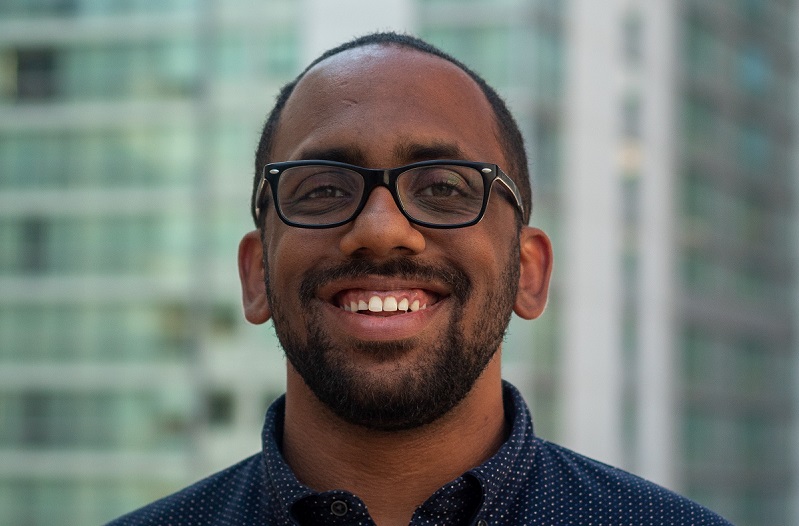
Robert Daniels
Robert Daniels is Associate Editor at RogerEbert.com, and has written for the New York Times, the Los Angeles Times,Reverse Shot, Screen Daily, and the Criterion Collection. He has covered film festivals ranging from Cannes to Sundance to Toronto to the Berlinale and Locarno. He lives in Chicago, and is a member of the Chicago Film Critics Association.
Furiosa: A Mad Max Saga
148 minutes ‧ R ‧ 2024
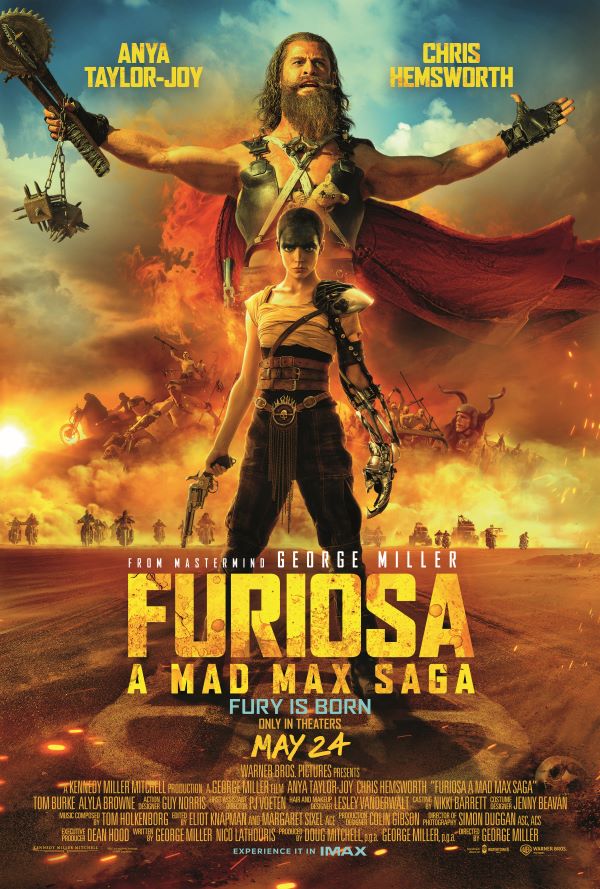
Cast
- Anya Taylor-Joy as Imperator Furiosa
- Chris Hemsworth as Warlord Dementus
- Tom Burke as Praetorian Jack
- Lachy Hulme as Immortan Joe / Rizzdale Pell
- Angus Sampson as The Organic Mechanic
- Nathan Jones as Rictus Erectus
- Editor
- Director
- Writer
- Director of Photography
- Original Music Composer
 Lord Buckbeak: "Will you come into my parlor?," said the Spider to the Fly.
Leave a comment