| The New York Times – Feb. 13, 2026 | By Jancee Dunn |
My husband has an unusual “love language”: He never notices what I’m wearing.
This may not sound particularly loving, but hear me out.
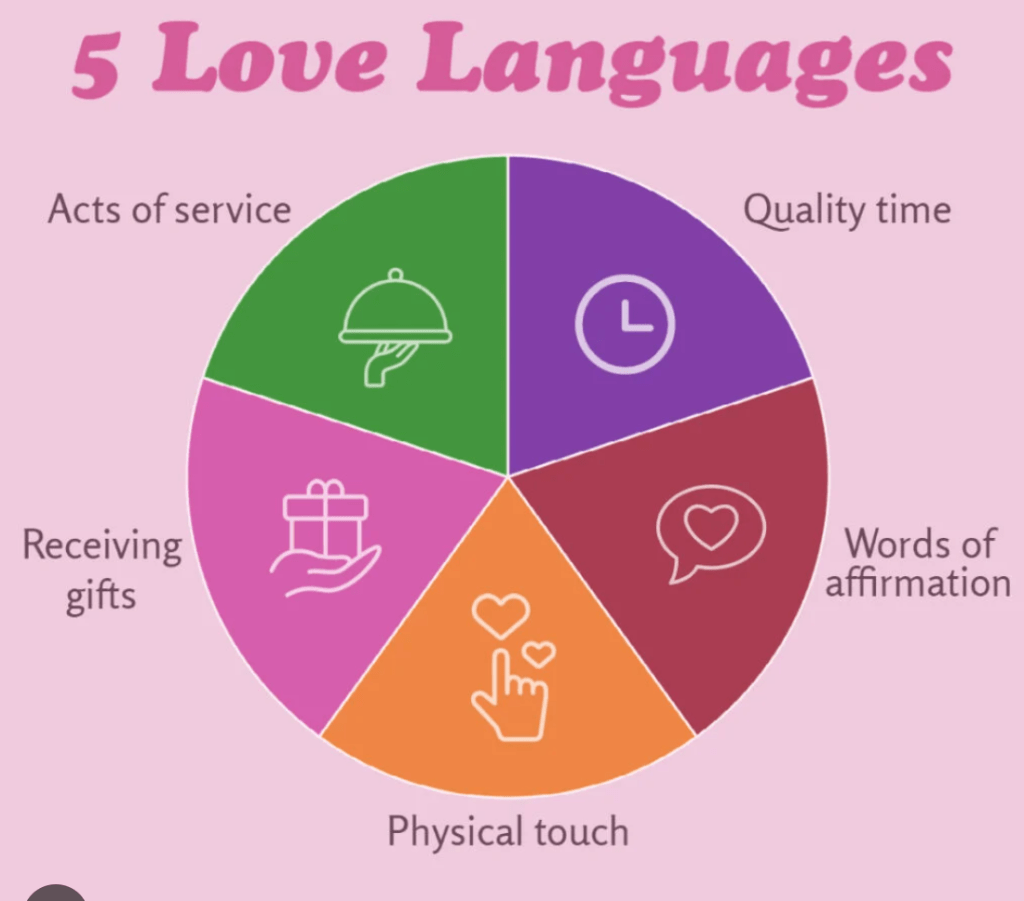
The “5 Love Languages” were conceived by Gary Chapman, a therapist and pastor, who proposed that the ways people express their love for each other fall into five categories: gifts, acts of service, compliments, quality time and physical touch.
Here is why Tom’s inattention is a love language: When I’m at work, I dress like a normal human being. During my off-hours, my look is usually “castaway.” I’ll wear the same ratty sweater, splotched with brownie batter, for days on end.
My chaotic get-ups never register with Tom, a snappy dresser even at home. When I asked him why, he smirked and said, “I see the inner you.” (That’s probably his coping mechanism.)
Nicole McNichols, a professor of human sexuality at the University of Washington and author of “You Could Be Having Better Sex,” cautioned that “there’s not really any solid data showing that there are these distinct love languages.”
Still, she said, they’re a good framework for communication. And the concept has become so entrenched that it seems anything can be a love language — iced coffee, for instance.
In that spirit — and in honor of Valentine’s Day — I have asked experts to suggest their own love languages.
Emotional safety
Tiffanie Henry, a psychotherapist in Atlanta, said that emotional safety “is as legit a love language as a foot rub or filling my gas tank.”
She describes it as the freedom to be open, vulnerable and completely yourself in your partner’s presence. “Think of it as a weighted blanket for your heart,” Dr. Henry said
If you tell your partner that you’re not OK, she said, the person “doesn’t shame you, try to fix you or ghost you.” And their behavior is reassuringly consistent, Dr. Henry added. “You’re not guessing who you’re getting from day to day.”
“What I see over and over in my office is that people don’t just want to be loved, they want to feel safe in that love,” she said.
Accommodating your artifacts
Emily Crews, executive director of the Martin Marty Center at the University of Chicago Divinity School, said that a love language she and her husband share is a high tolerance for the other’s mementos.
For example, Dr. Crews inherited two dolls from her grandmother that have “eyes that seem to follow you wherever you go.”
They are not shoved into a closet but prominently displayed — even though her husband admits that he “hates Harriet and Mischka,’” she said. “He calls them ‘the murder dolls.’”
Research suggests that the objects we hold close, she said, “are fundamentally part of how we understand the world and our place in it.”
The same is true of the rocking chair Dr. Crews’s husband inherited from his mother. “It doesn’t fit our style, and it takes up precious space in our house,” she said. “But it’s part of his family’s story, so it stays.”
Maintaining ‘tiny cultures’
Every relationship has its own idiosyncratic culture, or a set of “patterns, rituals and in-jokes that shape daily life,” said Paul Eastwick, a professor of psychology at the University of California, Davis.
And the way that two people construct their own tiny culture, he added, “can be a huge source of joy in a relationship.”
As an example, “sometimes I bring graphs of research data to dinner — I’m not kidding — and my partner is very excited when I do this,” said Dr. Eastwick, author of “Bonded by Evolution.” “Then we prop it up on a chair like it’s a ‘guest,’ and spend dinnertime talking about it.”
This offbeat ritual makes them both feel connected, he said. “But critically, I’m not sure that this ritual would make me feel connected in any other relationship,” he said. “It isn’t a feature of me that I need to talk about graphs at dinner. It’s a feature of us.”
Remembering your quirks
Recognizing the sometimes odd aspects of your partner’s personality is an act of love, said Jeff Guenther, a licensed professional counselor in Portland, Ore., and the author of “Big Dating Energy.”
Your partner may remember “that you hate the texture of eggplant in your mouth,” Guenther said. “Or that you avoid your dad’s calls when the Cubs are losing.” It’s gratifying, he explained, when your partner not only remembers these “completely useless details,” but accommodates them and celebrates them.
“It proves that they’re actually paying attention to who you are, not just what you provide,” he said.
Goofing around
Sometimes, Dr. McNichols and her husband will wrestle. “It scares the cat, but it can be fun,” she said.
Levity “is so important in relationships,” Dr. McNichols explained. “It’s about goofing around, having inside jokes, pet nicknames,” she said.
And research shows that playfulness builds intimacy. When you’re having lighthearted fun together, she added, “you show a side of yourself to your partner that might be a little bit silly and different from what you show the world.”
Last week while I was doing laundry, I put a sock on my hand and did a sock puppet routine for Tom. I would never have believed that I’d act sillier with him now than when we met 25 years ago, but here we are.
You get older, life knocks you around a bit and you can still act foolish together. It’s nice.
 Lord Buckbeak: "Will you come into my parlor?," said the Spider to the Fly.
Leave a comment