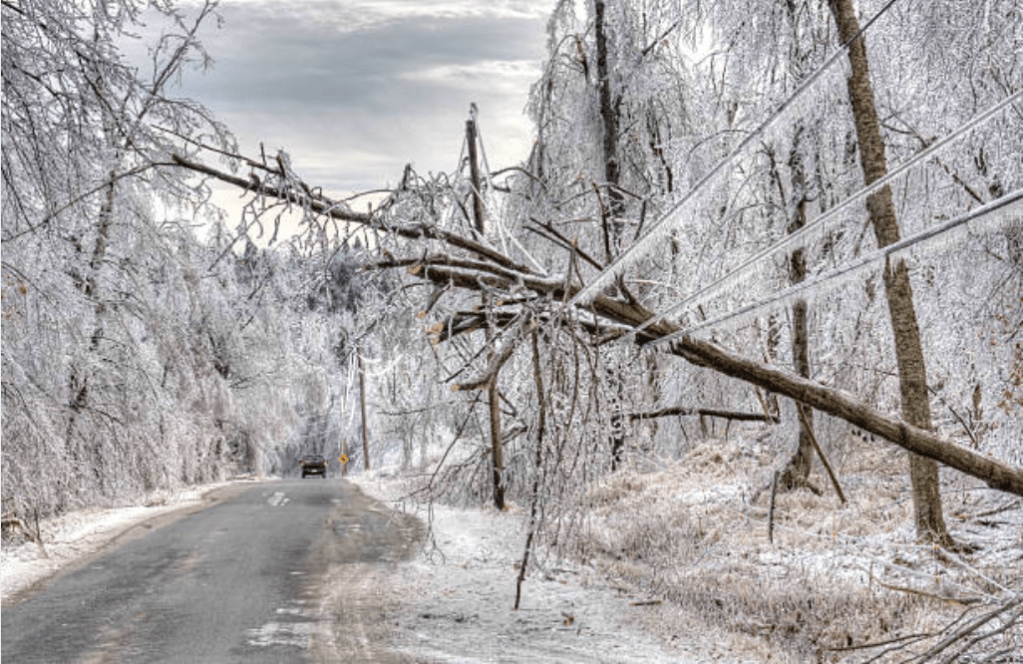
The energy source Biden tried to shut down rode to the deep-freeze rescue of the electric grid this weekend.
By The Editorial Board – Jan. 25, 2026 4:41 pm ET – Wall Street Journal
Ice dangles from an electrical line in Avondale Estates, Georgia on Sunday. Erik S Lesser/EPA/Shutterstock
The weekend’s arctic blast has put much of the U.S. grid through a stress test and served as another alert about the growing risks to electric-power reliability. Americans can be grateful the Biden crowd didn’t succeed in forcing all coal plants to shut down.
The North American Electric Reliability Corp. warned in November that “extreme winter conditions extending over a wide area could result in electricity supply shortfalls.” That’s what happened. Frigid temperatures supercharged demand in areas where Americans use electricity for heating, especially in Texas.
In the Northeast and Midwest, where more people get heat from natural gas, less fuel was available for power plants. Add weather-caused plant outages, and you have all the ingredients for a grid emergency. Grid operators, the utilities and the Trump Energy Department had to pull out all stops to keep the lights and heat on for tens of millions of Americans.
Utilities in the Midwest on Saturday directed customers to lower thermostats, unplug “nonessential appliances,” and reduce temperature settings on electric water heaters. Hope you enjoy lukewarm showers and curling up in a heavy coat with a book.
The Energy Department also waived emissions rules so fossil-fuel plants could run at maximum capacity. Early Sunday morning, coal accounted for some 40% of power in the Midwest’s MISO grid, 24% in the eastern U.S. PJM Interconnection and 18% in Texas, with most of the rest coming from natural gas and nuclear.
New York’s blockade on gas pipelines has constrained the fuel supply for power plants across New England. Power plants in the region had to resort to burning oil, which accounted for 40% of electricity at times of peak demand. Get this—the region generated more power from burning wood and trash than from wind power.
The climate crowd claims that solar, wind and batteries can replace fossil fuels, but those sources contributed little power in most places over the weekend. Wind and solar aren’t reliable during inclement weather. Batteries can discharge power only for a few hours at a time, which doesn’t much help during a storm that stretches for a day or two.
The deep-freeze energy scare underscores why the Energy Department issued emergency orders in recent months to “stop the political closure of coal plants” in the Midwest. The grid needs all the coal power it can get when temperatures plunge or skyrocket. Environmental groups have challenged the department’s orders. Is the goal to reduce carbon emissions by making Americans freeze?
 Lord Buckbeak: "Will you come into my parlor?," said the Spider to the Fly.
Leave a comment