Ranchers argue the real problem isn’t about supply, it’s the corporate giants controlling America’s meat industry
By Amanda Macias Fox News – Published – Fox

My cmnt: I’ve edited this article for clarity and accuracy. As you can see (after reading this piece) beef production and prices are more subject to supply chain disruption because of the time, land and resources needed to raise beef.
My cmnt: This article also completely failed to mention that because of the south of the border screwworm problem beef imports from Mexico have been hugely curtailed. This obviously affects the price and availability of the cheaper cuts of meat used in some hamburger and lots of Mexican-style foods.
=====================================================
From Google Ai:
The “worm” causing cattle deaths in Mexico is actually the New World screwworm (NWS), which is the larvae of a parasitic fly that burrows into open wounds on livestock. These maggots feed on living tissue, which can cause severe and deadly damage to the animal if left untreated.
Current situation:
The pest has spread through parts of Central and North America, and its presence in Mexico has prompted the US to temporarily halt cattle imports to prevent its entry into the United States.
======================================================
Four corporations — Tyson, JBS, Cargill and National Beef — anchor the U.S. beef supply chain, with pricing power that reaches from pasture to plate. As a result, the gap between what producers are paid for cattle and what consumers spend on beef has remained wide, a reflection, economists say, of how market power is distributed along the supply chain.
The frustration extends beyond farm country – Rep. Thomas Massie, R-Ky., says the dominance of multinational meatpackers is hurting both producers and consumers.
“Four corporations control 85% of the meat sold in the United States. One of these corporations is Chinese-owned and one is Brazilian-owned. American farmers are being squeezed and American consumers are being gouged,” Massie told Fox News Digital.
========================================================
My cmnt: I don’t know whose info is correct. Below is what came from Google Ai:
Tyson Foods is a publicly traded company, meaning it is owned by its shareholders, with the largest stakes held by institutional investors like Vanguard Group and BlackRock. The Tyson family, however, maintains control through its substantial interest in the Tyson Limited Partnership, which holds the controlling shares of the company. John H. Tyson is the Chairman of the Board and is a key figure in the family’s control of the company
JBS S.A. is a Brazilian multinational company that is the largest meat processing enterprise in the world, producing factory processed beef, chicken, salmon, sheep, pork, and also selling by-products from the processing of these meats. It is headquartered in São Paulo. It was founded in 1953 in Anápolis, Goiás.
Cargill, Incorporated is an American multinational food corporation based in Minnetonka, Minnesota, and incorporated in Wilmington, Delaware. Founded in 1865 by William Wallace Cargill, it is the largest privately held company in the United States in terms of revenue.
National Beef Packing Company LLC is a beef processor headquartered in Kansas City, Missouri, United States, that produces fresh, chilled and further processed beef and beef by-products for customers worldwide. The company is owned by the Brazilian multinational Marfrig.
============================================================
Massie, who raises cattle on his Kentucky ranch, warned that expanding beef imports from Argentina would only worsen those structural problems.
“Flooding the market with Argentinian beef is not the answer to these problems. An America First solution to rising beef prices is to pass my PRIME Act, which would empower American farmers to sell directly to consumers without interference from global corporate middlemen,” Massie said.
Under current federal law, beef processed at small, state-inspected facilities can’t be sold across state lines, even if it meets the same health standards as federally inspected meat. Massie’s PRIME Act would remove that barrier, a change supporters say would let local ranchers reach more consumers and compete with the big packers.
Economists agree the beef market is highly consolidated, but say the forces shaping prices go well beyond any one trade deal.
Glynn Tonsor, a professor of agricultural economics at Kansas State University, told Fox News Digital that strong consumer demand continues to drive beef prices higher, regardless of supply fluctuations.
“There’s nothing that forces me or you or anybody else when we go into the grocery store to pay more for beef. People are choosing to,” he said. “The consumer desire for beef is strong and, regardless of the supply-side situation, that has the effect of pulling prices up.”
He also noted that the large-scale structure of the U.S. meatpacking industry, often criticized by ranchers and lawmakers, has economic benefits for consumers.
“I would argue that those economies of scale benefit consumers,” Tonsor said. “The ability to operate at a cheaper cost per head and, ultimately, per pound produced gives us the ability to offer beef and every other item we’re talking about at a cheaper price. Anything we do that loses those economies of scale actually hurts consumers in the form of higher prices.”
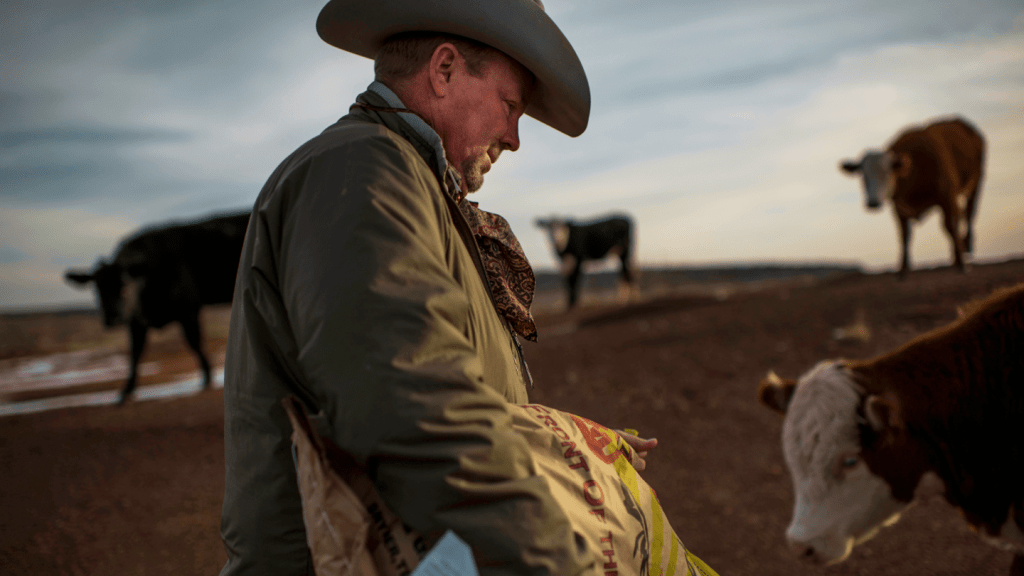
Derrell Peel, a professor of agricultural economics at Oklahoma State University, said that even if U.S. imports from Argentina increase, the impact on overall prices would be negligible.
“Most of what we import is lean, processed beef trimmings used for ground beef,” said Peel, who specializes in livestock marketing. “We’re not talking about the kind of beef that affects steak prices. Even if we doubled imports, it would be such a small share of the total supply that we wouldn’t detect any real impact.”
Peel added that there’s no quick way to ease pressure on cattle prices, since it takes roughly two years to bring animals to market and several years to rebuild herds.
“The fact of the matter is there’s really nothing anybody can do to change this very quickly,” he said. “We’re in a tight supply situation that took several years to develop, and it’ll take several years to get out of it.”

 Lord Buckbeak: "Will you come into my parlor?," said the Spider to the Fly.
Leave a comment