My cmnt: The following is from overviewbible.com – I post it here because it’s interesting and because another website (To The Reader – below) figures the longest book by chapter count only, which tho’ correct, is not the best way to determine this.
We’ve taken a look at the shortest books in the Bible, but what about the longest book in the Bible?
If you’d asked me about it in Sunday school, my answer would have been a quick, confident “Psalms!” I figured this because the book has 150 psalms, and the runner-up in chapter count would have been Isaiah, with a meager 66 chapters—that’s less than half of what Psalms has.
You can probably guess why this is incorrect. Psalms is a long book, for sure, but its psalms are pretty short (for the most part).
Even though Psalms has more contributors than any other book of the Bible, it turns out that two other books are much longer than Psalms.
The longest books in the Bible, in order
I used Logos Bible Software to find out which books are the longest, by original word count.
Here’s a list of the ten longest books of the Bible. This is going by word count in the original languages (not any English translation of the Bible). I referenced the Lexham Hebrew Bible for OT books and the NA27 for NT books, and here’s what I got:
- Jeremiah (33,002 words)
- Genesis (32,046 words)
- Psalms (30,147 words)
- Ezekiel (29,918 words)
- Exodus (25, 957 words)
- Isaiah (25,608 words)
- Numbers (25,048 words)
- Deuteronomy (23,008 words)
- Second Chronicles (21,349 words)
- First Samuel (20,361 words)
Notice anything interesting? The entire top-10 list of longest books in the Bible are all Old Testament books! Four of the five books of the Torah are here, all three major prophets are present, and even one book of poetry made it into the top 10.
(For the most part, this lines up with David J. Reimer‘s list on Justin Taylor’s blog—though Reimer’s count puts Isaiah before Exodus.)

So Jeremiah is the longest book of the Bible, right? Sure, if we’re going by modern books and their arrangements. This count is a little deceptive, though. Several books of the Old Testament are actually volumes of a larger original work. Why?
Because of scrolls.
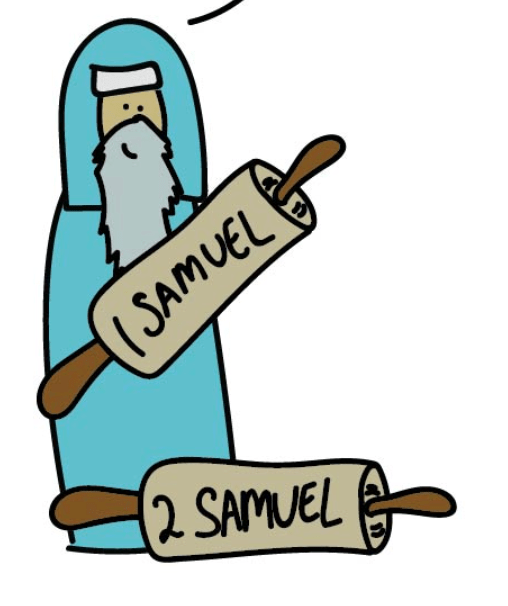
For example, First Samuel and Second Samuel were originally just Samuel. But back then, you wrote these kinds of stories on scrolls: and Samuel was just too long to reasonably fit on one. So they split it up into parts one and two.
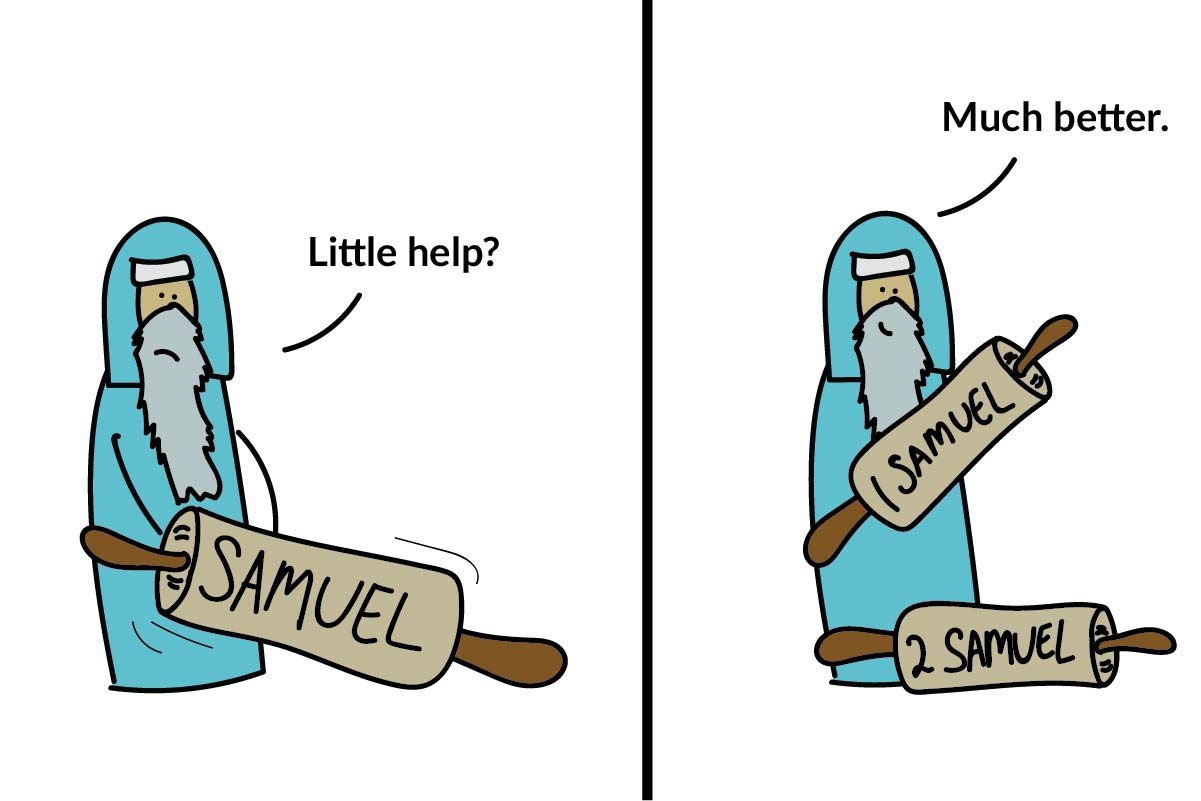
Kind of like how The Lord of the Rings was written as just one work, but got split into three volumes to keep the price low enough for the average novel enthusiast.
So, what if we were looking for the longest book of the Bible in its original format? First, we would combine First and Second Samuel, First and Second Kings, First and Second Chronicles, and Ezra with Nehemiah. Then we’d look at the numbers again.
Here’s what our top ten would look like:
- Kings (39,145 words)
- Chronicles (38,013 words)
- Samuel (38,007 words)
- Jeremiah (32,982 words)
- Genesis (32,046 words)
- Psalms (30,047 words)
- Ezekiel (29,918 words)
- Exodus (25, 957 words)
- Isaiah (25,608 words)
- Numbers (25,048 words)
Pretty cool, right?
My cmnt: Sure. But please keep in mind that none this trivia matters in the least. It’s kind of fun but of no real importance at all. It’s kind of similar to arguing over the middle verse or chapter or word in the Bible. Have some fun if you will but again, it’s of no importance whatsoever.
========================================================
My cmnt: The following is from Got Questions
What is the middle verse of the Bible?
There is a traditional belief that Psalm 118:8, which reads, “It is better to take refuge in the Lord than to trust in humans,” is the middle verse of the Bible. However, this is not correct. There are 31,102 verses in the Bible (KJV). Since the count is an even number, there is no single middle verse of the Bible. Psalm 103:1–2 are the two middle verses of the Bible, with 15,550 verses before them and 15,550 verses after them.
The middle verses of the Bible say this: “Praise the Lord, my soul; all my inmost being, praise His holy name. Praise the Lord, my soul, and forget not all His benefits” (Psalm 103:1–2).
Psalm 117 is the middle chapter of the Bible. But, since there are numerous chapters that contain a significant number of verses prior to Psalm 117, the middle verses of the Bible are pushed to Psalm 103:1–2.
Ultimately, there is no spiritual significance to the middle verse of the Bible. It is interesting information to know, and it can help you win Bible trivia games, but it won’t help you grow in your relationship to God. Still, a passage that focuses on praising the Lord being in the exact middle of the Bible seems fitting.
===========================================================
From the To The Reader wordpress website:
Psalms 116, 117, 118
Psalms is (by FAR) the longest book in the Bible.
Psalm 119 is the longest chapter in the Bible.
Psalm 117 is the shortest chapter in the Bible. It’s also the middle chapter of the Bible. I’ve heard forever that Psalm 118 is the middle chapter but it really isn’t. I counted them. (You’re welcome.) There are 595 chapters before Psalm 118 and 592 after.
Psalm 116 is divided into 2 psalms in the Septuagint.
ALL of them are labeled in the Septuagint as “Alleluia” psalms The word hallelujah appears at the end of Psalm 116, the beginning AND end of Psalm 117, and in Psalm 118 I cannot find that the word “hallel” appears anywhere. There is a different phrase that can also be translated “praise the LORD” and it is yadah Yah.
 Lord Buckbeak: "Will you come into my parlor?," said the Spider to the Fly.
Leave a comment