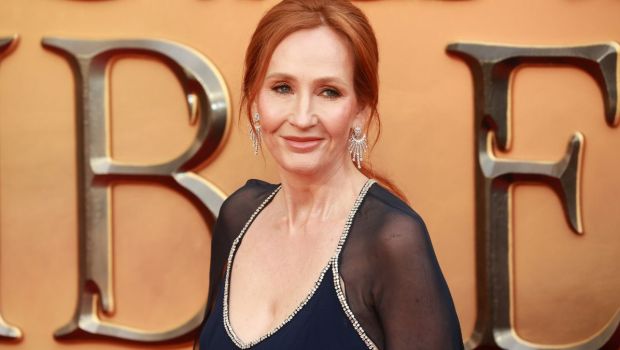
J.K. Rowling arrives at the “Fantastic Beasts: The Secret of Dumbledore” world premiere at The Royal Festival Hall on March 29, 2022, in London, England. | Stuart C. Wilson/Getty Images
Harry Potter author J.K. Rowling has opened up about her religious beliefs and acknowledged that she has a “God-shaped vacuum” in her heart that she could take to the grave. She also voiced opposition to euthanasia and marijuana use.
Rowling discussed her shifting political beliefs in an X post published Friday in response to a question from an X user asking her what beliefs she has changed. Towards the end of the post, the 60-year-old author also discussed her religious beliefs over the years.
“I’ve struggled with religious faith since my mid-teens,” she wrote. “I appear to have a God-shaped vacuum inside me, but I never seem quite able to make up my mind what to do about it.”
“I could probably list at least twenty more things I’ve changed my mind about,” she concluded. “I don’t currently have a single belief that couldn’t be altered by clear, concrete evidence and in all but one case, I know what that evidence would have to be.”
Rowling identified the “God conundrum” as the “exception,” explaining how “I don’t know what I’d have to see to make me come down firmly on either side.”
“I suppose that’s the meaning of faith, believing without seeing proof,” she said. “That’s why I’ll probably go to my grave with that particular personal matter unresolved.”
Although Rowling’s book series has been controversial in Christian circles, the U.K.-based magazine Premier Christianity reports that Rowling was brought up as an Anglican and is a member of the Church of Scotland.
The author has been outspoken in recent years and has drawn much public backlash for her opposition to policies opening up women-only sex-segregated spaces to trans-identified males. Rowling addressed her conversion on the issue she has become the most passionate about.
“In my early twenties I believed the difference between the sexes was entirely due to socialisation,” she stated, stressing that she no longer believes that after reading studies.
Rowling indicated that she has also changed her views on “unilateral nuclear disarmament” and the claim that “cannabis was essentially harmless.”
While she did not elaborate on why she now opposes unilateral nuclear disarmament, she said she watched cannabis “wreak havoc” on the mental health of someone close to her.
“I used to believe in assisted dying,” she added. “I no longer do, largely because I’m married to a doctor [Neil Murray] who opened my eyes to the coercion of sick or vulnerable people.”
Critics have long argued that “right to die” policies that enable terminally ill patients to opt for assisted suicide open up the possibility of family members and others abusing and coercing their loved ones into pursuing assisted suicide. Such policies, they say, could make terminally ill patients “feel they were a burden to friends and family.”
Rowling has become one of the most vocal opponents of transgender ideology, which seeks to eliminate distinctions between the sexes and insists that trans-identified males should be treated exactly the same as women and vice versa.
In 2020, she reacted to an op-ed published with the phrase “people who menstruate” in the headline by sarcastically remarking, “I’m sure there used to be a word for these people” and used nonexistent words like “wumben,” “wimpund” and “woomud” as she condemned the article’s avoidance of the word “women.”
In another social media post published in 2020, Rowling defended the concept of biological sex: “If sex isn’t real, there’s no same-sex attraction. If sex isn’t real, the lived reality of women globally is erased. I know and love trans people, but erasing the concept of sex removes the ability of many to meaningfully discuss their lives. It isn’t hate to speak the truth.”
J.K. Rowling, who is known across the world for her best-selling “Harry Potter” series, shared with her X followers last week that she has a “God-shaped vacuum” inside her. Rowling explained some beliefs she has changed over time and said she is willing to let evidence change her mind on any topic—the one exception is that she is not sure what evidence she needs when it comes to “the God conundrum.”
“I’ve struggled with religious faith since my mid-teens,” Rowling said in a Sept. 12 post on X. “I appear to have a God-shaped vacuum inside me but I never seem quite able to make up my mind what to do about it.”
JK Rowling Not Sure What To Do About ‘The God Conundrum’
J.K. Rowling is the pen name of Joanne Rowling, who became an internationally known multimillionaire for her book series, “Harry Potter.” The series became the basis for a franchise that includes the wildly successful “Harry Potter” film series, the “Fantastic Beasts” prequels, and the Wizarding World of Harry Potter theme park in Orlando, Florida.
In recent years, Rowling has been outspoken about her belief that people’s gender must correspond to their birth sex and frequently interacts with her critics on X. Recently, a user responded to a post from Rowling about the importance of free speech and changing one’s beliefs based on evidence. The user accusing Rowling of wanting “people dead simply for expressing their gender identity” and also told Rowling to “shut the f*** up.”
Rowling replied:
I’m sure you can back up that assertion with a quote of mine, because otherwise it might look like you’re exactly the kind of person I’m describing: fixed beliefs, zero evidence, inventing grievances to justify a desire to silence people who say things you don’t like.
Someone else asked Rowling what beliefs she has changed. Rowling answered, “I used to believe nurture was everything and that nature wasn’t important. My belief changed because of my own life experience and from reading studies about genetic inheritance.”
“In my early twenties I believed the difference between the sexes was entirely due to socialisation,” she continued. “I no longer believe that (for the same reasons as above.).”
Rowling said she no longer believes in nuclear disarmament or that cannabis is “essentially harmless.” Her reason for changing her view on the latter topic was “because I’ve witnessed it wreaking havoc on someone I care about’s mental health.
“I used to believe in assisted dying,” said Rowling. “I no longer do, largely because I’m married to a doctor who opened my eyes to the possibilities of coercion of sick or vulnerable people.”
“I could probably list at least twenty more things I’ve changed my mind about,” Rowling said. “I don’t currently have a single belief that couldn’t be altered by clear, concrete evidence and in all but one case, I know what that evidence would have to be.”
“The exception is the God conundrum, because I don’t know what I’d have to see to make me come down firmly on either side,” she concluded. “I suppose that’s the meaning of faith, believing without seeing proof, and that’s why I’ll probably go to my grave with that particular personal matter unresolved.”
JK Rowling Asks for Faith Advice, Says She Has a ‘God-Shaped Vacuum Inside Me’
Catholics, can we kindly offer the famed author some concrete evidence about the true, apostolic faith?
British author J.K. Rowling of Harry Potter books fame took to social media last Friday to talk about faith, personally discussing how she wrestles with God.
In a long post on X, formerly known as Twitter, the writer, who has been outspoken about the dangers of gender ideology on social media, even essentially being doxxed for her viewpoints, wrote:
“I’ve struggled with religious faith since my mid-teens. I appear to have a God-shaped vacuum inside me, but I never seem quite able to make up my mind what to do about it.”
She says that she “could probably list at least twenty more things I’ve changed my mind about” and then broaches the idea that perhaps she is indeed searching:
“I don’t currently have a single belief that couldn’t be altered by clear, concrete evidence; and in all but one case, I know what that evidence would have to be.”
Dubbing it the “God conundrum,” Rowling said she doesn’t know “what I’d have to see to make me come down firmly on either side.”
“I suppose that’s the meaning of faith, believing without seeing proof,” the author admitted. “That’s why I’ll probably go to my grave with that particular personal matter unresolved.”
Rowling was raised Anglican, according to Premier Christianity, and is a member of the Church of Scotland. But her latest post highlights a desire to assess more data as to how best o fill that “God-shaped vacuum” in her heart. Perhaps we as Catholics can help her?
This wouldn’t be the first time Rowling has changed her heart and mind on an issue. In her same post mentioning God, she lists out many issues that she has changed course about, including transgenderism, marijuana, and medically assisted suicide. She wrote:
I used to believe nurture was everything and that nature wasn’t important. My belief changed because of my own life experience and from reading studies about genetic inheritance.
In my early twenties I believed the difference between the sexes was entirely due to socialisation. I no longer believe that (for the same reasons as above). I used to believe in unilateral nuclear disarmament. I no longer do.
I used to believe cannabis was essentially harmless. I no longer do because I’ve witnessed it wreaking havoc on someone I care about’s mental health.
I used to believe in assisted dying. I no longer do, largely because I’m married to a doctor who opened my eyes to the possibilities of coercion of sick or vulnerable people.
She says she could list out even more things that have shifted for her, but belief in God is one that she is honestly and openly inquiring about, seeking concrete evidence.
As Catholics, we might introduce her to our two new saints, including St. Carlo Acutis, who did so much with Eucharistic miracles. Would that sway the Harry Potter author’s mind? What about St. Thomas Aquinas’ Prima Pars on how to prove that God exists? Or Father Mike Schmitz’s clear and concise take on Scripture inThe Bible in a Year podcast?
Ms. Rowling, we also invite you to check out EWTN and maybe learn more about Mother Angelica, who spoke so candidly and openly about faith. We are here to help answer any questions. And we pray for you in this moment, that in this era of digital evangelization, our fellow Catholics will help you in your quest to fill your heart with God.
Aleteia’s advice for J.K. Rowling and her “God-shaped vacuum”
As Rowling reveals her search for faith, she reminds us that doubt, too, can be brave and deeply human.
In recent days, J.K. Rowling — best known to many as the creator of Harry Potter — has opened a window onto something deeply personal: her struggle with faith. In a post on X (formerly Twitter), Rowling laid bare a faith-question that many of us carry but few voice so publicly. The courage required is considerable — not least because when you share your beliefs, people pay attention. Sometimes they cheer you on. Sometimes they turn away.
Here is the heart of Rowling’s reflection:
“I’ve struggled with religious faith since my mid-teens. I appear to have a God-shaped vacuum inside me, but I never seem quite able to make up my mind what to do about it.” “I could probably list at least twenty more things I’ve changed my mind about … I don’t currently have a single belief that couldn’t be altered by clear, concrete evidence; and in all but one case, I know what that evidence would have to be.” “I suppose that’s the meaning of faith, believing without seeing proof,” … “I’ll probably go to my grave with that particular personal matter unresolved.” — J.K. Rowling, X
If you’d like to read the full message you can see it here:
I used to believe nurture was everything and that nature wasn’t important. My belief changed because of my own life experience and from reading studies about genetic inheritance. In my early twenties I believed the difference between the sexes was entirely due to socialisation.
There is a kind of bravery in Rowling’s admission. It’s not often that someone of her literary stature, someone so used to certainty in the worlds she creates, states plainly that in the realm of faith she is holding space for the unknown. To say “I don’t know,” to say “I’m still looking,” to say “I need evidence” — these are positions that risk disapproval, misunderstanding, even loss of fans.
It is a vulnerability rare in public life, especially in an age of social media where statements are often required to be sharp-edged, decisive, polished.
Rowling’s past willingness to speak out on controversial matters has already cost her. Yet this different kind of unknowing — it doesn’t announce itself with grand affirmations or polemics, but with honest questioning — carries its own peril and its own weight. It is a reminder that belief, real belief, isn’t always about certainty. Sometimes it is about the searching: about being unafraid to ask the questions that might not be fully answered in this life.
How age, experience, and openness reshape belief
Rowling points out that she has changed her mind on many things — gender ideology, nature vs nurture, cannabis, assisted dying — each time because of life experience, personal exposure, reflection, evidence.
This is something many of us come to see: that beliefs formed in youth, or under cultural pressure, often shift as we grow, suffer, laugh, engage, witness. Indeed, age (if we allow it to) brings a humility of perspective. With years comes better vantage of complexity, of unintended consequences, of the gap between theory and lived life. What once seemed obvious begins to feel more contingent; what once was unthinkable reveals itself differently in a new light.
Rowling is modelling a generosity of mind: being open enough to let evidence, personal experience, even intellectual inquiry inform one’s beliefs. Not necessarily to abandon them, but to temper them, to refine them, to acknowledge their uncertainties. That openness doesn’t weaken belief — it tends to deepen it, if the journey is honest.
The “God-shaped vacuum”: What it means, and how one might answer it
The phrase “God-shaped vacuum” has echoes in Christian spiritual literature (e.g., Blaise Pascal’s “God shaped-vacuum” or “God-shaped void”), suggesting a yearning or a place in the human heart that seeks its fulfillment. Rowling’s admission — that she senses such a vacuum inside but doesn’t know what would fill it for her — resonates with many people, religious or not.
So what might it look like to respond to that question? How to answer someone who senses this void, who is willing to be persuaded by “clear, concrete evidence,” and yet remains unconvinced?
Here are some reflections, drawn from Christian tradition and pastoral insight, that might help her — or anyone in her shoes — grapple with that vacuum:
1Story and Testimony
It is often the lived lives of others that make faith more tangible. Hearing people speak honestly of doubt, of transformation, of encounters they could not rationalize but which became real for them: those stories can illuminate what abstract arguments do not. Rowling, who is a master of narrative, may find this particularly compelling.
2Philosophical and Theological Argument
The Church has long wrestled with questions like existence of God, meaning, suffering, ethics. Thinkers from Augustine and Aquinas to modern apologists have built arguments from first causes, from morality, from the existence of consciousness or beauty, from human reason. These don’t always feel decisive — some remain more compelling than others — but they offer frameworks in which a seeking person can situate their questions.
3Experiential Encounter
Sometimes faith is not won by logic alone, but by experience: moments of awe, of beauty, love, community, suffering, joy that feel as though they come from beyond ourselves. Practices like prayer, retreats, pilgrimage, sacramental life (for Christians), service to others, even just visiting a beautiful church — these can open up space in the soul for what is unseen, even if they don’t offer forensic proof.
4Patience with Mystery and Openness to Change
It’s okay to live with unanswered questions. Many saints and thinkers did. In fact, believing without seeing is itself an act of faith (as Rowling recognizes). Not rushing is part of maturity: not closing the door to possibility, not locking the mind so firmly that no evidence could ever shift it.
5Community and Tradition
For many believers, the tradition of faith, the community of worship, shared rituals provide a scaffolding for faith. They don’t always answer all questions, but they offer a stable ground in which one can explore, fail, doubt, reaffirm. They offer accountability, shared wisdom, history.
What we can learn
Rowling’s post to millions of people is a reminder to all of us: that belief isn’t static. It is formed, deformed, re-formed. It is tested, stretched, refined. And that maybe strength doesn’t always lie in knowing all the answers, but in having the courage to live with some uncertainty while continuing to seek truth.
It also reminds us not to judge others (or ourselves) by whether they seem to have it all figured out. Some have firm faith; others are in between. Some are locked in certainty; others are still discerning. But all of us are on a journey — if we are willing.
J.K. Rowling has stepped into a kind of vulnerability many fear — exposing that inner vacuum, naming it, admitting that she’s not certain. That takes humility, bravery, perhaps suffering. It costs something: risk of criticism, risk of disappointment. And yet, there is something beautiful in it.
For those who believe, it is an occasion to meet others where they are; to share what they cherish—not to force, but to invite. For those still asking, it is a sign that doubt need not be shameful, that questioning is part of the journey. Perhaps this “God-shaped vacuum” is less a problem to be solved instantly than a longing to be attended to.
Of course, we could also recommend to the author — or anyone questioning their faith — that she could read Aleteia on a regular basis to help her learn more about the wonders of Catholicism!


 Lord Buckbeak: "Will you come into my parlor?," said the Spider to the Fly.
Leave a comment