A 6-gigawatt (GW) power source can power roughly 4.5 million to 6 million U.S. homes, assuming an average annual consumption of about 10,655 kWh per home, since 1 GW can power approximately 750,000 to 1 million U.S. homes.
My cmnt: Nuclear power was always the future of the world’s energy demands. But for Left-Libs demagoguing nuclear power (i.e., the Simpson’s, etc.) we would have developed these smaller plants decades ago. The Libs tie everything up with their bogus environment and “safety” regulations. Now that they want carbon-free energy they’ve no choice but to back nuclearenergy.
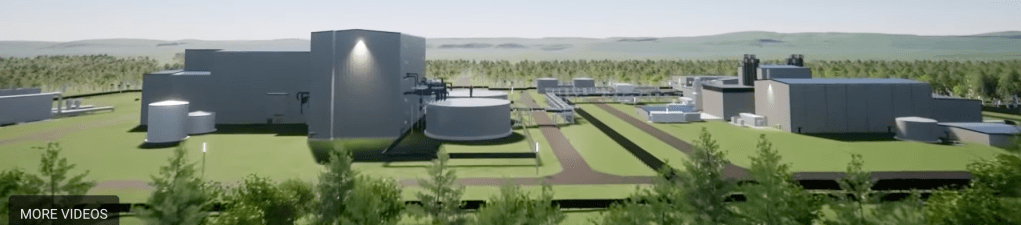
The Tennessee Valley Authority (TVA) and ENTRA1 Energy have signed a groundbreaking agreement to develop a 6-gigawatt nuclear portfolio, consisting of six small modular reactor power plants built by NuScale Power across TVA’s seven-state service region.
Powermag reports that in a significant step towards advancing next-generation nuclear power in the United States, the TVA and ENTRA1 Energy have announced a landmark collaboration to develop a 6-gigawatt nuclear portfolio. The agreement, signed on September 2 will see ENTRA1 Energy develop and own six small modular reactor (SMR) power plants across TVA’s seven-state service region, selling the generated electricity to the nation’s largest public power supplier through future power purchase agreements (PPAs).
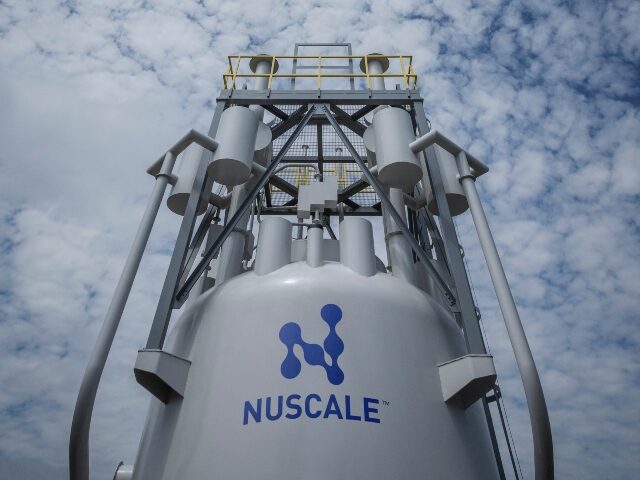
ENTRA1 Energy, serving as NuScale’s exclusive global strategic partner for the commercialization and development of power plants utilizing NuScale Power Modules, the leading SMR technology, plans to deploy these small reactor nuclear plants as part of its immediate strategy. The collaboration has the potential to generate enough energy to power approximately 4.5 million homes or 60 new data centers, addressing the unprecedented growth in electricity demand driven by energy-intensive technologies such as hyperscale data centers, AI, and semiconductor manufacturing.
SMRs are small nuclear reactors that lack many of the drawbacks of traditional nuclear energy facilities. According to NuScale, the only company with NRC approval for their SMR design:
A small modular reactor is a type of nuclear fission reactor that is smaller in size than a traditional nuclear reactor. These compact reactors are manufactured at a factory and brought to a site to be fully constructed. Modular refers to the multi-module design which provides benefits such as scaling and non-interruptive refueling. Their small size and modular nature also allow for less upfront capital costs, making them a more affordable option for utilities or countries looking to invest in nuclear energy. SMRs are designed with advanced safety features and are seen as a promising technology for future nuclear power generation.
The TVA-ENTRA1 Energy agreement marks the largest SMR deployment program in U.S. history, with the two companies set to jointly identify sites, coordinate development activities, and share planning efforts for the nuclear projects. This collaborative approach is designed to shield TVA ratepayers from construction risk while providing long-term price certainty through contracted power sales, offering a contrast to the recently canceled NuScale Carbon Free Power Project in Utah.
A crucial step in the TVA-ENTRA1 Energy effort will be securing the necessary approvals from the U.S. Nuclear Regulatory Commission (NRC). While NuScale’s 50-MWe US600 model has already received design certification, and its uprated 77-MWe US460 module was granted a Standard Design Approval in May 2025, site-specific licensing, construction, and operating permits will still be required. TVA, already holding an early site permit at its Clinch River site in Tennessee, is expected to leverage this regulatory groundwork as it evaluates potential sites across its service region.
The TVA-ENTRA1 Energy collaboration is part of a growing trend of ambitious plans to scale up nuclear deployment in the United States, with tech giants such as Amazon, Microsoft, Google, Meta, and Oracle also pursuing significant nuclear power projects. TVA itself has been at the forefront of the nation’s nuclear renaissance, launching its New Nuclear Program in February 2022 and boosting funding to explore advanced reactor deployment.
As Don Moul, TVA president and CEO, stated, “TVA is leading the nation in pursuing new nuclear technologies, and no utility in the U.S. is working harder or faster than TVA. This agreement with ENTRA1 Energy highlights the vital role public-private partnerships play in advancing next-generation nuclear technologies that are essential to providing energy security – reliable, abundant American energy – and creating jobs and investment across the nation.”
Lucas Nolan is a reporter for Breitbart News covering issues of free speech and online censorship.
Companies backed by Bill Gates and Warren Buffett are developing mini nuclear reactors. The specific project involves Bill Gates’ company TerraPower and Buffett’s utility company PacifiCorp, a subsidiary of Berkshire Hathaway Energy.
Key details of the project:
The technology: The project uses TerraPower’s “Natrium” technology, an advanced nuclear design that features a 345-megawatt sodium-cooled fast reactor. It is considered safer, more efficient, and potentially cheaper to build than traditional nuclear plants.
Energy storage: The Natrium technology includes a molten salt-based energy storage system. This “thermal battery” can boost the plant’s power output from 345 megawatts to 500 megawatts for over five hours when needed. This allows it to support intermittent renewable energy sources like wind and solar.
Project location: The first Natrium reactor is under construction at the site of a retiring coal plant in Kemmerer, Wyoming. This location was chosen to utilize the existing energy infrastructure and workforce.
Timetable: Construction at the Wyoming site began in 2024, with the plant expected to become operational in 2030.
Funding: The approximately $4 billion project is a public-private partnership. The U.S. Department of Energy is providing substantial funding through its Advanced Reactor Demonstration Program, matched by private investment, including from Gates.
Future plans: In addition to the demonstration plant in Wyoming, TerraPower and PacifiCorp are also studying the feasibility of deploying as many as five additional Natrium reactors in the U.S. West by 2035.
 Lord Buckbeak: "Will you come into my parlor?," said the Spider to the Fly.
Leave a comment