If the league won’t act to protect its superstar from a hostile environment, the government should do so.
By Sean McLean Aug. 3, 2025 at 11:38 am ET – WSJ
(7 min)
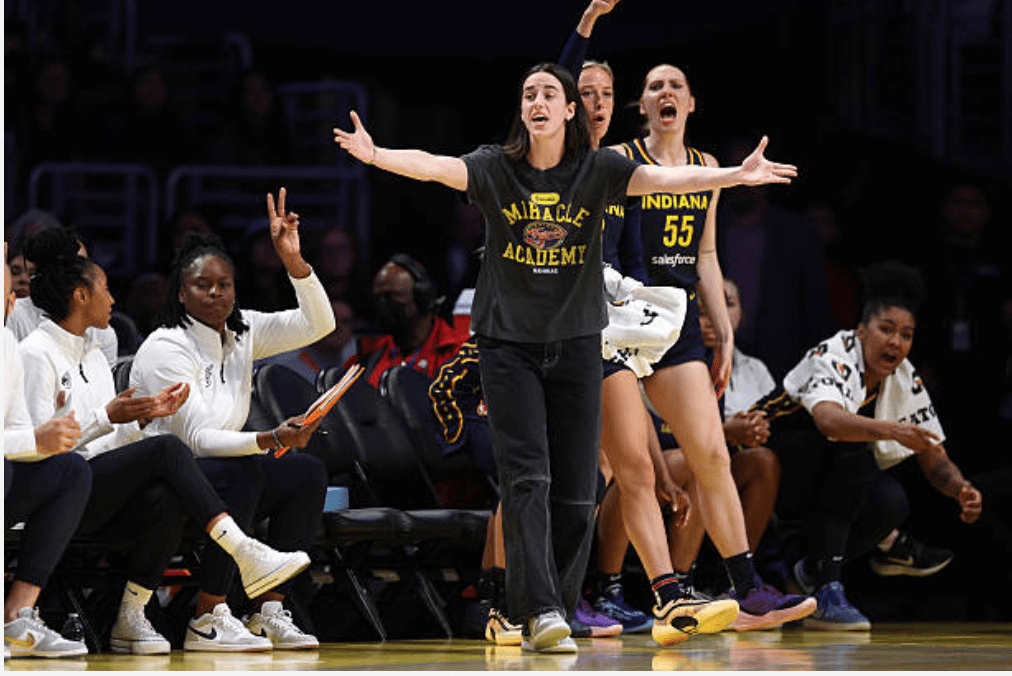
Caitlin Clark in an Indiana Fever-Golden State Valkyries game in Indianapolis, July 9. PHOTO: TREVOR RUSZKOWSKI/REUTERS
Caitlin Clark has done for the Women’s National Basketball Association what Michael Jordan once did for the NBA—made it more valuable, watchable and marketable. Instead of protecting its transformative star, the league’s leadership ignores the relentless targeting of Ms. Clark, treating its greatest asset as if she were a PR headache. That approach could turn into a legal liability for the WNBA.
Since she joined the league last year, Ms. Clark’s impact has been seismic: Merchandise sales soared 601%, Indiana Fever viewership jumped 170%, the team’s value tripled, League Pass subscriptions climbed 366%, app engagement rose 613%, and her endorsements topped $11 million. She’s the economic engine driving the league forward.
Yet she routinely faces intentional hits, excessive fouling and uncalled abuse while referees look away. Teammate Sophie Cunningham said what fans already know: “The star player of the league is not being protected.” Ms. Clark herself noted: “Everybody is physical with me. They get away with things others don’t.” Three injuries have sidelined her for 10 games and the All-Star Game, with ratings plummeting 55% without her.
Is it because Ms. Clark is white? A’ja Wilson of the Las Vegas Aces, a three-time league most valuable player, thinks so. She has said that race is a “huge thing” and that “it boils my blood when people say it’s not about race because it is.” Under civil-rights law, race-motivated patterns trigger scrutiny even without explicit discriminatory intent.
Systemic missed calls include viral replays of Ms. Clark being fouled multiple times in a single possession. “Every single one of them is a foul,” analyst Rebecca Lobo said. Ms. Clark absorbed 17% of flagrant fouls last season—double her peers’ rate. This isn’t merely bad officiating—it’s dangerous and unequal. She endures blindside checks and midair collisions—plays that trigger reviews in other leagues. She is a flagrant foul away from a career-altering injury.
The league has fostered a hostile workplace for Ms. Clark through excessive fouling, targeting, and hostile comments from other players and owners. These aren’t isolated—they’re documented, continuing and ignored by officials. The disparity in treatment invites real scrutiny. Not a single player has been suspended for flagrantly fouling Ms. Clark.
Professional sports are multibillion-dollar industries subject to the same civil rights, antitrust and labor laws as any other. When basic rights, safety and public confidence are threatened, Washington intervenes. The government has forced changes at the National Collegiate Athletic Association, USA Gymnastics, and other leagues over player safety protocols.
UConn Hall of Fame Coach Geno Auriemma says Ms. Clark’s treatment isn’t merely rookie hazing: “She’s also being targeted. I don’t remember when Michael Jordan came into the NBA, guys looking to go out and beat him up.”
Ms. Clark faces a textbook hostile work environment, as the Supreme Court described in Harris v. Forklift Systems (1993), with severe or pervasive conduct altering her conditions. Statistical disparities like those she faces often prompt federal probes and lawsuits. The precedent is clear: In Texas Dept. of Community Affairs v. Burdine (1981), courts outlined disparate treatment under Title VII of the 1964 Civil Rights Act, letting employees allege less favorable treatment than peers due to race—warranting investigation without direct animus. That shifts the burden to the employer to prove nondiscriminatory motive.
Such narratives fuel specific snubs, reinforcing a pattern of hostility under Title VII. Washington Mystics co-owner Sheila Johnson questioned Ms. Clark’s 2024 Time Athlete of the Year recognition. Ms. Clark shattered fan vote records with 1.29 million All-Star votes, yet ranked only ninth among guards on the player ballot—a disparity ESPN’s Dick Vitale called “pure jealousy.”
Ms. Clark was left off the 2024 U.S. Olympic roster—despite leading the league in assists—by a selection committee including a league executive, a team president and former WNBA players—reinforcing institutional resistance.
Ms. Clark’s targeting may reflect a culture of disparate treatment, and the evidence provides reasonable cause for a federal probe into potential civil-rights violations. This would mirror the Equal Employment Opportunity Commission investigation into Dearica Hamby’s pregnancy discrimination claims against the WNBA and her team. Congress and the Labor and Justice departments would be justified in examining the facts.
At Harvard and Columbia during antisemitic protests, institutional leaders played down threats and failed to protect students. Congress and the Trump administration demanded answers. Columbia’s recent $221 million settlement for civil-rights violations shows the effect of such scrutiny.
The administration has shown it’s willing to demand change, proposing federal standards barring men from women’s NCAA athletics, issuing sweeping Title VI warnings to more than 60 schools, and launching a Justice Department antisemitism task force. Sen. Jim Banks’s 2024 letter to WNBA Commissioner Cathy Engelbertdemanded answers on Ms. Clark’s treatment.
Congress and the administration should demand answers from WNBA leaders, investigate officiating and internal league communications, hold hearings, and insist on real reforms. The Labor Department should review league protocols for workplace safety. If evidence shows discrimination or retaliation, the Justice Department’s Civil Rights Division must act. If leaders remain inert, Congress should reconsider the WNBA’s special privileges, including its antitrust and broadcast considerations. Checking referees’ work with NBA-style “Last Two Minute Reports” would be a meaningful first step toward building trust.
Caitlin Clark has already done more for women’s basketball than most athletes do for their sports in a lifetime. She’s brought new fans, sponsors and unprecedented visibility to her league and peers. None of that will last if the reward for excellence is physical targeting and institutional neglect. If the WNBA won’t act, Washington must.
Mr. McLean is founder of Origin Advocacy, a lobbying firm. He has served in the Trump White House and the offices of Sen. Ted Cruz and then-Rep. Marsha Blackburn.
 Lord Buckbeak: "Will you come into my parlor?," said the Spider to the Fly.
Leave a comment