Sarah Anderson – 1:08 PM on July 27, 2025 – PJ Media
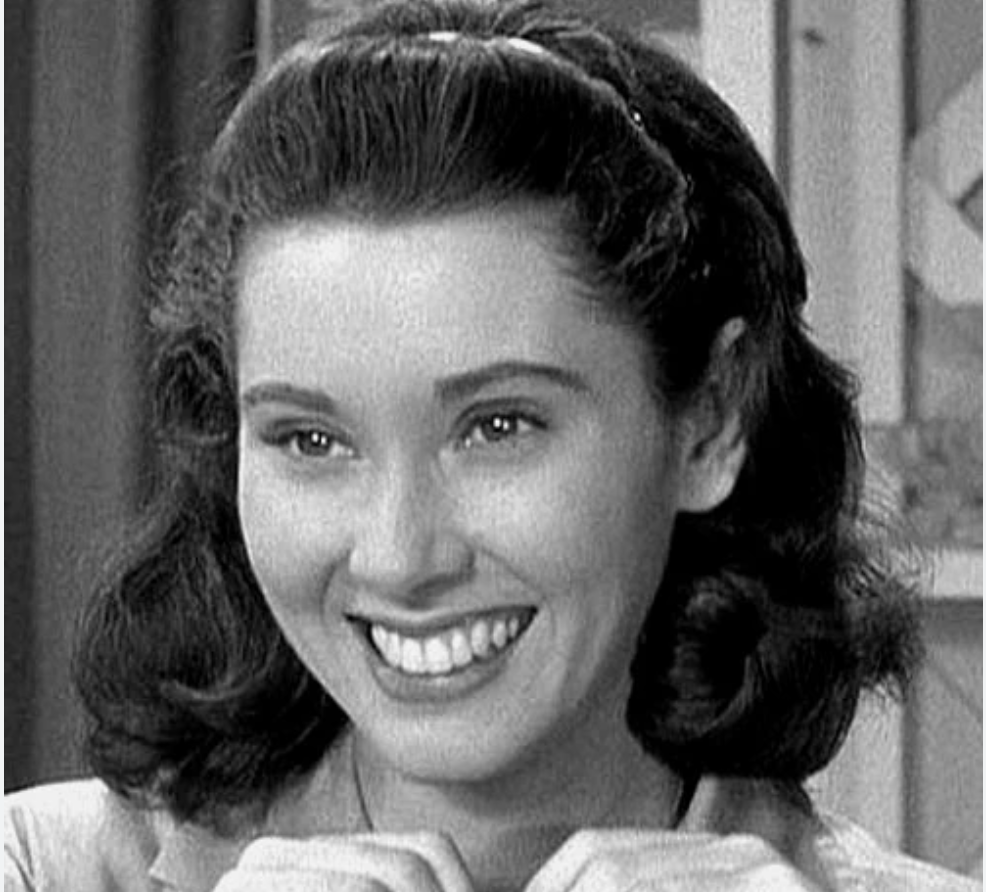
With the exception of Ron Howard, I believe most of the “The Andy Griffith Show” cast is no longer with us. However, there’s one actress who is still around, and she was always one of my favorites.
Elinor Donahue played Ellie Walker during the first season of the show, the “lady druggist” who would become Andy’s love interest after an awkward and somewhat tumultuous period of getting to know one another. Walker, a pharmacist, was running Walker’s Drug Store for her uncle Fred, and she did things her way, which didn’t go over very well in Mayberry at first. Donahue was such a big deal at the time that her name was even mentioned during the opening credits, making her the only other star besides And Griffith, Howard, and Don Knotts to earn that honor during Knotts’ tenure on the show. Not even good old Aunt Bee, aka Frances Bavier, received that kind of acknowledgement.
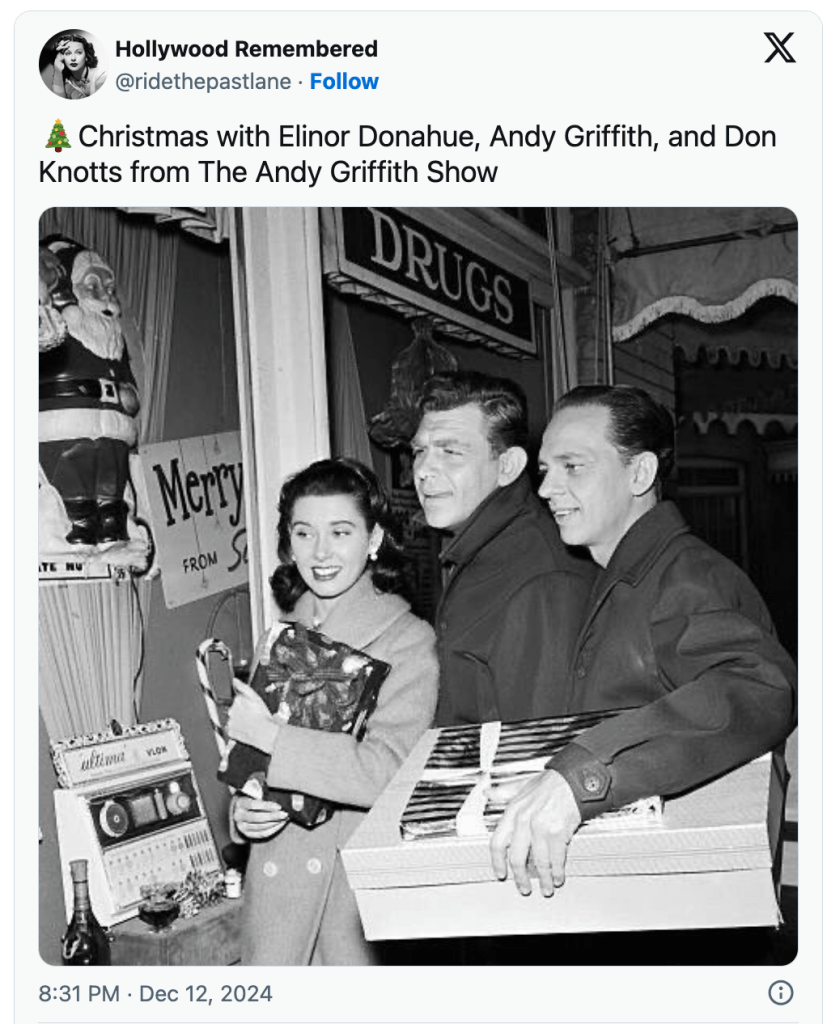
After that first season, Donahue’s character disappeared without a trace. By season three, Andy had fallen for Opie’s teacher — Helen Crump, played by Aneta Corsaut — and the rest, as they say, is history. Corsaut has said that she was only hired for one episode — the one where Opie and his pals complain about “Old Lady” Crump, but it’s been said that she had great chemistry with the cast and Andy himself, so she eventually became a regular character on the series. She and Griffith also reportedly had an off-screen affair.
But what about Donahue? There have been many rumors over the years as to why she left the show abruptly, and Griffith himself has spoken on the matter, claiming it was his fault. He said there was just no chemistry there, he felt awkward doing romantic scenes on-screen, and he was uncomfortable with her age. She was just 23 at the time, while Griffith was in his mid-thirties. Many believed that Griffith fired her for those reasons, but as it turns out, she’s the one who decided to walk away.
Donahue is 88 years old, and she’s had quite a successful career in the entertainment business. She recently sat down for an interview with Woman’s World and decided to set the record straight once and for all about why Ellie Walker disappeared without a trace. The actress had just finished her stint on another sitcom, “Father Knows Best,” during which she’d played Betty “Princess” Anderson. She said going from playing a child on that show to an adult on the “The Andy Griffith Show” kind of rocked her world.
To be honest, I felt like a bird out of a nest. I didn’t feel like I had all my feathers yet and I didn’t feel capable. It was the strangest feeling. I had a three-year contract for that show, but at the end of the first year, I asked to be let out of my contract, because I didn’t feel that I was playing the role properly. I just didn’t feel right about it. In retrospect, and from things that people have said to me — very lovely things — I was doing okay. I was just not a happy camper and there was no point in my trying to continue with it.
Donahue claims there were no hard feelings, and she later saw Griffith and his manager, Dick Lank, at a party. She approached them, and they said they just didn’t know how to write for her. “That could be part of it, but I didn’t think there was any real chemistry there and, fortunately, they would sporadically try other women,” the actress said of that statement, adding, “When Aneta Corsaut came in, I have since read they had a hot and heavy thing going. He was able to relate to her.”
Donahue still speaks highly of Griffith and his kindness during her time on the show. She recalled a time when they filmed a Christmas show, and she was nervous about singing, but he helped her through. (As a fan of the show who has seen every episode countless times, I can picture this scene perfectly in my mind.)
When we filmed the Christmas episode, he was so kind, I was very nervous about singing, I didn’t sing anymore and I avoided it like the plague. They wanted me to sing ‘Away in a Manger’ with Andy. I tried to get out of it. My mother said, ‘Oh for heaven’s sake, you sing that in church all the time, you can certainly sing that.’ But I was very nervous about it.
Donahue stopped acting during the 2010s, but as I said, she’s had quite a successful career in the entertainment business over the decades. Many people knew her for her time on “Father Knows Best,” a role for which she earned an Emmy nomination. She’s also appeared on dozens of other TV shows and in numerous movies, including “Star Trek,” “Many Happy Returns,” “The Odd Couple,” “The Young and the Restless,” and “Dr. Quinn, Medicine Woman.” Personally, I enjoyed her role on “The Gold Girls” on the episode “Stan Takes a Wife.”
I’ll leave you with a video of that Christmas scene from Donahue’s time on the show.
Enjoying our content? Gain access to more exclusive stories, podcasts, and more when you become a PJ Media VIP member. You’ll also help us combat the mainstream media by ensuring you hear the stories they refuse to cover.
Andy Griffith won our respect and affection
By Mark Dawidziak, The Plain Dealer – Published: Jul. 03, 2012, 9:11 p.m – Cleveland Plain Dealer

CBS Andy Griffith, who died Tuesday morning, became a beloved TV legend playing small-town sheriff Andy Taylor.
The beloved sheriff of “America’s hometown’” once explained why he didn’t carry a gun. Mayberry’s Andy Taylor — played to down-home perfection by Andy Griffith, who died Tuesday morning at 86 — summed it up in few straightforward yet eloquent words laced with common sense and conviction.
“When a man carries a gun all the time, the respect he thinks he’s getting might really be fear,” he said during an episode of “The Andy Griffith Show” (1960-68). “So I don’t carry a gun, because I don’t want the people of Mayberry to fear a gun. I’d rather they respect me.”
Throughout a career that started about 60 years ago, Griffith earned not only our respect but our affection. That was true whether he was playing a small-town sheriff on the enduring show that carried his name or whether he was playing an ever-crafty Atlanta defense lawyer named Ben on his other long-running series, “Matlock” (1986-95).
“It feels like such a personal loss to so many people,” said Jim Clark, founder of the “The Andy Griffith Show” Rerun Watchers Club. “He was truly an American entertainment legend, but the character of Andy Taylor made such a deep connection with viewers for generations, he felt like a member of the family. Andy was very private in his real life, but also extremely bright, creative, generous and deeply religious – just a really nice person.”
There were many honors, including an Emmy, a Grammy, the Presidential Medal of Freedom and a statue in his hometown, Mount Airy, N.C. There were many compliments passed his way as he triumphed as a recording artist, on Broadway, in movies and, of course, on television.
But as Mark Twain, an American humorist Griffith much appreciated, observed, “Praise is well, compliment is well, but affection – that is the last and final and most precious reward that any man can win, whether by character or achievement.”’
Griffith won this affection by character and achievement, yet, despite his long run in the pop-culture spotlight, those achievements sometimes went underrated.
His signature role unquestionably will remain Andy Taylor. That sheriff’s uniform seemed like such a natural fit, we tended to underestimate his work in front of the camera and behind it.
“People felt as if they knew him, that he wasn’t playing a character at all, when in fact, he was,” critic and show business historian Leonard Maltin said during a telephone interview. “That was his artfulness as an actor. Sitcom characters of the time tended to be idealized or goofy versions of the people next door. But Andy seemed so genuine, you expected to meet him down the street. More to the point, you wanted to meet him.”
Still, Griffith, who died at his home in Manteo, N.C., was the first to say don’t confuse him with Andy Taylor. Although he based the town of Mayberry on childhood memories of Mount Airy in the 1930s, the sheriff and widower was a character, not the reality.
“He often said, ‘I am not Andy Taylor,’ ” said Ken Beck, co-author of several books about “The Andy Griffith Show.” “Few people realized that he worked 16 hours a day on ‘The Andy Griffith Show,’ putting his touch on every line of dialogue. He was a great writer and rewriter. He shaped it. He polished it. He gave it that special touch that made the characters seem real to us.”
He was deceptively brilliant when the cameras were rolling, as well. On “The Andy Griffith Show,” for instance, he often was called to score laughs in one scene, then play straight man to Don Knotts’ Barney Fife or Ron Howard’s Opie in the next.
Even his comic roles show great versatility. Compare his Andy Taylor with Will Stockdale, the more-broadly played character he portrayed in the TV, Broadway and film versions of “No Time for Sergeants.” They’re both good-natured Southerners, to be sure, but distant cousins, at best.
“He had tremendous range as an actor,” said Carl Reiner, who was writing and producing “The Dick Van Dyke Show” at the same time “The Andy Griffith Show” was airing on the same network, CBS. “He started out as a monologist, and then played the rube in ‘No Time for Sergeants,’ but he was extremely literate and could play villains and sinister characters. When you put all the credits together, you see what an extraordinary performer he was.”
One film proves Reiner’s point: “A Face in the Crowd,” the dark 1957 drama featuring Griffith as Lonesome Rhodes, a charismatic drifter who becomes a national celebrity. It’s a disturbing and powerful performance that stands in stark contrast to Andy Taylor.
Compare that to his sly work as an aging Western actor in “Hearts of the West,” a 1975 comedy set in 1930s Hollywood. Compare that to his work as villains in the TV movies “Pray for the Wildcats” (1974), “Savages” (1974) and “Murder in Coweta County” (1983). Compare that to his 1981 Emmy-winning “Murder in Texas” portrayal of a father determined to see his daughter’s killer brought to justice.
“He’ll be remembered for ‘The Andy Griffith Show,’ and that’s how it should be,” Clark said. “But there was so much more to this career than just Andy Taylor.”
Andrew Samuel Griffith was born on June 1, 1926, in Mount Airy. Griffith was teaching English and music at Goldsboro High School in North Carolina when he started writing. He first made a national name for himself as comedian delivering monologues in an exaggerated Southern drawl. His best-known comic piece, “What it Was, Was Football,” was recorded in 1953 and sold more than 850,000 copies.
On the strength of his popularity as a monologist, Griffith was tapped to play drafted Will Stockdale in the March 1955 TV version of “No Time For Sergeants.” That was expanded into a Broadway hit seven months later. A film version appeared in 1958.
In 1960, he showed up as a Southern sheriff arresting Danny Thomas for speeding in an episode of “Make Room for Daddy.” Thomas and his producing partner, Sheldon Leonard, used this as the launching pad for “The Andy Griffith Show.”
By then, Griffith already had returned to Broadway, in the 1957 musical “Destry Rides Again,” and wowed critics with “A Face in the Crowd.”
He reprised the role of Andy Taylor in the highly rated reunion movie “Return to Mayberry” (1986), which also featured Knotts, Howard, Jim Nabors and George Lindsey (who played Goober and died in May). That same year, having struggled back from leg paralysis caused by Guillain-Barre syndrome, he made his first appearance as Ben Matlock.
America’s beloved sheriff died the day before America’s birthday, his third wife, Cindi, at his side. His family released this statement: “Mr. Griffith has been laid to rest on his beloved Roanoke Island . His favorite causes were Outer Banks Conservationists and the Griffith Scholarship Fund at UNC-Chapel Hill.”
“It was a big life and a big career, but his legacy rests on ‘The Andy Griffith Show,’ ” Beck said. “He always said that the show was about love, and I think that’s right. It’s basically a show about the love of family and friends, and that’s universal. And Andy was the kind of person you wanted to turn to for common sense, homespun wisdom, gentle humor, basic decency and human kindness. He was Opie’s father and the town’s sheriff, but he was our friend.”
Andy Griffith Secret & Scandals: Who Hated Who, The Vicious Fights, Affairs & Booze
OK! Staff – April 21 2023, Published 7:30 a.m. ET – OK magazine
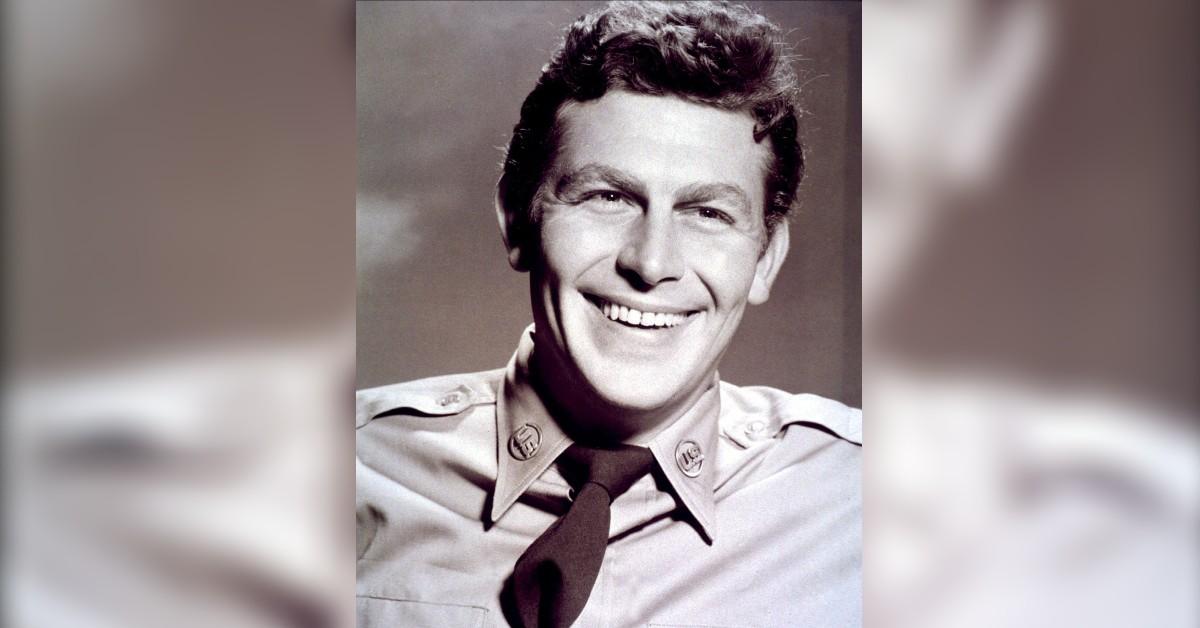
Andy Griffith and Don Knotts came off as country bumpkins keeping the peace in the sleepy sitcom town of Mayberry — but their squeaky- clean image hid dark secrets and sleazy off-camera antics! From 1960 until 1968, The Andy Griffith Show showcased small-town life in fictional Mayberry, N.C.
It starred Griffith as Sheriff Andy Taylor, Knotts as Deputy Barney Fife, a young Ron Howard as Griffith’s son, Opie, Frances Bavier as Aunt Bee and a cast of supporting characters. It’s been almost eleven years since Griffith died of a heart attack on July 3, 2012. Now, OK! can rip the lid off the shameful secrets behind The Andy Griffith Show — including its beloved stars’ boozing, cheating and cruelty to kindly spinster Aunt Bee!
Despite playing a goodhearted, folksy sheriff on the show, Griffith had a reputation as a mean drunk and had some costars shaking in their boots! “Friends winced at the thought of spending an evening in the Griffith home,” said Daniel de Visé, author of the book Andy & Don. George Lindsey, who played Goober Pyle, a hayseed car mechanic on the show from 1964 to 1968, noted Griffith’s volatile moods in his 1995 memoir, Goober in a Nutshell. “Most of us were deathly afraid of Andy,” recalled Lindsey, who died in 2012. “Every Monday night, he would call you if he liked your performance. If the call didn’t come, I dreaded going back to work on Tuesday morning.”
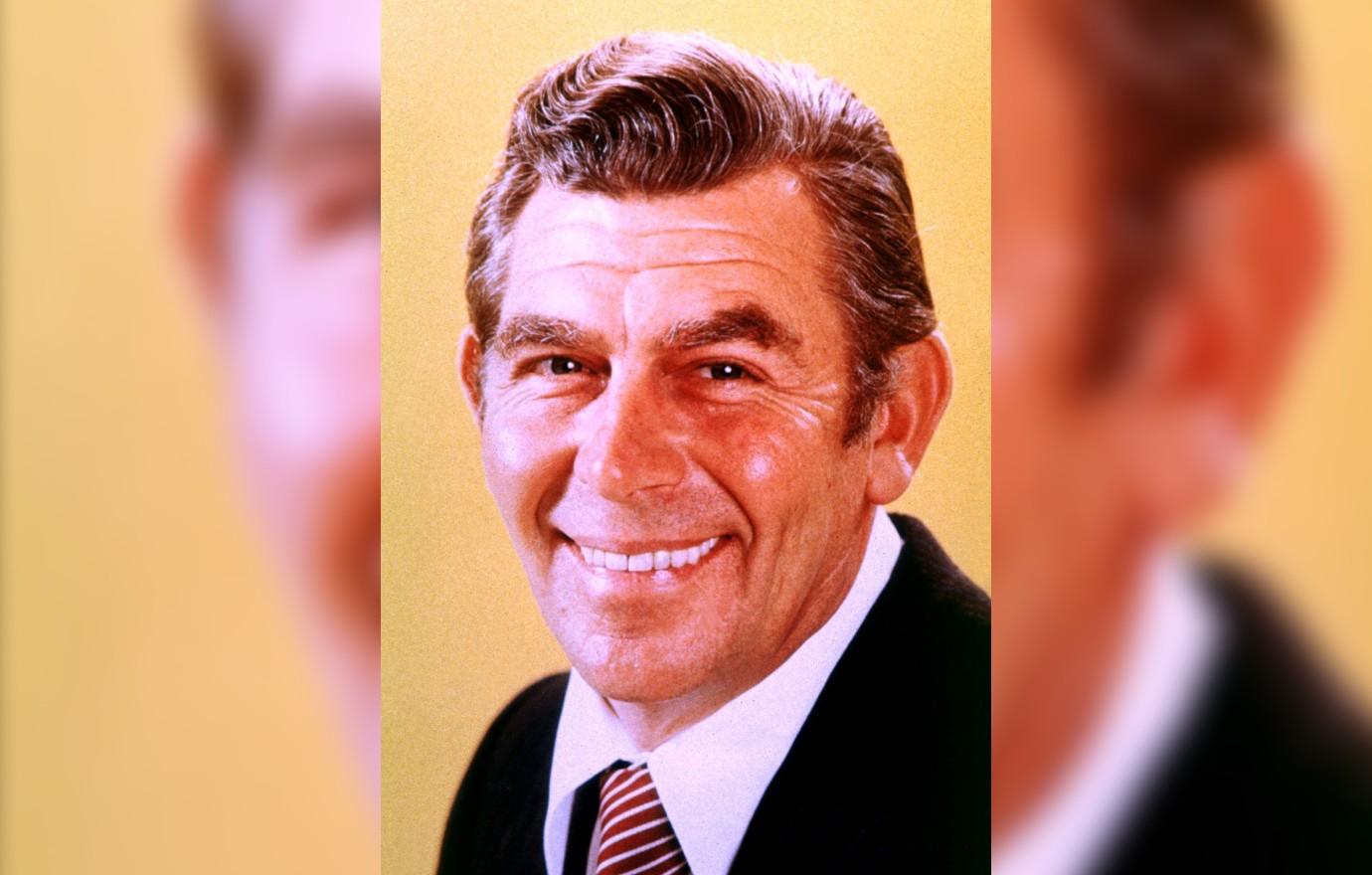
The star’s white-hot rages were “unbearable,” spilled an insider — and during a furious fight with first wife Barbara, Griffith punched out a car’s windshield! Griffith later admitted he saw a shrink for more than a dozen years to control his anger, according to insiders.
The actor’s childhood had been rough, and there were times he said he felt looked down upon because of his “wrong side of the tracks” up- bringing in Mount Airy, N.C. He was especially bitter — and jealous — over the Emmy Awards and critical acclaim that Knotts won for playing bumbling Deputy Barney to his Sheriff Andy.
Knotts had an equally troubled childhood, growing up in a small town in West Virginia, with a disabled alcoholic father who reportedly held a knife to his own son’s throat. It fueled the two stars’ rift and prompted Knotts to leave the show in the lurch after five seasons, but it wasn’t always that way.
Knotts and Griffith had become friends in 1955 when they costarred in the Broadway play No Time for Sergeants. For years, they were partners in crime — sex-crazed womanizers who cheated on their first wives, stepping out on double dates with their mistresses! During the show, Griffith played practical jokes on Barney, calling him by his real name “Jess,” when he was annoyed, knowing Knotts hated that name. Griffith would also drop heavy metal film canisters when Knotts was sleeping. Many years after the show, they made up, and in 2000, Griffith said of Knots, “The five years we worked together were the best five years of my life.”
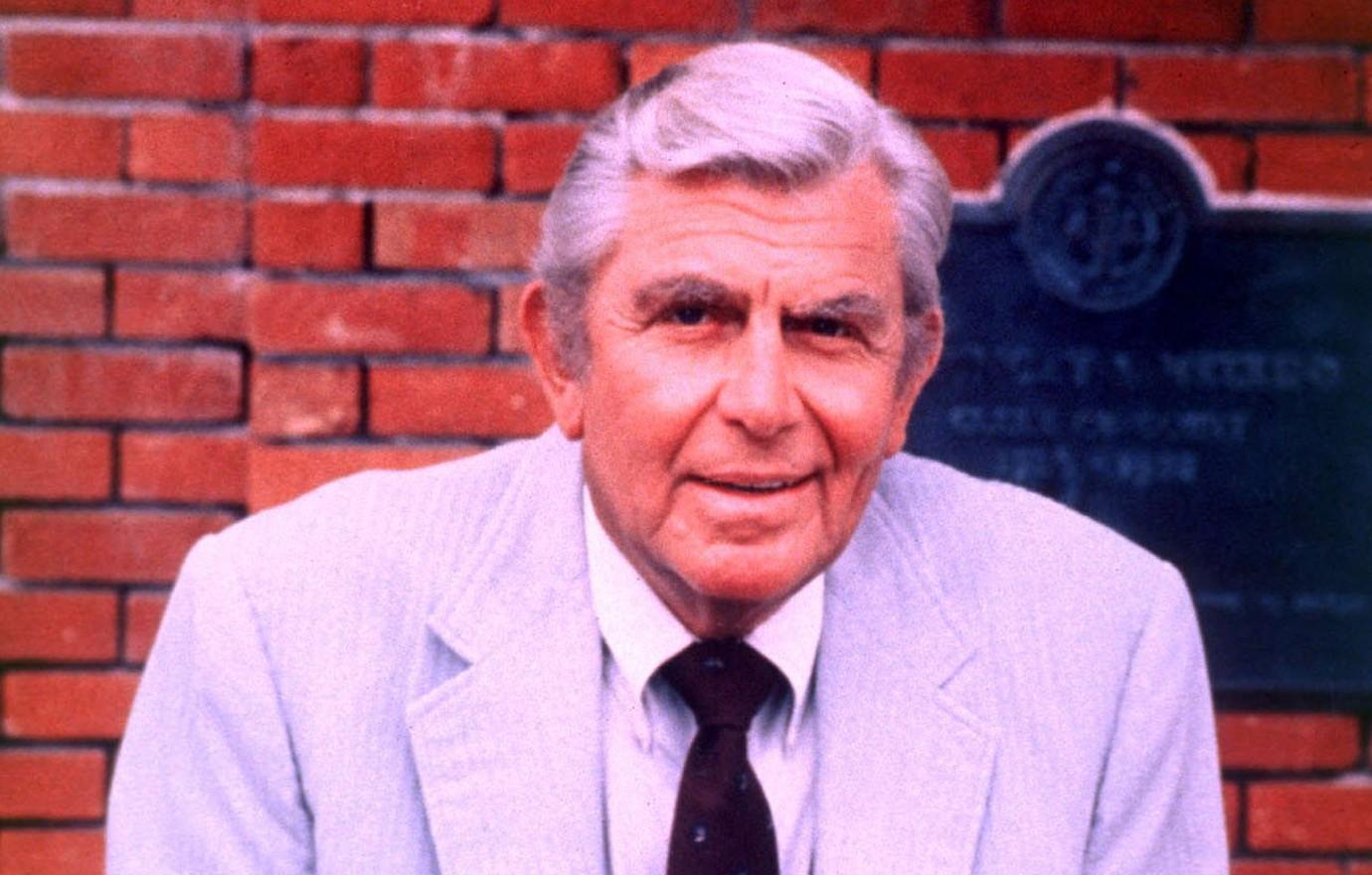
They kept in touch until Knotts’ death in 2006, and Griffith was at Knotts’ bedside before he died of lung cancer.
Actress Aneta Corsaut, who played Griffith’s on-screen girlfriend, teacher Helen Crump, became his real-life lover almost immediately after joining the cast in 1963. “Andy couldn’t get enough of Aneta,” de Visé wrote, adding that one of Griffith’s buddies described the relationship as “true love. They were closer than anyone knew.”
But the couple’s torrid affair was the worst-kept secret on the set! In one of their many pranks, a crew member donned a waiter’s uniform and delivered food to Griffith’s Hollywood hotel room — catching him locked in a steamy embrace with Corsaut. Griffith was fit to be tied!
Knotts was married to Kathryn Metz at the time, but his sweetie was Lynn Paul, the assistant to Griffith’s manager, according to the book. When Knotts confessed to his wife he’d been bedding Paul, their marriage collapsed and they divorced in 1964, claims author de Visé.
Two-timing Griffith also hid his affair with Corsaut from wife Barbara, whom he wed in 1949. They divorced in 1972, but not before lusty Griffith bedded a number of other babes, including actress Joanna Moore, who appeared in four episodes of the series. Moore went on to wed Love Story hunk Ryan O’Neal and gave birth to their daughter, Tatum.
Griffith was married to third wife Cindi Knight when he passed away at age 86. For some mysterious reason, Griffith’s body was buried five hours after he died! Actress Bavier, who played lovable Aunt Bee on the CBS sitcom, also incurred Griffith’s wrath. In the time leading up to her death at 86 in 1989 the actress was heartbroken because “she thought Andy would always remain her dear friend,” said a pal. “But to her bitter disappointment, once the show was over, Andy forgot all about her.”
But she wasn’t thrilled with the role of Aunt Bee, and didn’t have much of a sense of humor on set. Although she and little Howard were friends, the adults hated being around her! Despite her matronly nature in front of the camera, Bavier herself was from a wealthy New York family — and it’s rumored she called Griffith before her death and apologized for being “difficult” when they worked together!

She thought most of the cast didn’t take their jobs seriously, and didn’t mind telling them that, which made Griffith see red! Other cast members said Bavier was known for having an attitude. She couldn’t stand anyone cursing on the set, and her costars sometimes felt they had to walk on eggshells around her. Once, Lindsey cursed up a storm and she smashed him with her umbrella!
Howard was only six when he began playing Opie Taylor, and he had a wonderful experience working on the series, saying it was a lot like living in Mayberry. “It was warm and funny, like the show,” said the actor-director. “I learned hard work and fun were not diametrically opposed. In fact, they could work hand in hand. Andy taught me about the spirit of collaboration, which I’ve carried with me forever. I grew up in an environment with an equilibrium, a work ethic, but also a sense of joy.”
 Lord Buckbeak: "Will you come into my parlor?," said the Spider to the Fly.
Leave a comment