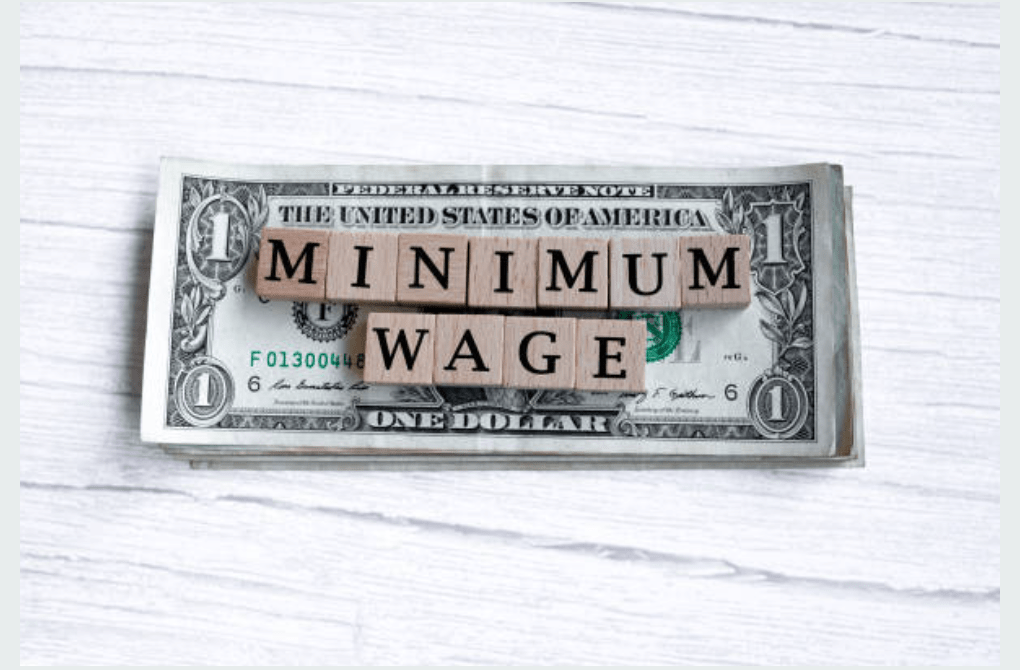
Andrew Wegley – Apr 30, 2025 – Lincoln Journal Star
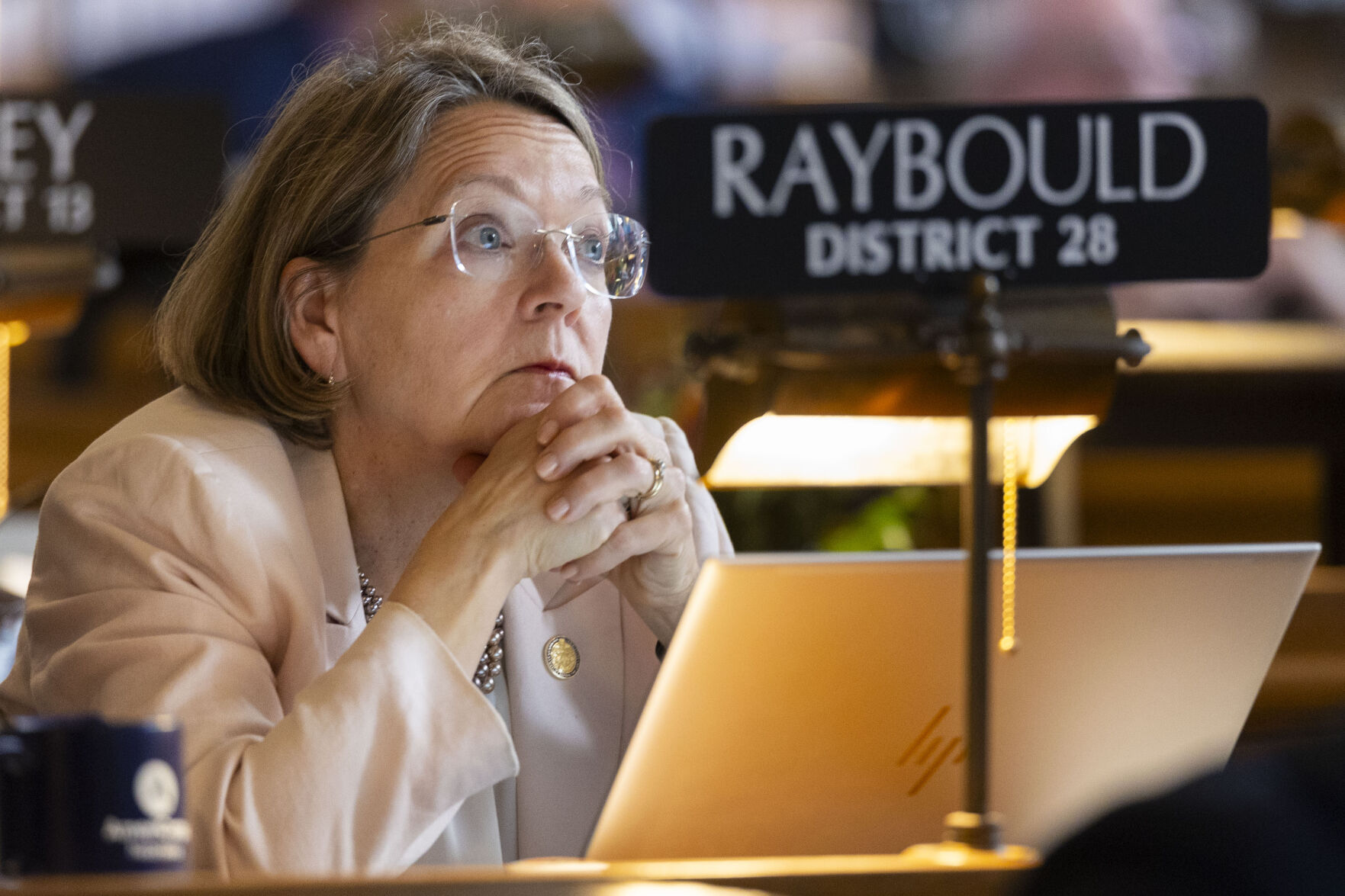
Sen. Jane Raybould of Lincoln listens to senators speak during floor debate at the Capitol on April 22. Her proposal to set increases to the state’s minimum wage at a percentage rather than using a cost-of-living measure moved Wednesday to the final round of debate.
My cmnt: As economics professor Thomas Sowell has repeatedly pointed out minimum wage laws were put into place to help the unions and suppress the hiring of blacks. FDR’s Great Depression was exacerbated by his first national minimum wage law which threw 500,000 blacks out of work in 1933. Businesses which employ teenagers and part-time workers are forced to close because of minimum wage hikes. Very, very few full-time employed adults actually work for minimum wage. Minimum wage is mostly paid to young, unskilled workers looking for their first job as teenagers. It is not feasible to hire these workers when the minimum wage is raised to make college-educated, white Liberals feel better about themselves.
My cmnt: Most democrat lawmakers know that their bread is buttered by having and maintaining government (i.e., taxpayer) jobs or welfare, for both themselves and their constituents. Democrat state legislator Jan Raybould is an exception. She is a business owner which employs lots of teenagers. As she is attached to the real world, instead of the fantasy world of most democrats, through her company, she realizes that the new Nebraska minimum wage act passed by the heavy influence of out-of-state democrat money and not the legislature hurts job-providing businesses and hardly helps workers. It hardly helps workers because when you artificially raise wages and therefore costs of doing business you simply hire less and less minimum wage workers to make up the difference.
Less than three years after 58.7% of Nebraska voters approved annual cost-of-living increases to the state’s minimum wage, lawmakers moved Wednesday to instead increase the wage by 1.75% per year beginning in 2027.
State voters in 2022 voted to gradually raise Nebraska’s minimum wage to $15 an hour next January and increase it annually with the cost of living each year after.
But a proposal from Lincoln Sen. Jane Raybould, a Democrat, who co-owns the parent company of Russ’s Market and Super Saver, sought to cap future increases to the minimum wage at 1.5% while also allowing businesses to pay children younger than 16 less than minimum wage.
Her proposal (LB258) narrowly survived the first of three rounds of debate in Nebraska’s Legislature earlier this month, when Sen. Stan Clouse, a Republican from Kearney, gave Raybould’s bill the final vote it needed to overcome a Democrat-led filibuster while taking issue with the provision in the bill that would have limited increases to the minimum wage at 1.5% but allowed for wages to remain stagnant when the cost of living didn’t grow.
Clouse pledged to withhold his support if Raybould didn’t swap that provision with a guaranteed, fixed-rate annual increase to the minimum wage that would provide certainty to employers and workers alike.
The two lawmakers agreed to replace the 1.5% cap with the 1.75% guaranteed annual increase — a compromise that helped Raybould’s amended bill advance to the final round of debate Wednesday.
The 1.75% annual raise will increase Nebraska’s minimum wage by 26 to 30 cents annually for its first eight years in effect. Under the bill, the state’s minimum wage would surpass $16 an hour in 2031 and breach $17 per hour in 2035.
But the compromise did not appease Democrats, who were unmoved by the guaranteed annual increase and filibustered Raybould’s bill again Wednesday, casting it as an attempt to chip away at the will of Nebraska voters.
Under the law passed by voters, Nebraska’s minimum wage was set to rise annually according to the Midwest consumer price index, which has risen by as much as as 9.5% in recent years and hasn’t dipped below 2.5% since at least 2022 — meaning the fixed annual increase established by Raybould’s bill will raise the minimum wage by less than what the voter-approved law originally would have based off recent data.
“If inflation is increasing and the price of eggs or the price of gas or the price of housing is going up, and we artificially restrain minimum wage earnings from keeping pace with that, it drives working families deeper into poverty,” said Sen. Danielle Conrad of Lincoln, who led Wednesday’s filibuster against Raybould’s bill.
Opponents, too, pointed to the 2022 election results in which more than 57% of voters — including voters in 37 of Nebraska’s 49 legislative districts — backed the hike to the state’s minimum wage, which lawmakers have never voted to raise.
Raybould’s bill is one of several introduced this year that seek to narrow laws enacted by Nebraska voters in recent years. Lawmakers have granted first-round approval to a bill that would exclude certain employees from the paid sick leave law passed by nearly 75% of voters in November, while a bill to implement voter-approved medical cannabis laws remains stuck in the Legislature’s General Affairs Committee.
“It’s just ridiculous,” Omaha Sen. Terrell McKinney said, calling for the Legislature to rebrand itself “the … Legislature to go against the will of the people of Nebraska.”
But Raybould and her Republican allies in the body disputed the notion that they were undermining state voters, noting that Nebraska’s constitution gives lawmakers the right to amend laws passed by voters and casting doubt on the purity of the $3.57 million ballot campaign that led to the minimum wage increase.
“By my estimation, it’s almost $3.5 million they spent to promote this ballot question, and they got about 330,000 votes,” Sen. Mike Moser of Columbus said. “So it’s not so much the will of the people as it is the will of the people from Washington, D.C., that contributed all this money.”
Sen. Kathleen Kauth of Omaha, meanwhile, argued that the “minimum wage was not put in place to support families.”
“Minimum wage was put in place as a safeguard against people being used too much,” she said. “If you want more money — if you need more money — ask for more responsibility, increase your skills, change yourself rather than asking the government to do it for you and you don’t change anything at all.”
After four hours of debate, the Legislature voted 33-16 to end the filibuster as Raybould, a Democrat, joined nearly every Republican to push the bill to the final round of debate.
 Lord Buckbeak: "Will you come into my parlor?," said the Spider to the Fly.
Leave a comment