
Dr. Scott Atlas– 5-Minute Videos – Mar 24, 2025 – Prager U
Trust in public health officials and scientific “experts” is at an all-time low. No surprise, given the disaster of the COVID lockdowns. So, how should the government respond to the next pandemic? Dr. Scott Atlas, former advisor to the president and member of the White House Coronavirus Task Force, reveals the key lessons we must learn to prevent history from repeating itself.
How should the government respond to the next pandemic?
As a physician, former Chief of Neuroradiology at Stanford, advisor to the president, and a member of the White House Coronavirus Task Force in 2020, I am often asked this question.
Here’s my answer.
DON’T close schools.
DON’T shut down businesses.
DON’T mandate masks or drugs.
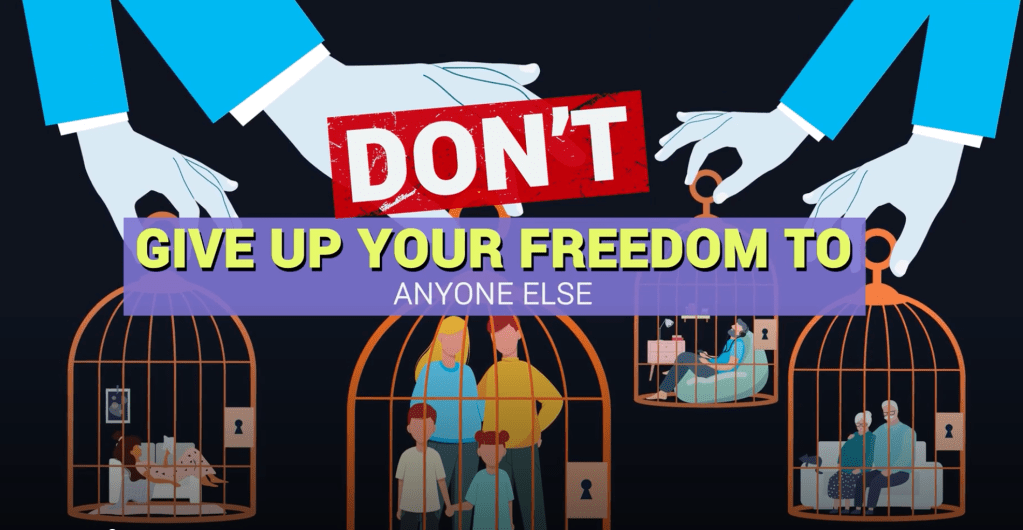
And most importantly, DON’T give up your freedom — to politicians, bureaucrats, or anyone else.
EVER.
Sound extreme? It shouldn’t. What I’m suggesting is just common sense, based on the evidence and ethical public health policy.
When COVID hit in early 2020, the White House proposed a 15-day pause to “slow the spread.” A temporary, short-term measure to ensure hospitals could deliver care even in a “worst case” scenario. Beyond that, the approach would be standard pandemic management: stay home if sick or at high risk, protect the elderly and vulnerable, and let everyone else continue with their lives.
But fear and politics overtook data and biology.
Politicians—governors, mayors, and local officials—pushed for extended lockdowns, panicked that they would be blamed for the rising death toll. They aggressively seized new powers to justify their actions.
15 days turned into 15 months. And then some.
The lockdowns failed in every respect.
By fall 2022, nearly all Americans had been infected.
Meanwhile, the harms caused by the lockdowns cascaded across the entire society.
Here are just three:
One: Health Consequences
Medical care was delayed or denied, leading to unnecessary deaths. In spring 2020, nearly half of the 650,000 cancer patients skipped chemotherapy, and 85% of living organ transplants were canceled.
Emergency room visits fell by 45%, even for critical conditions like heart attacks and strokes. People were too afraid to seek care, fearing they might catch COVID.
Routine screenings and diagnostic tests were missed, delaying the detection of life-threatening diseases like cancer.
Two: Economic Devastation
The Bureau of Labor Statistics reported that in May 2020, 50 million Americans were out of work or working fewer hours—not due to the virus, but because of lockdowns.
Small businesses were crushed, with hundreds of thousands never reopening. Families saw a lifetime of work and savings wiped out overnight.
Meanwhile, the “laptop class” worked comfortably from home. Low-income workers bore the brunt of the economic collapse.
Three: Psychological Damage
Isolation and fear triggered surges in depression, anxiety, and suicides, especially among teens. Psychiatric issues, self-harm, and substance abuse skyrocketed.
Children, especially from poor families, suffered massive learning loss. The prolonged school closures led to falling test scores and long-term educational setbacks that may never be recovered.
Elderly parents and grandparents in nursing homes and hospitals were cut off from their loved ones, many dying alone.
And for what?
Lockdowns did not stop the spread of COVID, nor did they protect high-risk populations. Studies by the National Bureau of Economic Research and the Institute of Economic Affairs show that lockdowns prevented only a small number of COVID deaths, between 4,000 and 16,000, while creating vast collateral damage – and killing countless more.
Sweden took a different approach, rejecting lockdowns and keeping schools open. Their policies resulted in the lowest excess mortality increase among Western nations, proving that it was possible to protect the public while preserving individual freedom. No Swedish schools were closed, and their children avoided the severe psychological and educational harms seen elsewhere.
Data from Sweden suggests that if the U.S. had adopted similar policies, it could have avoided up to 1.6 million deaths from the lockdown-related economic and health impacts.
Considering all this, it’s hardly surprising that the trust in our public health agencies, medicine, and science itself has plummeted. People don’t know what to believe or who to believe. And rightfully so.
So, what needs to be done?
The government broke it.
But the people must fix it.
Here’s how:
First, we need to think for ourselves.
The era of blindly trusting “experts” solely based on their titles or credentials must end. We need to evaluate evidence for ourselves and our families. That’s on us.
Second, we must limit government power in times of emergency.
State legislatures should clearly define what constitutes a health emergency. We also need laws that make it virtually impossible to shut down society. Guarantees of freedom are most important during times of crisis. Those guarantees must be protected from overreach and abuse.
So, how should the government respond to the next pandemic?
The more important question is — how will we, the people, respond?
And that depends on how well we learn the lessons from the last one.
I’m Dr. Scott Atlas, Senior Fellow in Health Policy at the Hoover Institution of Stanford University, for Prager University.
 Lord Buckbeak: "Will you come into my parlor?," said the Spider to the Fly.
Leave a comment