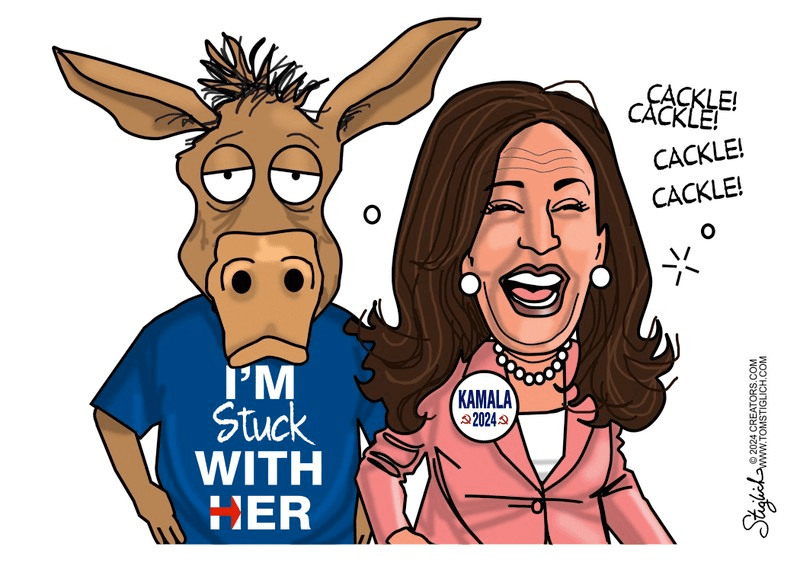
Andrew Wegley – Aug 23, 2024 – Lincoln Journal Star
My cmnt: We do NOT want to enshrine the “right” to abortion into our state constitution. So Pro-Life voters need to vote AGAINST “Protect Our Rights” amendment (actually vote against it – do not just ignore it) and vote FOR “Protect Women and Children” amendment.
My cmnt: It’s unfortunate that the abortion lobby caused this dueling amendment battle. The United States Supreme Court in 2022 finally overturned the hideous and extra-constitutional Roe v Wade decision of 1973 which was legislating from the bench to invent a wholly new “right” never before seen in the Constitution. Dobbs simply returned abortion regulation to the states where it had always been. The Left, nature worshipers, Darwinists, Canaanites and other democrats went all apeshit – like a monkey on a cupcake.
My cmnt: They said in effect: Aaaaahhhh! You’ve taken away my right to worship Baal through human sacrifice. I must offer at least one of my children to the fire so that the gods of nature will protect Mother Earth and grant an organic harvest. Sex is our religion and abortion is our sacrament.
Nebraska voters will be the first in the country to directly choose between a 12-week abortion ban and a proposal to ensure abortion access “until fetal viability” this November after the Secretary of State on Friday certified that both petitions met the signature requirements to crack the ballot.
The either-or vote facing Nebraskans this November is without precedent in the state, which has not previously had two conflicting petition efforts make the same ballot, Secretary of State Bob Evnen said in a news release Friday.
“Barring any legal challenges, this November general election ballot will host two ballot measures that appear in direct conflict with each other, which could be the first time this has happened in Nebraska’s history,” Evnen said.
His announcement comes after the rival campaigns seeking to amend Nebraska’s constitution through ballot questions both turned in more than 200,000 signatures to Evnen’s office in July after spending months and millions of dollars circulating dueling abortion access petitions.
One proposed amendment, circulated by a group of abortion access advocates known as the Protect Our Rights campaign, seeks to enshrine “a fundamental right to abortion until fetal viability” into the state’s constitution.
The other proposed amendment, backed by the Protect Women and Children committee, seeks to enshrine the state’s 12-week abortion ban, established by lawmakers last year, into Nebraska’s constitution.
What will Nebraskans be voting on?
If dueling proposed constitutional amendments over abortion access are approved by Nebraska voters in November, the ballot measure that receives the highest number of approving votes will prevail. Here are the competing proposals:
The “Protect Our Rights” petition, backed by Planned Parenthood and the ACLU, seeks to enshrine the “fundamental right to abortion” in Nebraska’s constitution. Here is the exact policy language the group has proposed:
“All persons shall have a fundamental right to abortion until fetal viability, or when needed to protect the life or health of the pregnant patient, without interference from the state or its political subdivisions. Fetal viability means the point in pregnancy when, in the professional judgement of the patient’s treating health care practitioner, there is a significant likelihood of the fetus’ sustained survival outside the uterus without the application of extraordinary medical measures.”
The “Protect Women and Children” petition, backed by Republican donors including Sen. Pete Ricketts, seeks to protect “unborn children” through a constitutional amendment. Here is the exact policy language the group has proposed:
“Except when a woman seeks an abortion necessitated by a medical emergency or when the pregnancy results from sexual assault or incest, unborn children shall be protected from abortion in the second and third trimesters.”
Petitions seeking to amend Nebraska’s constitution through a ballot measure must collect valid signatures from at least 10% of voters statewide — or about 122,000 voters — and signatures from at least 5% of registered voters in at least 38 of the state’s 93 counties.
Both campaigns surpassed both requirements, Evnen said Friday.
If both proposals are approved by voters Nov. 5, the ballot measure that receives the highest number of approving votes will prevail. That sets up what is sure to be an expensive general election campaign cycle that will give Nebraska voters the power to directly weigh in on the future of abortion access in the state.
The head-to-head matchup in November will come more than two years after the Supreme Court overturned Roe v. Wade in June 2022, ending the constitutional right to abortion that had been upheld for decades and turning the issue over to states.
Before the Supreme Court overturned Roe v. Wade, Nebraska had outlawed abortions after the 20th week of pregnancy, a law that had been in place since 2010.
In May 2023, Nebraska lawmakers narrowly voted to ban abortions after 12 weeks gestational age with no exceptions for fetal anomalies, though there are exceptions for rape and incest. That vote came after a more restrictive six-week ban fell one vote short of advancing in the Legislature in April 2023.
Now, voters will likely have the chance to restore abortion access beyond even the restrictions that had been in place under Roe — or reaffirm the Legislature’s decision to broadly bar the procedure after 12 weeks.
“Today is an important next step for this campaign,” Allie Berry, the campaign manager for Protect Our Rights, said in a news release following Evnen’s announcement Friday. “Nebraskans in every corner of the state believe in the freedom to make private health care decisions without political interference. Now, they can make this a reality in November.”
In its own statement, the Protect Women and Children committee said the petition’s “broad support in collection efforts signifies Nebraskans’ support to protect both women and children.”
“It provides exceptions for rape, incest and the life of the mother, and protections in the second and third trimester,” the committee said. “Voters have the choice to reject an extreme, activist amendment that invites government intrusion between a woman and her doctor and paves the way for taxpayer-funded abortions in favor of this consensus option.”
Though both campaigns turned in north of 200,000 signatures last month, Evnen’s office instructed county election offices — tasked with verifying signatures collected in their jurisdictions — to halt verification after the petitions had 110% of the signatures they needed to qualify for the ballot.
Evnen said both campaigns turned in more than 136,000 valid signatures from Nebraska voters statewide.
The Protect Our Rights coalition collected valid signatures from at least 5% of registered voters in 47 counties, while the Protect Women and Children committee collected valid signatures from at least 5% of registered voters in 86 counties, Evnen said.
Both campaigns spent millions in the lead up to the July 3 deadline to turn in signatures to Evnen’s office as the groups made their final push to reach November’s ballot, relying in part on paid petition circulators.
The rival camps both spent around $2.7 million between the launch of their respective campaigns and the end of June, according to campaign finance filings.
The Protect Our Rights campaign — backed in large part by the Planned Parenthood Advocates of Nebraska, the ACLU of Nebraska and Nebraska Appleseed — launched its petition effort in November.
Funded almost entirely by two families — that of U.S. Sen. Pete Ricketts and the Peeds, the family behind Sandhills Global — the Protect Women and Children campaign kicked off its drive in March.
Combined, the rival campaigns spent $2.3 million in June alone.
Evnen’s certification of both abortion petitions Friday means Nebraska voters will consider at least three ballot measures this fall.
His office certified a petition last week seeking to require Nebraska employers to offer paid sick leave to workers.
The Secretary of State’s office hasn’t yet certified a pair of petitions seeking to legalize medical cannabis in the state. Organizers behind that effort turned in more than 114,000 signatures to Evnen’s office last month — some 27,000 more signatures than the 87,000 needed for the initiative petition to qualify for November’s general election ballot.
Initiative petitions require fewer signatures to qualify for the ballot than petitions seeking constitutional amendments, as both abortion petitions do.
Nebraska abortion initiative with the most votes would become law, if voters pass more than one
Evnen says possibility could trigger gubernatorial decision on whether amendments in conflict
By: Aaron Sanderford – May 28, 2024 5:00 am – Nebraska Examiner
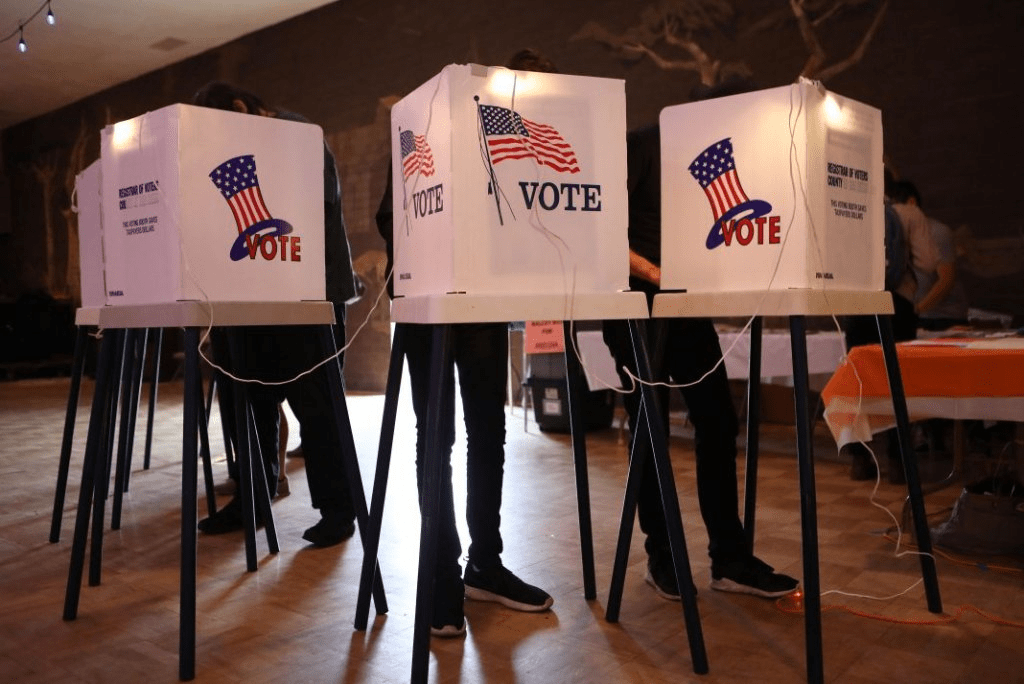
LINCOLN — Nebraska voters could face an unusual result from a November election that is likely to see multiple — and possibly dueling — ballot initiatives.
What happens if voters pass more than one competing constitutional amendment on the same issue?
The short answer: The one with the most votes wins if more than one is passed and in legal conflict with one another.
“If they’re on the same topic, you’re looking for the amendment that received the most raw votes (for passage),” Nebraska Secretary of State Bob Evnen said. “It’s not the percentage.”
That quirk of state law and constitutional design could come into play this fall on the issue of abortion.
Three potential amendments
Three groups are circulating potential constitutional amendments on abortion for the November ballot. Each appears at odds with the others.
One initiative, put forward by Protect Our Rights Nebraska, would enshrine the right to an abortion in the state constitution up until fetal viability, which most place between 22 and 24 weeks.
A second, put forward by Protect Women and Children, would prohibit most abortions after the first trimester, much like current law, but it would let the Legislature restrict abortion further in the future.
A third, put forward by Now Choose Life, would grant “personhood” under the law to embryos and fetuses in a mother’s womb, making the law treat them like a child who has been born.
At least the first two appear to have a chance of passage, based on public opinion and results of elections in other states showing support either for abortion rights or for abortion bans after 12-15 weeks.
The third effort started late, but it could find support among people in communities of faith, raising the possibility of not just two amendments passing that might conflict, but three.
People behind the petition efforts had no immediate comment.
What happens if it happens
Evnen, the state’s top election official, spoke to the Nebraska Examiner this week about what the possibility of more than one ballot issue passing might mean.
First, he said, the State Canvassing Board would have to meet after the election to certify the election results.
Within 10 days of certification, Evnen explained, Gov. Jim Pillen would decide whether the constitutional amendments were in conflict with one another and to what degree.
“In this particular case, these appear to me to be entirely in conflict,” Evnen said.
Under state law, the governor has the ministerial duty to convey what constitutional amendments have passed. The one with the most votes would be amended into the constitution.
That power is rooted in Article III, Section 2 of the Nebraska Constitution and clarified in Nebraska Revised Statute 32-1416.
For voters, Evnen said, the calculus changes.
“If a voter says, ‘This is what I want to have passed, and I don’t want that,’ the wisest course of action is for them to vote for the measure they want and against the measure they don’t want,” Evnen said.
How it could happen
Some people might vote for more than one of the amendments, especially the abortion-rights amendment and the Protect Women and Children initiative.
Some supporters of the abortion-rights amendment have said they wanted it to provide a specific number of weeks in which abortions would be allowed. They might be drawn to the Protect Women and Children initiative, because it includes language banning abortion after the first trimester.
Abortion-rights supporters say the Protect Women and Children language was designed to confuse voters so it might seem more moderate than it is.
Supporters of the Protect Women and Children petition acknowledge that it was written to set a maximum number of weeks abortions could be performed. It would still allow abortion to be further restricted by the Legislature.
It was unclear whether a similar issue has arisen previously in Nebraska, although other states, including California, Missouri and Oregon, have previously passed competing amendments.
Petition drive backers have until July 3 to turn in signatures to the Secretary of State’s Office.
 Lord Buckbeak: "Will you come into my parlor?," said the Spider to the Fly.
Leave a comment