Chris Dunker – Apr 30, 2024 – Lincoln Journal Star
My cmnt: This is of course a wonderful idea so naturally the Lib-Left-Loonies (i.e., democrats) in the Nebraska state legislature scream bloody murder. Also please note in column below this one that even Gov. Newsom of California is trying to do the same thing.
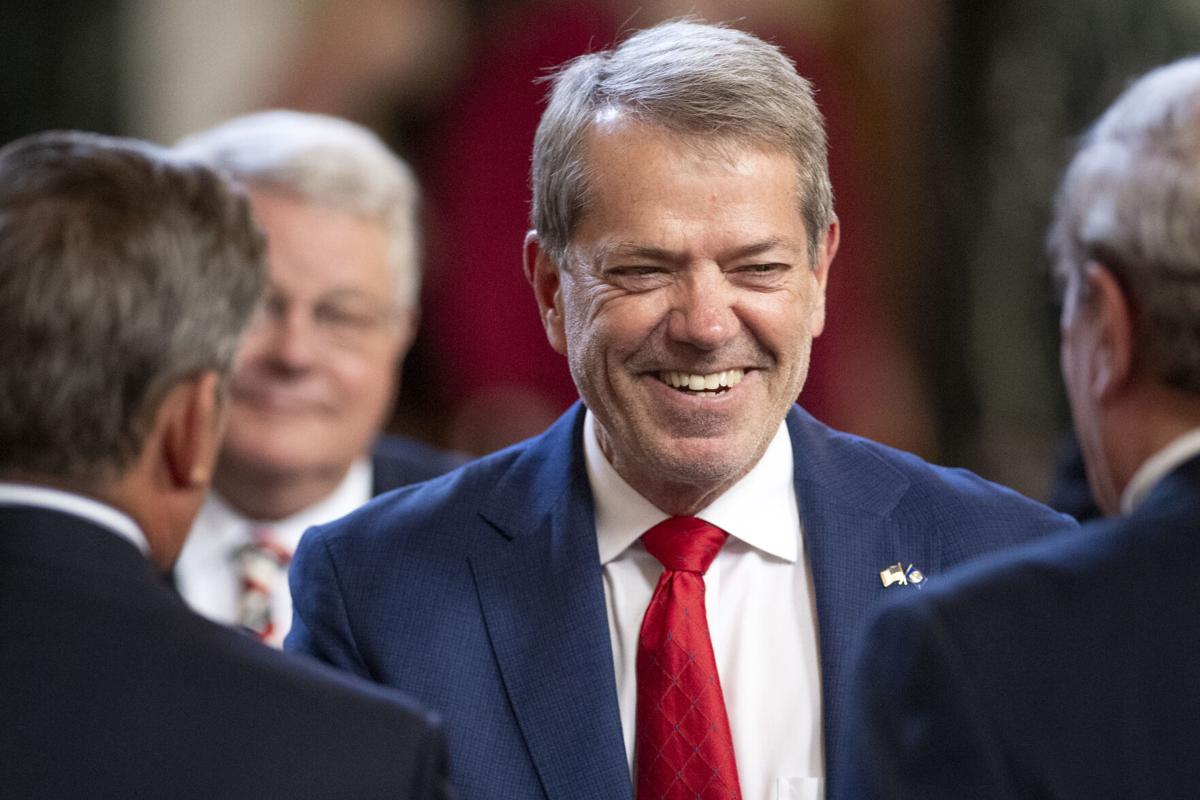
Gov. Jim Pillen on Tuesday signed an executive order that aims to eliminate up to 1,000 state government jobs that have remained open for 90 days or more.
The funds budgeted for those positions will be reallocated to other priorities of the state or be used to lower property tax payments for Nebraskans, the governor said.
The executive order takes effect on June 1.
“I promised to run state government like a business and this order delivers on that promise,” Pillen said in a news release. “These positions have been vacant for months or even years, and yet government has continued to function.
“We have proven we can work without them, so we will eliminate them and return the money to the taxpayers,” he added.
But one state lawmaker, our resident Marxist/community agitator, cast doubt on Pillen’s ability to reallocate appropriated funds to a different purpose — something the Nebraska Constitution gives only the Legislature the authority to do – as if she cared about the Nebraska Constitution.
“Governors cannot appropriate no matter how much they wish to,” Lincoln Sen. Danielle Conrad said. “There’s no ability for the governor to take an appropriation and simply shift it over to a property tax relief fund. That’s not legally permissible.”
However when democrats, her party of choice, want to do something unconstitutional she’s always the first to proclaim it a living document subject to interpretation.
Conrad said an effort by Pillen earlier this year to recapture unused cash funds from various state agencies went through the Legislature’s appropriations process and won three rounds of approval by state senators on the floor.
Any attempt to do so with funds appropriated to state agencies for specific purposes would have to go through a similar process, she added.
“There is no constitutional or legal avenue for the governor to re-appropriate funds on his own whims or desires,” Conrad said, “and there’s a very clear example that the governor understands that.”
While the executive order targets positions that have been open for at least 90 days, Pillen identified several categories of government staff that would not be cut.
Those positions include law enforcement officers, correctional officers, firefighters, children and family service specialists, or other state employees directly involved in public safety.
Positions that provide direct operational support or facilities offering around-the-clock service are also protected from elimination, as are highway maintenance and construction workers.
The executive order also does not apply to executive branch staff working for the governor, lieutenant governor, secretary of state, state treasurer, attorney general and state auditor.
It also does not affect legislative and court staff, employees at the Public Service Commission, University of Nebraska, Nebraska State College System, Nebraska Department of Education, Coordinating Commission for Postsecondary Education and other offices.
The goal of closing 1,000 vacant positions could result in a savings of $39.4 million, including $15.2 million of direct savings to the state’s general fund, Pillen’s office said.
The governor said savings up to 25% more “may be possible,” which could bump total taxpayer savings to $49 million.
The plan to achieve savings by closing open jobs comes less than two weeks after Pillen’s proposal to reduce Nebraskans’ property tax bills by 40% failed on the floor of the Legislature.
Pillen’s plan called for eliminating sales tax exemptions and hiking the sales tax rate but was met with opposition from a wide array of businesses, anti-tax advocacy groups, think tanks and others.
Following Tuesday’s announcement, the Nebraska Association of Public Employees, which represents more than 8,000 state workers, said the plan to close open positions to achieve savings would hurt all Nebraskans.
NAPE represents employees who work in 300 different frontline jobs in each of Nebraska’s 93 counties.
Justin Hubly, the executive director of NAPE, said one in five state jobs are currently waiting for a qualified applicant to fill the position. Closing those vacancies would put added pressure on the remaining workforce, ensuring they work short-staffed permanently, he said.
“We should expect consequences, including longer lines and closures at (Department of Motor Vehicles) locations to continue, hold times to increase when applying for Medicaid, and a slowdown in the delivery of unemployment services, just to name a few,” Hubly said.
“We want to do the best for our neighbors, but we simply can’t deliver quality service with a permanent 20% reduction in the state workforce,” he added.
Hubly said the executive order will force NAPE members to take on more work for essentially the same pay, and he said they plan to negotiate higher wages if Pillen goes through with his plan to cut positions.
“The governor has a noble goal of reducing property taxes and running the most efficient state government possible,” Hubly said. “Funding for property tax relief, however, cannot come at the expense of providing quality frontline services to all Nebraskans.”
Conrad believes Pillen’s executive order will generate debate around the Capitol and beyond during the interim and perhaps outline his intent for the 2025 legislative session.
“To me, that’s signaling they are looking at this in preparation for a budgetary plan they will present to the Legislature at some future time,” she said.
Newsom’s Budget Revisal Proposes 10,000 Vacant State Jobs Being Cut, Cuts To 260 State Programs
California still has a massive deficit whether you look at Newsom’s lowball numbers or the state projections
By Evan Symon, May 11, 2024 7:45 am

California Governor Gavin Newsom speaking at the State of the State address in Sacramento, CA, Mar 8, 2022. (Photo: Sheila Fitzgerald/Shutterstock)
During his May revised 2024-2025 state budget proposal announcement on Friday, Governor Gavin Newsom proposed cutting around 10,000 vacant state jobs, as well as spending to 260 state programs.
Back in January, Governor Newsom released his first 2024-2025 state budget proposal. In it, Newsom had the budget set at $291.5 billion with a$37.9 billion deficit attached after previous spending reductions were added in.
The $27.6 billion detailed in his proposal, plus $17.3 billion in proactive cuts recently agreed upon between the administration and the state Legislature, amount to a total of $44.9 billion total deficit. To help pay for it he had delayed spending, more borrowing, and tapping into the rainy day fund to make it all work. But no where there was any mention of job losses or big time cuts spread across hundreds of agencies.
But reality quickly kicked in, during the months that followed. The Legislative Analyst’s Office tacked the real state deficit initially at $58 billion. It soon climbed up to $68 billion, and by late February it was $73 billion. Only a few years before, the state had a $31 billion surplus. But numerous factors, including a weakening economy, a massive loss of the state population, businesses moving out of state, delayed tax changes, and other post-COVID changes sent California on a downward spiral.
Newsom’s office and other state leaders attempted to challenge the LAO’s findings, but the non-partisan analyst’s office numbers held. The LAO figure served as the true figure on how much the state was behind and just how drastically the state needed to change. This led to Newsom’s revised budget announcement on Friday. With Newsom’s announced deficit now higher than his estimate in January, and the LAO not yet saying how much higher the actual deficit is now based on Newsom’s slightly reduced $288.1 billion budget, massive cuts were in mind.
Newsom proposes to cut 10,000 vacant state jobs
Perhaps none were so sweeping as Newsom proposing to cut around 10,000 vacant state jobs and cutting spending to 260 state programs. Newsom didn’t linger on these major changes however, moving on to other key areas like climate change and crime, noting that “Even when revenues were booming, we were preparing for possible downturns by investing in reserves and paying down debts – that’s put us in a position to close budget gaps while protecting core services that Californians depend on. Without raising taxes on Californians, we’re delivering a balanced budget over two years that continues the progress we’ve fought so hard to achieve, from getting folks off the streets to addressing the climate crisis to keeping our communities safe.”
However, employment experts said that should the Legislature agree to the cuts, the 10,000 vacant jobs being cut would not be as dramatic as the Governor and his advisors made it seem.
“State-level job cuts in California is like whack-a-mole. You hit one down and somehow two pop back up,” explained job placement consultant Harriet Colon to the Globe on Friday. “That 10,000 seems like a lot, and it is. That’s salary, benefits, retirement. It does put a small dent in the deficit. But here’s the thing: new state jobs always pop up after cuts. Sometimes they are relisted shortly afterwards as a new position and not based on the cut one. New programs go hire people, so jobs come back that way. Emergency hiring comes into place sometimes thanks to the cuts gutting an area that suddenly need those people back.
“You can cut that rose bush down to the stems, but it is just going to bloom again. He also mentioned cuts in 260 state programs. That’s noble, but many more are getting funding boosts new. Many new programs are coming on-line. I mean, money is still being thrown at climate initiatives, and Newsom is fixing his weak points by boosting funding in areas like crime prevention too.
“10,000 jobs just cut out is a lot. But each year we see so many state jobs come up for people to help place. It comes back fast. If he wanted to truly cut back, he would need to have hard hiring limits across the board. A state job cap. Other states and countries do this when they are in a budget fix. But California won’t even touch that, and look, they still have a massive deficit whether you look at Newsom’s lowball numbers or the state projections.”
More on Newsom’s budget revisal is to come out soon, as the June 15th pass date is just over a month away.
 Lord Buckbeak: "Will you come into my parlor?," said the Spider to the Fly.
Leave a comment