My cmnt: See also the blog (below) from Nagi on how to cook eggs and use them creatively
Hi! I’m Elizabeth Rider at Elizabeth Eats
NOTE: No need to bring them to room temp; you can use this method with eggs straight out of the refrigerator..
NOTE: Fresh eggs are harder to work with. Your refrigerated eggs are perfect.
I’m a Certified Health Coach, longtime blogger, and host of Elizabeth Eats on YouTube. In addition to writing recipes (I love to eat!), I’m a strong believer that life is too short to settle for anything less than living your best life.
TOP LINKS
BREAKFAST IDEASDINNER IDEASALL RECIPES
NEWSLETTERSearch for:

Want to make perfect easy-to-peel hard-boiled eggs recipe to make deviled eggs or your favorite egg recipe?
After a lot of trial and error, I finally figured out the secret to making the shells fall right off of hard-boiled eggs. No more tiny shell pieces or hard-to-peel eggs!

Let me be the first to tell you… we’ve all been led astray on how to boil eggs.
Who else has been told to put the eggs in a pot, cover them with an inch of cold water, then bring them to a boil? Yeah, me too. But that’s where we’ve been doing it wrong.
Follow this process on how to boil eggs on the stovetop (you can also watch this recipe on YouTube or print it in the recipe card below) and I guarantee you will have the easiest-to-peel hard-boiled eggs you’ve ever made. You can also make hard-boiled eggs in the Instant Pot if you prefer.
#1: Easy-To-Peel Hard-Boiled Eggs Are The Result Of A Boiling Hot Start.
I think this “cold start” egg myth came from the fact that potatoes actually do need a cold start. When you give potatoes a cold start—meaning that you put the chopped potatoes in a pot, cover by an inch with cold water, then boil—you wind up with a better texture and a more even cook. (Tuck that away for the next time you make mashed potatoes!)
Because this cooking method is tried and true for potatoes, people have assumed the same with eggs. But that’s not the case! To make sure your hard-boiled eggs turn out perfect, you want to boil the water first, then reduce it to a simmer and gently lower in the eggs.
#2: Making Easy-To-Peel Hard-Boiled Eggs Requires Shocking Them In Cold Water.
After 13 minutes at a low simmer (not a boil—see full method below & read the tips to prevent cracking), immediately put the eggs in ice water to make them easy to peel. Shocking them in ice-cold water stops the cooking process.
This not only yields more tender whites and a perfectly cooked yolk (no weird dark lines here), it immediately cools the eggs which makes them easier to peel.
My friends over at one of my favorite blogs, Serious Eats, go into the science of it, but you can just trust me that it’s true.
You can shock them in a bowl of ice water like I do in this video, or if you’re feeling brave strain the hot water from the pan and add ice and cold water to cover the cooked eggs (but you might crack them this way).

#3: Easy-To-Peel Hard-Boiled Eggs Require A Specific Cooking Time.
You don’t want the water at a full rolling boil for 13 minutes or they will be overcooked (and they may knock together and crack). The best method is to bring the water to a full boil and then reduce it to a simmer, carefully lower the eggs in (a slotted spoon, fine mesh strainer, or spider-skimmer work well), cover the pot, then keep them at a low simmer for 13 minutes.
After the water boils, turn the burner to low and keep them at a very gentle simmer.
None of these tips really take much effort—and trust me—it’s worth it for shells that practically fall right off the eggs.
IN SUMMARY, BRING THE WATER TO A BOIL, THEN REDUCE IT TO A VERY GENTLE SIMMER AND GENTLY LOWER THE EGGS IN. PUT THE HEAT BACK UP TO HIGH FOR 30 SECONDS THEN REDUCE TO THE LOWEST SETTING SETTING AND PUT A LID ON THE PAN. COOK FOR 13 MINUTES, THEN SHOCK THEM IN AN ICE BATH AT THE END TO MAKE PERFECT, EASY-TO-PEEL HARD-BOILED EGGS.
BUT, there are still a few mistakes that will mess up your easy-to-peel hard-boiled eggs.
What about making a tiny hole at the top of the egg?
In my experience, making that tiny hole in the shell with a thumbtack actually does help—but only a little. If you don’t have a thumbtack handy, you don’t need to drive to the store to get one just to make easy-to-peel eggs.
However, if you already have one, use a thumbtack to make a tiny hole at the top of the big end of the egg before boiling (gently press and it will go right through the shell). The shells will be that much easier to peel.
Do I need to cover the pot?
I generally do cover the pot, but I’ve forgotten to cover it before and they still turn out great. There are other methods that call for turning off the burner while the eggs sit in the hot water. If you turn off the burner you definitely want to cover the pot to trap the heat in. But, if you do it as I explain on this page and keep the burner on the lowest setting, it’s not always necessary.
There are other methods out there that call for salt or vinegar in the water. I tried both (multiple times!) and didn’t find that either trick made a difference. So, save your salt and vinegar for other recipes.
Tips To Prevent Cracking
Post update: Since publishing this blog post last year, it’s quickly become a top Google search result. And, while an overwhelming majority of you have commented that this method works perfectly, a few of you have commented below that your eggs cracked.
This can be for two reasons:
MISTAKE #1: THE PAN IS EITHER CROWDED OR IT’S TOO BIG.
Be sure to not overcrowd the pan. Your eggs need a little room to groove. They should not be on top of each other nor be packed in tightly. There needs to be enough room to allow a single layer of eggs in your pan while they cook, but not so much room that they’ll roll around. Watch this video to see how to choose the right-sized pan.
If they crack while cooking, it may be because they are too crowded.
MISTAKE #2: SUPER FRESH EGGS CRACK MORE EASILY.
And finally, don’t use super fresh eggs for your hard-boiled eggs.
This is probably the only time in the kitchen that day-of fresh isn’t best. Shells like to really stick to just-laid eggs. If you have your own chickens or buy directly from a farmer, use those eggs for a glorious scramble or poach ’em up.
If you buy your eggs at the grocery store, they’re already a few weeks old so they’ll work great. In the US, eggs are refrigerated because they are power-washed before packing. Of course, don’t use expired eggs.
No need to bring them to room temp; you can use this method with eggs straight out of the refrigerator.
HOW LONG DO YOU BOIL EGGS?
The general rule of thumb to make hard-boiled eggs is to (simmer) them for 13 minutes. A roaring boil can crack your eggs, so yes, first bring the water up to a boil, then let the eggs simmer for 13 minutes before transferring them to an ice bath. You can also turn off the heat and cover the pot with a lid for 13 minutes to trap in the heat.
The size of the eggs can also be a factor. Smaller eggs might take 11-12 minutes, while extra large eggs might take 14-15 minutes. I almost always simmer for 13 minutes and they always turn out great.
Depending on how you want your yolk:
- Hard-boiled yolk: 13 minutes (extra large eggs will need 14-15 minutes)
- Medium soft yolk: 9 minutes
- Soft yolk (a soft-boiled egg): 6 minutes
After boiling, let the eggs sit in the ice bath for at least 15 minutes, then peel them or refrigerate them (unpeeled) for up to seven days.
The ice bath quickly cools the eggs, which prevents them from overcooking and prevents the dark ring from appearing on the outside of the yellow yolk. The ice bath also helps the shells separate, making them much easier to peel.
To peel, gently tap the egg at the big end first, then the small end, then all around.
I prefer not to roll them because it’s easy to break the white. Just gently tap all around to crack the shells everywhere and they will peel with ease.
Need to learn how to make deviled eggs? You can do that right here with my deviled eggs tutorial.
Perfect Easy-To-Peel Hard-Boiled Eggs
5 Stars4 Stars3 Stars2 Stars1 Star4.2 from 69 reviews
- Author: Elizabeth Rider
- Prep Time: 5 minutes
- Cook Time: 15 minutes
- Total Time: 30 minutes
- Yield: varies
- Category: Eggs, Breakfast, Snacks
- Method: Simmer, Ice Bath
DESCRIPTION
This easy-to-peel hard-boiled egg post is a #1 Google search result for a reason–it works! Read the recipe notes below to prevent your eggs from cracking. If you love this recipe, give it a 5-star rating in the comments below to help other readers.
One reader recently commented, “I deployed your method just yesterday and the results were stunning! Not only did the shells just “slide” away – the eggs were gorgeous.”
INGREDIENTS
- Eggs (obviously!)
(Super fresh eggs crack easily, so try to use “older” but not bad eggs. Read the notes below.)
Cook Mode Prevent your screen from going dark
INSTRUCTIONS
- Bring a pot of water to a full boil. Use an appropriate-sized pot that will fit your eggs. I use a 2.5-quart pot for six eggs.
- If using, use a thumbtack to make a tiny hole at the top of the big end of the eggs. (See note.)
- Gently lower the eggs into boiling water. A fine mesh strainer or spider-skimmer work well for this.
- (Tip from a reader comment: “I took my boiling water off the burner and let it settle a moment and then gently lowered my eggs. Worked great! I had several broken eggs on my first batch when I put the eggs in while the water was at a rolling boil. Hope this helps someone because this recipe is a game-changer!”)
- Once the eggs are in, keep the burner on high for 30 seconds (so long as the eggs aren’t knocking together), then turn the burner to the lowest setting for a very gentle (not rolling) simmer. Cover the pan with a lid and wait 13 minutes.
- Put the eggs in an ice bath. You can do this by filling a separate bowl with water and ice, and transfer the eggs, or, gently pour the water out of the pan without cracking the eggs, then fill the pan with cold water and ice. The first way, with the bowl, is easiest to prevent accidentally cracking your eggs while they are hot.
- Leave the eggs in the ice bath for 15 minutes.
- Peel and use right away, or store unpeeled eggs in the refrigerator for up to 7 days.
- To peel, gently tap the egg at the big end first, then the small end, then tap all around to gently crack the shell. Be amazed at how easily they peel.
NOTES
Tips to prevent cracking:
- Tip to prevent cracking #1: Be sure to not crowd the pan. Your eggs need a little room to groove. They should not touch or be on top of each other. There needs to be enough room to allow a single layer of eggs in your pan while they cook. If they crack while cooking, it may be because they were too crowded.
- Tip to prevent cracking #2: Don’t use super fresh eggs for your hard-boiled eggs. This is probably the only time in the kitchen that day-of fresh isn’t best. Shells like to really stick to just-laid eggs. If you have your own chickens or buy directly from a farmer, use those eggs for a glorious scramble or poach ’em up. If you buy your eggs at the grocery store, they’re already a few weeks old so they’ll work great. In the US eggs are refrigerated because they are power-washed before packing. No need to bring them to room temp, you can use this method with eggs straight out of the refrigerator.
- Make sure you have a single layer of eggs in the pan. If you try to stack eggs or stuff more in the pan that fit, the water won’t be hot enough to cook the eggs. I use a 2.5 quart pot for six eggs, which is about 6.5 inches in diameter.
– In my experience, making that tiny hole in the shell with a thumbtack actually does help—a little. If you don’t have a thumbtack handy, you don’t need to drive to the store to get one just to make easy-to-peel eggs. But, if you do have one, use a thumbtack to make a tiny whole at the top of the big end of the egg before boiling (gently press and it will go right through the shell). The shells will be that much easier to peel.
– Unpeeled eggs can be stored in the refrigerator up to 7 days. I suggest storing them in an airtight container to prevent odor in your refrigerator.
– Tip: While I’m not for wasting food, if you are unsure of your cooking time, you may want to cook 1 extra egg and test it by trying to peel it to check the inside before shocking it in the ice bath. It won’t be as easy to peel because it hasn’t gone into the ice bath, but it will let you see the inside to know if it’s cooked to your liking.
============================================================
How to boil eggs
Search Recipes…

Hi, I’m Nagi!
I believe you can make great food with everyday ingredients even if you’re short on time and cost conscious. You just need to cook clever and get creative!
Published:22 Mar ’23Updated:7 Apr ’23
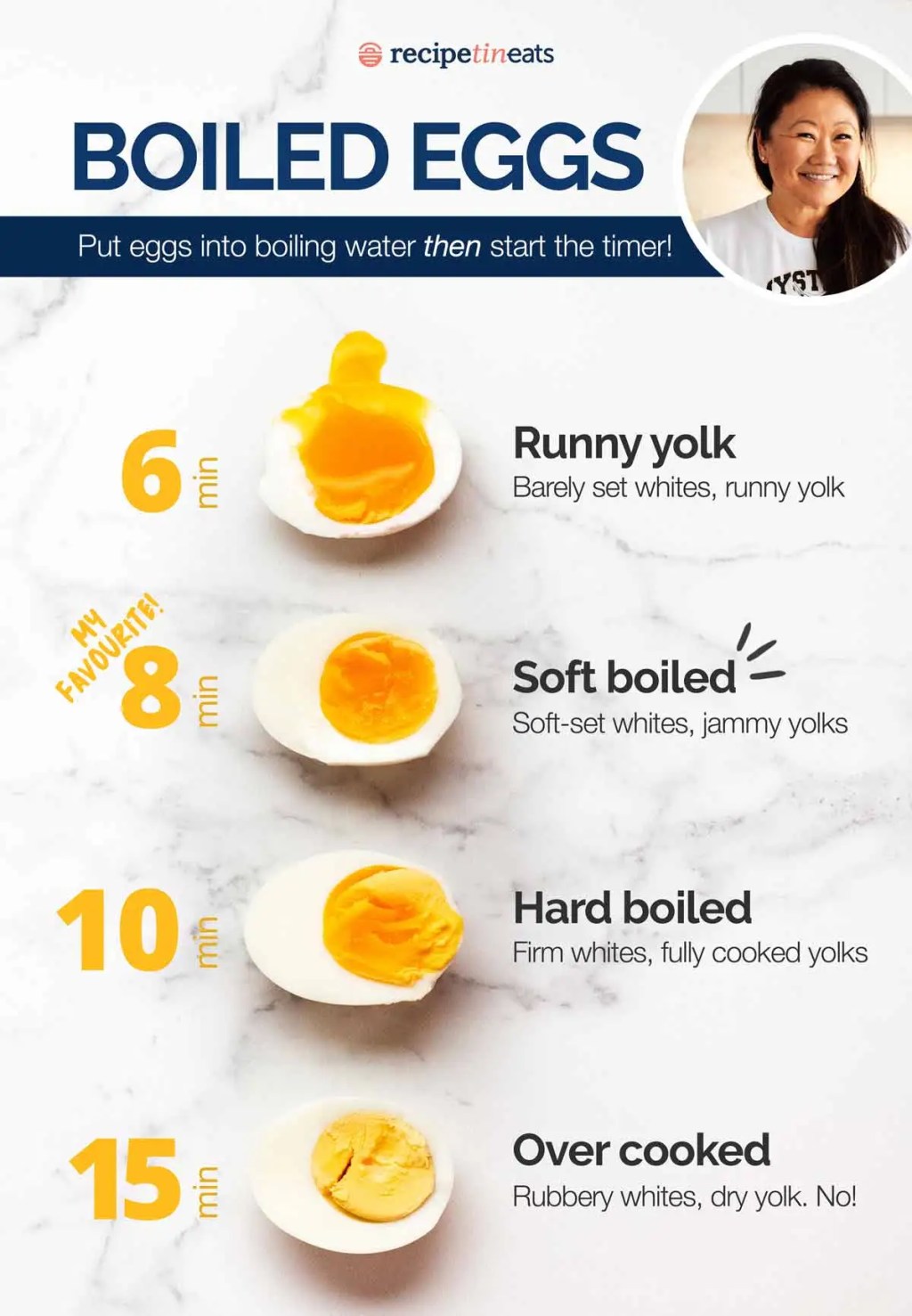
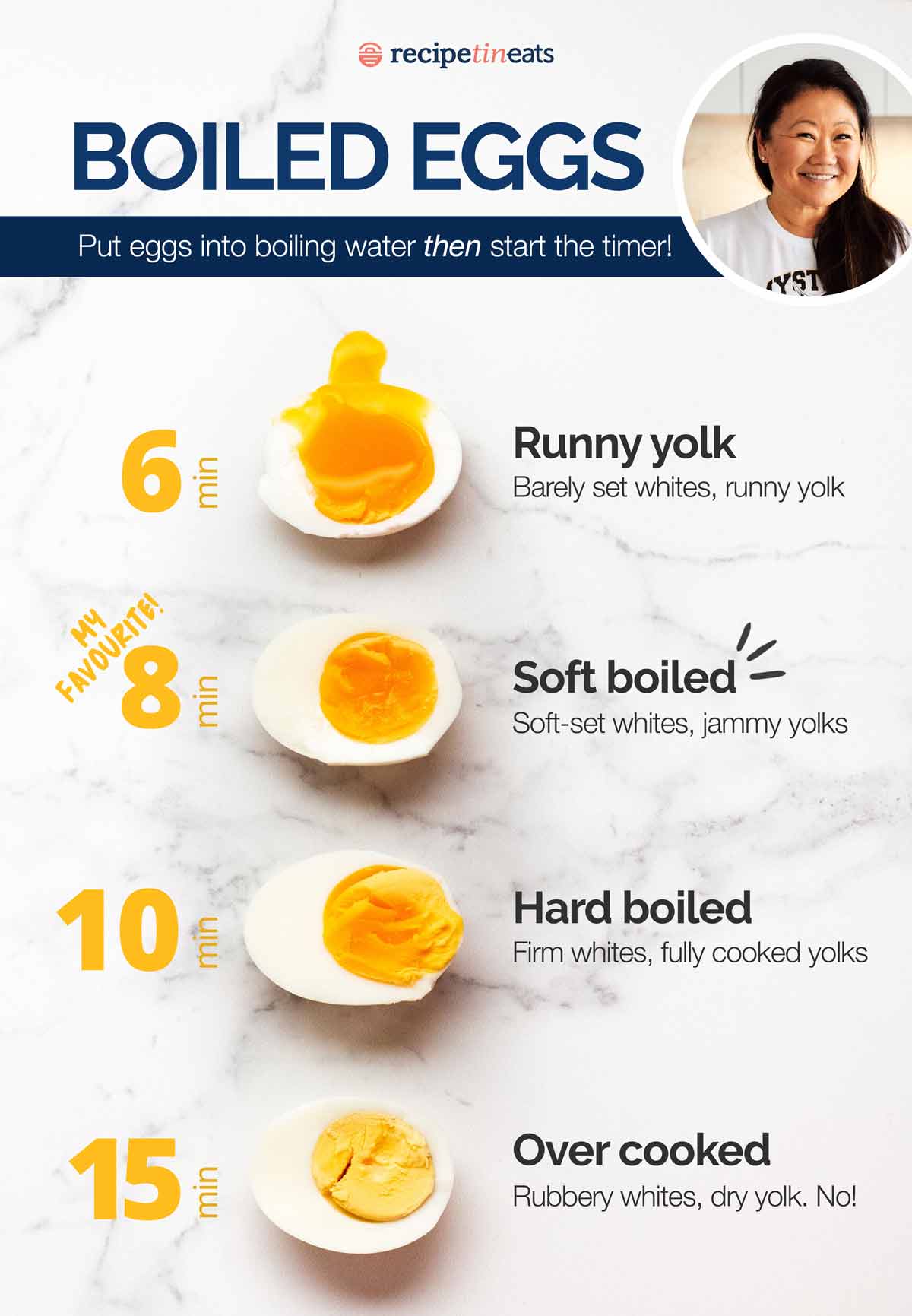
How to boil eggs – Bring water to a boil first, add eggs, start the timer. 6 minutes for runny yolks, 8 minutes for soft boiled (my go-to!), 10 minutes for hard boiled. Peel under water to make life easier.
After cramming directions for how to boil eggs in the notes of more recipes than I can count, I figured it was high time to share a proper recipe. So here is how I boil eggs!
How to boil eggs
This method will produce consistent results to the level of doneness you desire no matter what pot you use and how weak or strong your stove is.
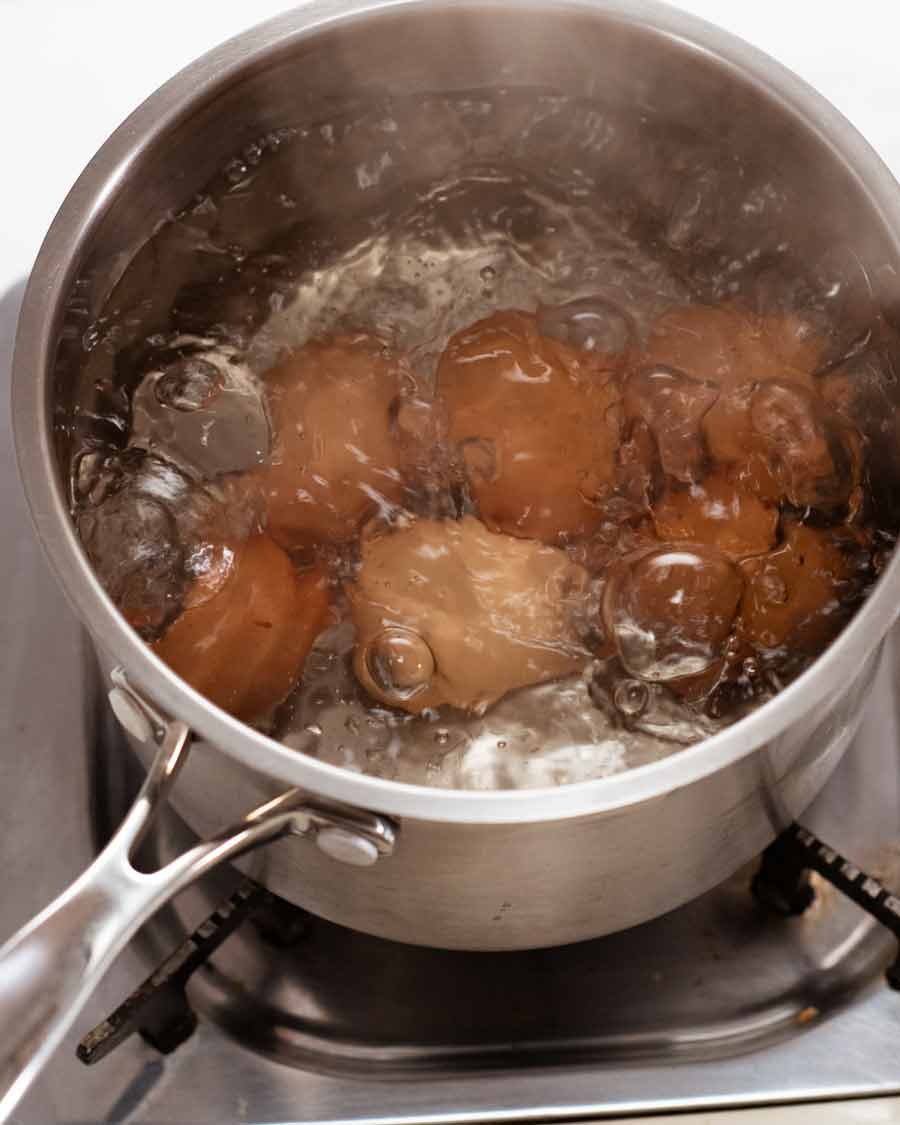
- Boil water first.
- Gently lower in fridge-cold eggs.
- Lower the heat slightly – so the eggs don’t crack due to being bashed around but water is still at a gentle boil.
- Start the timer – 6 minutes for runny yolks, 8 minutes for soft boiled, 10 minutes for classic hard boiled, 15 minutes for unpleasant rubbery whites and powdery dry yolks.
- Transfer into a large bowl or sink of cold water.
- Peel under water starting from the base (it’s easier).
And that’s all you need to know. But if you’re wondering about the why, read on!
How long to boil eggs
- Dippy eggs and soldiers – 3 minutes (can’t peel)
- Runny yolks – 6 minutes
- Soft boiled – 8 minutes
- Hard boiled – 10 minutes
Remember, lower fridge-cold eggs into boiling water then start the timer!
My egg boiling rules & the why
- Boil water before adding eggs – Your water boils faster than mine, because you have a better pot and stronger stove. So if we both start with eggs in cold water then bring it to a boil, our egg cook times will be different. Plus, at what point really do you consider the water to be boiling so at what point do you start the timer? And who wants to stand over a pot, waiting for that exact moment it comes to a boil so you can start the timer? Remove that variable! Always start your eggs in boiling water.
- Lower heat slightly once eggs are added – So the eggs aren’t bashed around so they crack. But keep the water at a gentle boil / rapid simmer else you will lose heat. Goal: maximum water bubbling without eggs cracking.
- Fridge-cold eggs – Insurance policy for creamy / runny yolks, eggs are consistently easier to peel, pls there’s a consistent baseline for everyone boiling eggs. 8 minutes for a room temperature egg = hard boiled, fridge cold egg = soft boiled!
- Egg size – The egg cook times provided above are for “large eggs” which are sold in cartons labelled as such. “Large eggs” are ~50 – 55g / 2 oz each, a size prescribed by industry regulations. For other egg sizes:– Extra-large eggs (60g/2.2 oz): add 30 seconds
– Jumbo eggs (65g /2.5 oz): add an extra 1 minute
– Emu eggs: separate recipe coming one day….. (maybe!😂) - Don’t crowd the pan – Small saucepan and too many eggs = not enough heat in the water per egg = slower cook time.
- Saucepan size – A 18 cm / 7″ saucepan is suitable for 6 eggs, a 16cm / 6″ pan for 4 eggs.
- Save ice for cocktails – Ice is precious around these parts. There’s no need to waste them on your morning eggs! A bowl of cold tap water is enough to stop the cooking process.
- Peel from the base – It’s easier. Try it.
- Peel under water – Also easier. Try it!
What type of boiled eggs I use for what
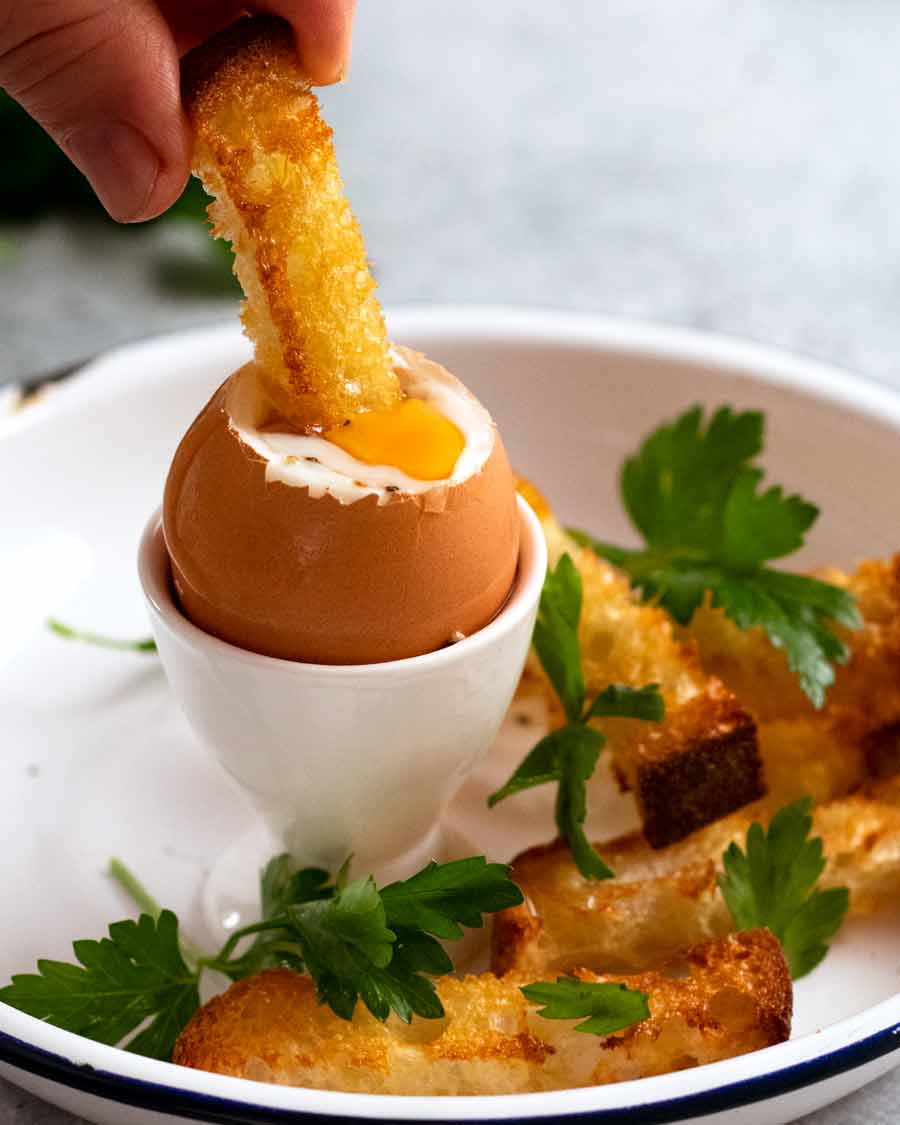
- Dippy eggs for soldiers (3 minutes) – Made for dipping in toast sticks (pictured above), these cannot be peeled as only the outer rim of the whites are set. The yolks are runny as is the inner layer of egg whites, so you can mix it up and dip the bread sticks in.
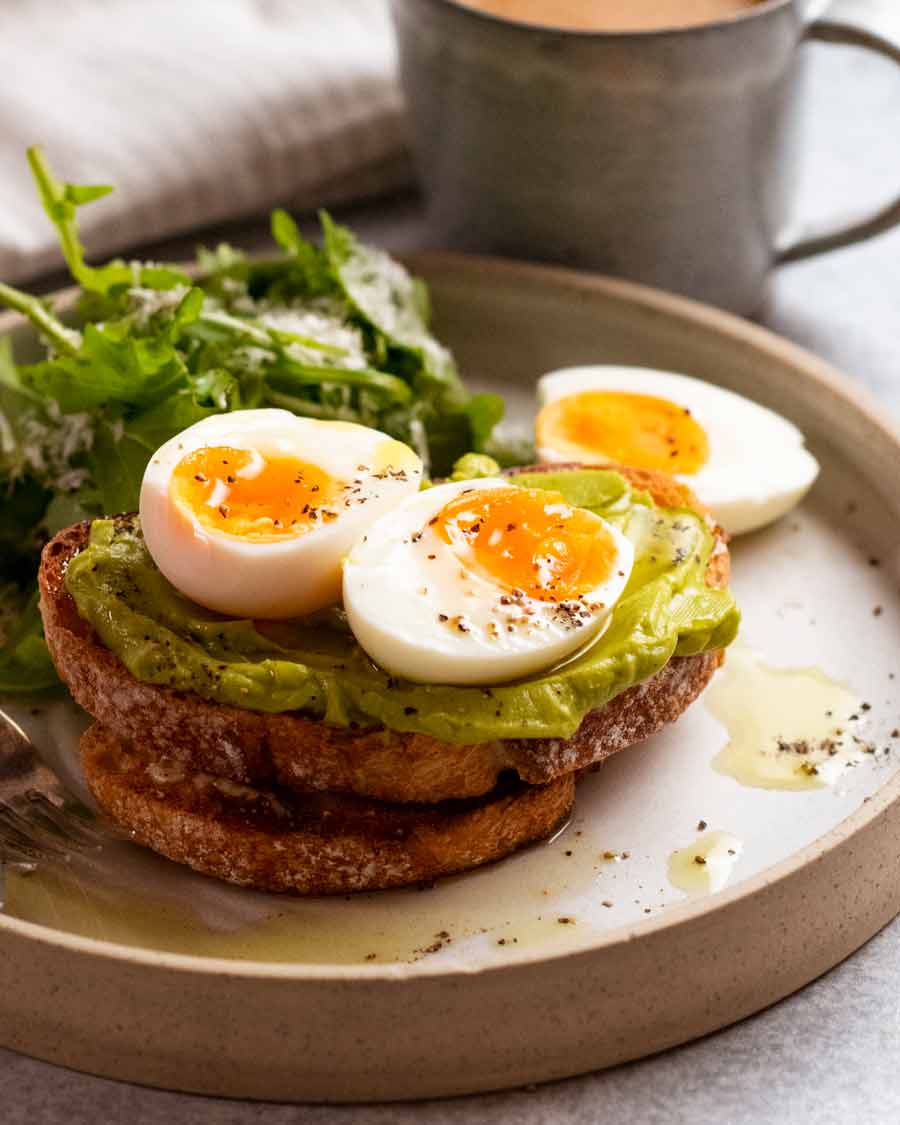
- Runny yolks (6 minutes) – I don’t use these very often because they are a bit of a pain to peel because the egg whites are just barely set so they are rather delicate! Usually if I’m after a runny yolk I’ll do poached eggs (such as for Eggs Benedict) or fried eggs sunny-side up (for burgers). Just easier to handle and cook, I find.What I use them for – Caesar salad and on toast with avocado in some form (smashed/smeared, guacamole or avocado sauce).
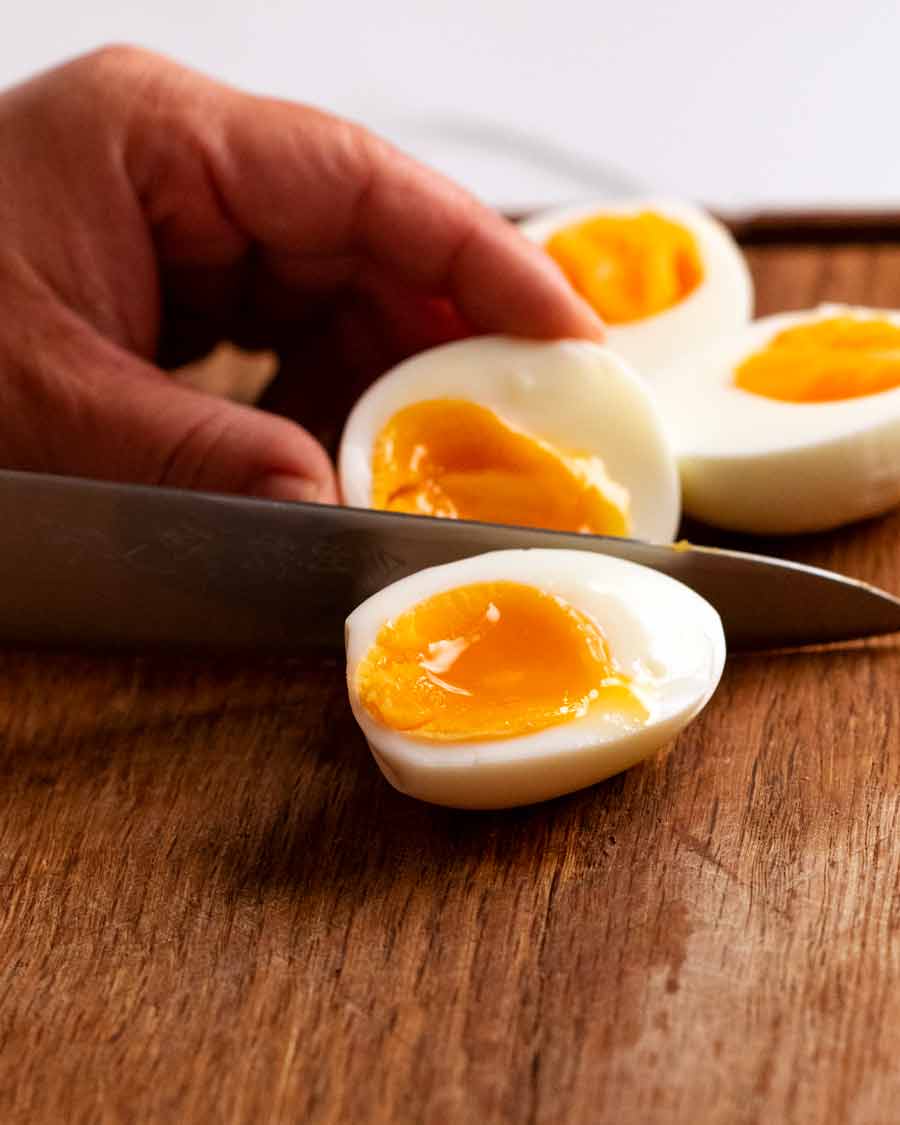
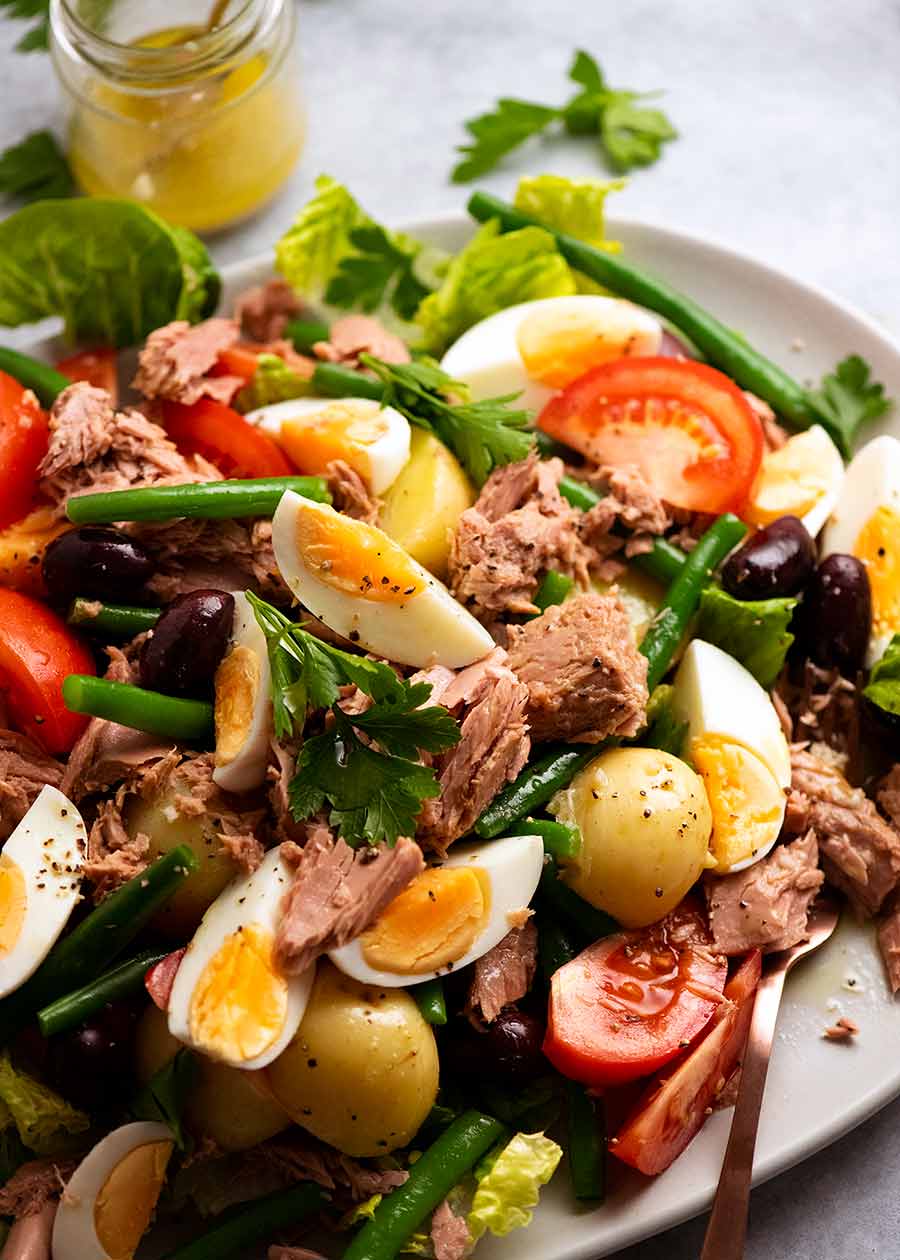
- Soft boiled eggs ⭐️(8 minutes) – My favourite and default boiled egg because it is at its best! Cooked so the yolk is just set which means it is at its optimal creaminess. But the yolk is cooked enough so it doesn’t run when you cut it.What I use them for – salads (Nicoise, chicken pasta salad, Gado Gado), studded throughout fish pie and for my favourite egg sandwiches.
- Hard boiled eggs (10 minutes) – The other alternative level of doneness for the above listed salads. I prefer soft boiled rather than hard boiled simply because the yolks are creamier and the whites are softer.
- Overcooked eggs (12 minutes+) – Powdery yolks and rubbery whites are not to my taste, but do your eggs as you wish! I just hope nobody is aiming for the dreaded grey ring around the yolk. That’s as overcooked as you can get!
Egg cracking problems?
To prevent eggs cracking:
- Lower the eggs in gently using a slotted spoon or similar – don’t drop them in from a height!
- Reduce the heat slightly as soon as the eggs are added so the water isn’t bubbling so furiously that the eggs are thrown around so violently that they crack.
The other thing that can cause egg cracking is thin shells. The thickness of shells varies which can come down to the chicken breed and the quality of the chickens – and therefore the eggs. Do you use free range eggs?
Crater eggs
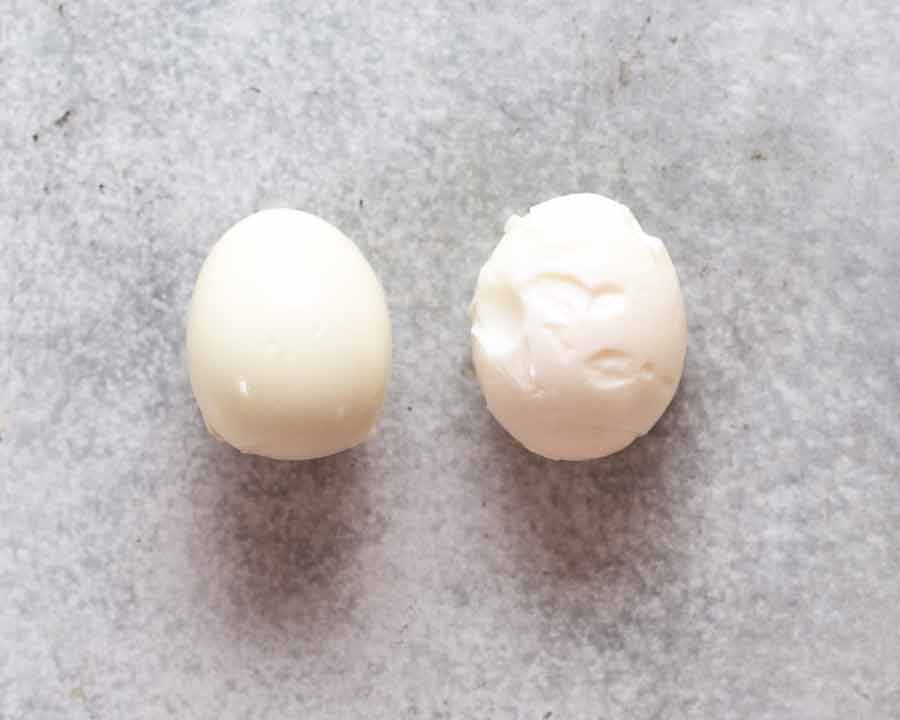
As for the burning question about why some eggs peel neatly and others end up cratered like the moon? Ahh, so much information out there! The only thing I know for sure is that older eggs peel more neatly than fresh eggs. This is simply because the membrane of freshly laid eggs is adhered more firmly to the shell so it’s harder to peel off. The older the egg, the more that membrane degrades = easier to peel.
I find eggs purchased from the store that I’ve had for a week+ in the fridge almost always peel neatly.
 Lord Buckbeak: "Will you come into my parlor?," said the Spider to the Fly.
Leave a comment