Mick Lindgren – Jul 24, 2005 – Lincoln Journal Star
I generally liked the ideas presented in the Values section feature “Doubt and beyond” (LJS, July 16) but feel that an important clarification is in order.
There is a backward-looking, almost anachronistic, view of the history of science that reads into certain past events a modern, positivist spin that is inappropriate to the tenor of the times.
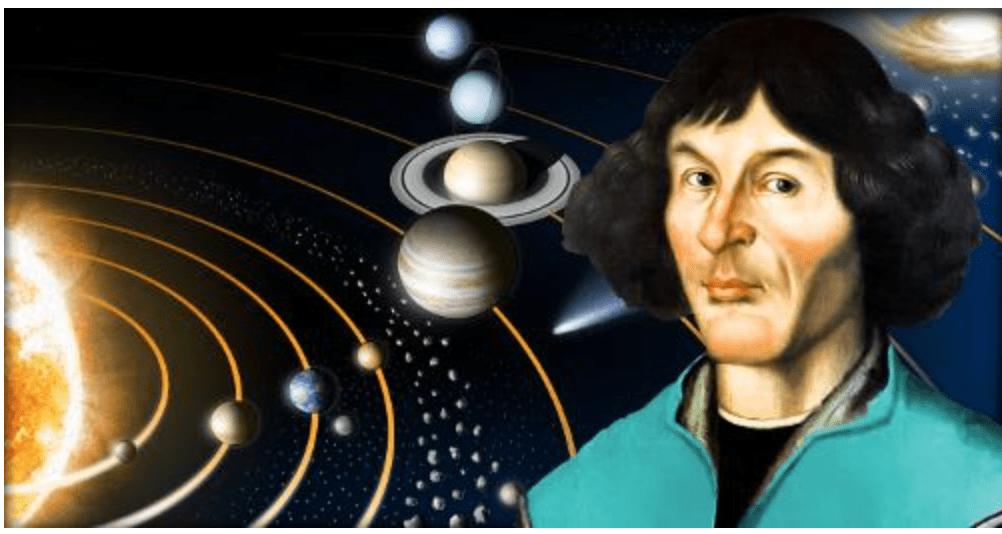
And so it is with the orthodox story of Nicolaus Copernicus and his heliocentric theory. In this tale Copernicus is the disinterested seeker after truth while the Church is the evil oppressor of the righteous, suppressing the advancement of knowledge so that its doctrines won’t be undermined by science. A very similar story is told today in the Hollywood version of the Scopes Monkey Trial as portrayed in “Inherit the Wind.” Here we have John Scopes portrayed once again as the noble seeker after truth being unfairly and ruthlessly persecuted by the evil religious doctrinaire, our own William Jennings Bryan.
Neither of these stories match up with historical reality nor give us the true lessons to be learned from these watershed events.
Our article states, “In challenging the belief (that the Earth was the center of the universe), he came to the conclusion the Earth revolved around the sun, which was nowhere near the center of the universe, according to experts of the time.” And consequently: “Today, scientists and mathematicians question their theories every day, testing, reaffirming and challenging their beliefs.”
Certainly this is done by those working scientists who labor away doing R&D for corporations, labs and universities. But this is often not the case for those scientists whose labor is highly theoretical or tightly bound up with social causes that directly define our present reality. No human enterprise occurs in an ideological vacuum, and science is no exception.
So let us set the record straight concerning Copernicus. He was first of all a devout and highly religious man. In his quest for a better cosmology than that of Aristotle and Ptolemy, the reigning cosmology of his day, Copernicus was moved by his belief that the universe was “wrought for us by a supremely good and orderly Creator” and therefore his cosmology would “uphold the regularity, uniformity and symmetry that befitted the work of God.”
Copernicus came under the influence of neo-Platonism, which was linked to a kind of sun mysticism, while studying in Italy So while Aristotle believed that heavier things naturally occupied the center of the universe, neo-Platonist writers argued that the center of the universe could be occupied only by something as dignified and significant as the sun. Both of course were incorrect, as there is no center of the universe; neither party remotely conceived of galaxies, nor did they grasp that our sun was really a star among billions of other stars. They were arguing religion, and one religious idea happened to be closer to reality than the other but the important point here is this: It was a religious/philosophical debate rather than a scientific argument.
Copernicus wrote: “In the middle of all sits the Sun enthroned. In this most beautiful temple could we place this luminary in any better position from which he can illuminate the whole at once? He is rightly called the Lamp, the Mind, the Ruler of the Universe so the sun sits upon a royal throne ruling his children the planets which circle round him.” Copernicus quoted Hermetic literature (named for Hermes Trismegistus or Thoth the Egyptian god of alchemy and magic) referring to the sun as the “Visible God.”
Science, according to positivism, is a linear march from superstitious darkness to modern enlightened rationalism. Rarely is there any mention of the religious and philosophical roots of scientific ideas, and we are presented instead with this triumphalist march of pure secularism.
Pythagorean philosophy regarded mathematics with a kind of religious awe and the key to understanding ultimate reality, while Aristotelianism taught one to perceive the nature of a thing by rationally contemplating it. Eventually Pythagorean concepts won out, but not because they looked at the data and developed a concept the concept came first. Physicist and philosopher Thomas Kuhn points out that “neo-Platonism is explicit in Copernicus’s attitude toward both the sun and mathematical simplicity. It is an essential element in the intellectual climate that gave birth to his vision of the universe.”
Science, like all other human endeavors, works in fits and starts and dead ends and pig-headed clinging to bad theories and ideas and often has to be beat over the head with overwhelming data before it will admit it is wrong or something new is right. As Kuhn notes, it is shifting paradigms of reality that change science rather than any presumed, steady march of the rational mind to truth.
Mick Lindgren of Lincoln is a systems analyst at Lincoln’s Goodyear plant.
 Lord Buckbeak: "Will you come into my parlor?," said the Spider to the Fly.
Leave a comment