State senator from Omaha gets Trayvon Martin story wrong
Hearing on Nebraska’s ‘stand-your-ground’ bill ends with tense exchange over race, crime
Andrew Wegley – Feb 8, 2024 – Lincoln Journal Star
My cmnt: Here is a link to the truth about Trayvon Martin who attacked and tried to kill George Zimmerman
A tense exchange over race, crime and disparities in the criminal judicial system capped off an otherwise banal hearing Thursday on Nebraska’s proposed “stand-your-ground” law being considered by the Legislature’s Judiciary Committee.
The proposal from Sen. Brian Hardin of Gering would give Nebraskans broad license to use force — including potentially deadly force — to defend themselves when they believe they are facing death, serious injury, kidnapping or sexual assault.
The bill (LB1269) would remove the provision in current state law that renders deadly force unjustified when someone using such force can flee or hand over property “with complete safety” to avoid doing so.
If made law, Hardin’s proposal also would extend the so-called “castle doctrine” — the right to use deadly force against an assailant in your home or workplace — to personal vehicles and public places in general, while providing both criminal and civil protections when someone uses force in self-defense.
“‘Complete safety’ is a very subjective phrase,” Hardin told the committee Thursday, casting his attempt to change state law as one meant to remove the need for that interpretation from statute.
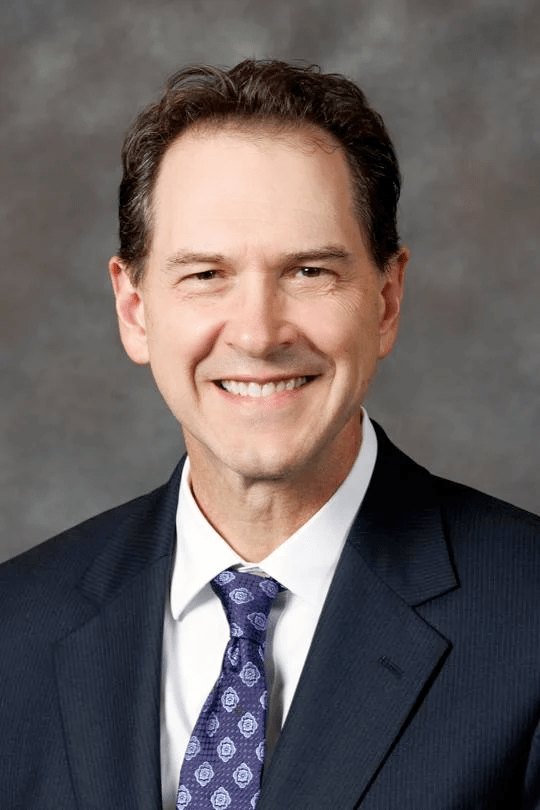
“What would be complete safety to me would be very different for anyone else. If I stub my toe during the retreat, is that considered to be in complete safety? … What’s considered to be complete safety for juror No. 1 could be far different than the definition for juror 12. And you could have 10 other definitions between those two.”
Three different testifiers opposing Hardin’s bill pointed to the February 2012 shooting death of 17-year-old Trayvon Martin at the hands of a neighborhood watchman who had followed Martin from a convenience store in Florida before fatally shooting him.
In his closing comments to the committee Thursday, Hardin invoked the shooting of Martin, too, saying “the evidence had demonstrated that he was, in fact, the aggressor and he attacked first, and so self-defense applied.”
Hardin’s comment set off a nine-minute exchange between him and Sen. Terrell McKinney of Omaha, one of two Black senators in Nebraska’s 49-member unicameral Legislature, who skewered Hardin over the remark and the unintended consequences his proposal could have on Nebraskans of color if made law.
“You have to acknowledge the difference in how the law is applied and how people are perceived based on your race,” McKinney said. “You mentioned a young man who, three days ago, would have turned 29 — who was not the aggressor, who left his home to go get some snacks, who was followed by a vigilante.”
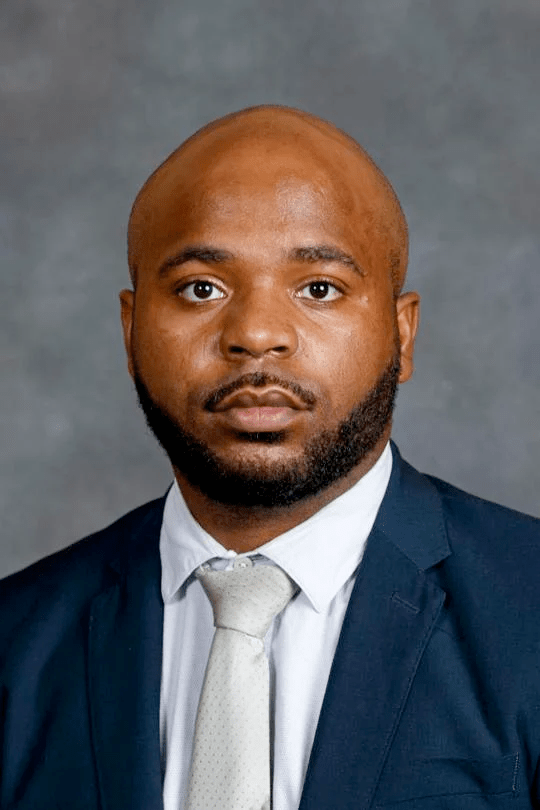
McKinney noted that Martin’s shooter, George Zimmerman, had been advised by a police dispatcher to stop following the teen before the then-28-year-old ended the call with police prior to shooting Martin.
Zimmerman, who was charged with second-degree murder, was acquitted by a jury after claiming self-defense. Florida is among 38 states considered stand-your-ground states, though not all of them have passed laws expressly indicating such, instead establishing protections through case law.
“I’m trying to keep my words cool,” McKinney said. “But I think you also have to think about race. And that’s where I’ll leave it. Like, you can say, ‘Yeah, I live in a rural area so we need this.’ But … this is the state of Nebraska. We can’t have different laws for different parts of the state.”
“You have to understand that there is a racial component to how laws are applied and how people are perceived,” McKinney added. “And I would also say when you mention Trayvon Martin, I think you should really do your research on that story. He was not the aggressor.”
Hardin, a western Nebraska senator, had previously noted that a majority of Nebraskans who wrote in opposition to his proposal live in Lincoln or Omaha, where “seconds and seconds can go by before law enforcement might come to your rescue” while “it might be hours and hours during a snowstorm” in Gering, he said.
 Lord Buckbeak: "Will you come into my parlor?," said the Spider to the Fly.
Leave a comment