For the author, transgenderism was an escape hatch
July 17, 2023 | 11:35 am – Written By: Madeleine Kearns – for Spectator World

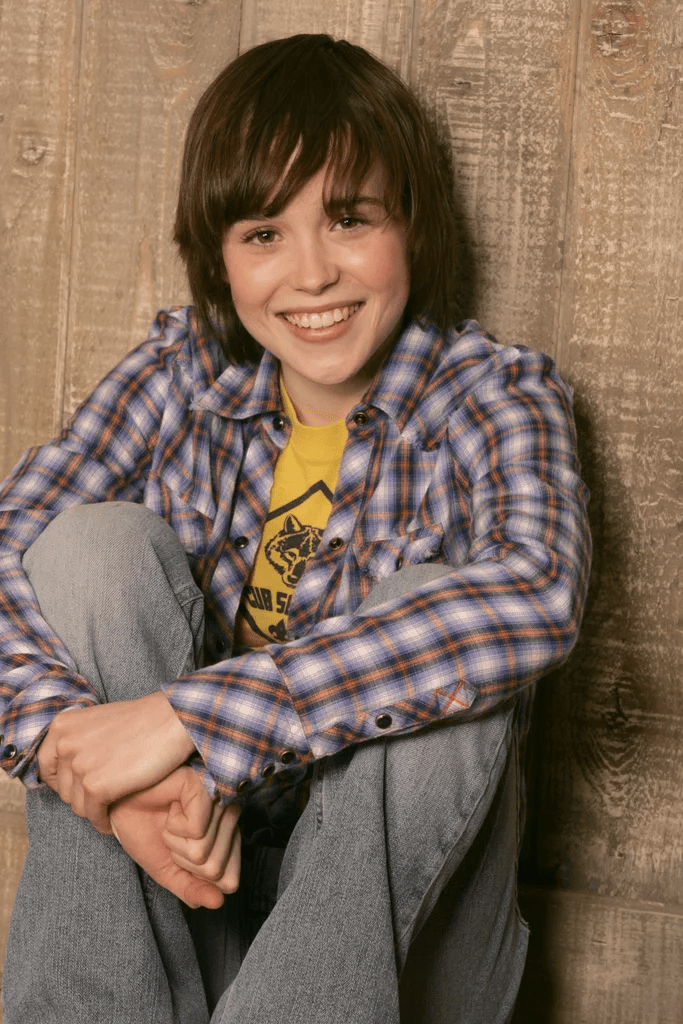
(The Canadian Press/Alamy Live News) – Elliot Page – a sad, sick, petite, mentally ill woman trying to be a man
My cmnt: According to Page’s own testimony below Hollywood physically, sexually, mentally and in every horrible way abused her as a young woman incapable of defending herself. She had no family support, her mind poisoned against God, and her friends were only there for the fame and money. Hers is a terrible tale of destruction and ruin – only God can save her now.
In 2010, the twenty-three-year-old actress Ellen Page appeared on the British talk show Friday Night with Jonathan Ross.
Plonking herself down on the guest couch, and noticing there was a lot of room left, she announced: “I’m petite.” The affable Ross seized on this new avenue of conversation.
“Do people comment on your height when you first meet them?”
“They often comment on how incredibly short I am.”
“And is this something you welcome or would you rather they didn’t?”
“Oh, it’s just fine. I’m used to being short. It’s been a part of my life. And it’s something that I’ve begun to accept.”
Back then, Page came across as confident and resilient. But according to Page, this was an act, carefully constructed for her by homophobes. In 2020, Page announced she was now a transgender man named Elliot. In 2021, she had her breasts surgically removed. In June 2023, appearing on the American talk-show The View to discuss her new memoir, Pageboy, Page appeared dejected and fragile. This, she tells us, is her true self.
Page grew up in Canada, where her parents divorced when she was two. Her father remarried and Page had a difficult relationship with both her father and stepmom. Page recalls her paternal grandmother asking her father, “What you gonna do if Ellen’s a dyke?” Her mother was kinder. Still, Page suspects that she too “may have prayed for me to not be gay.”
Page’s perception of homophobia was not limited to her family. After Page played the title role in Juno, in which she played a pregnant teenager — a performance that gained her an Oscar nomination — media speculation intensified. She remembers a piece in the Village Voice that asked “Is Juno a you know?” People in the industry told her that it was in her best interest to keep her lesbianism a secret. She took their advice, putting “on the dresses and the make-up” and keeping her girlfriend hidden.
Not long after Page publicly came out as gay in 2014 at a Human Rights Campaign event, she recalls a highly intoxicated “asshole” at a party, “who was, and still is, one of the most famous actors in the world,” harassing her, saying “I’m going to fuck you to make you realize you aren’t gay.” The actor claimed to have no memory of this after the fact and apologized to her “again and again.” But Page couldn’t shake her disgust. She realized that Hollywood is not only homophobic but hypocritical: “built on leveraging queerness. Tucking it away when needed, pulling it out when beneficial, while patting themselves on the back.”
Compelling though this account of homophobia is, it is undermined by her jarring revisionist history of having been trans all along. The memoir has a deliberately jumbled chronology: “these memories shape a nonlinear narrative, because queerness is intrinsically nonlinear, journeys that bend and wind.” Are they also contradictory?
When, after Page identified as trans, a woman she met through a dating app asked, “when did you know [you were trans]?” Page is irked by the question. She tells her reader that at age four, “I understood that I wasn’t a girl.” This, she explains, is why she “writhed in clothes that were feminine” and “preferred masculine clothes and toys.” This was also why, as a teenager, she fantasized about “being a man that women fall in love with.”
But if from age four onwards, she was really a boy, why does she describe coming out as lesbian at age twenty-seven to be “one of the most crucial things I have ever done for myself?” Later, Page refers to herself as a sixteen-year-old trans kid. If transgender identity is applied retroactively, then Ellen was always Elliot. Either this is the story of Ellen, a young woman struggling to resist sex stereotypes and heteronormativity, or it’s the story of Elliot, a young man who embraced them. At the book’s outset, Page explains: “At certain points I’ve referred to myself using my previous name and pronouns. This is a choice that felt right to me, occasionally, when talking about my past self, but it’s not an invitation for anyone to do the same.”
It is difficult to imagine how Page could have written this book any other way. Except for the occasional assertion, there is nothing in her memoir that can be coherently understood as a male experience, nor does she attempt to convey such a thing. (Hence it would be nonsensical for this reviewer to refer to her as “he.”) For instance, Page recalls a time in school that homophobic bullies “physically forced” her into the boys’ bathroom. This would hardly be as distressing to Elliot as it was to Ellen.
Ray Blanchard, the American-Canadian sexologist and leader in the field of gender dysphoria, once explained to me that “it’s only at very unusual moments that a normal man or woman has a conscious awareness of ‘I’m a woman’ or ‘I’m a man,’ and this is often a highly emotional situation.”
One such instance is being misidentified as the opposite sex. Once a girls’ soccer coach told the ten-year-old Page that “boys can’t play on this team.” Humiliated, Page responded, “I’m a girl.” On another occasion in adolescence, when she was making out with a boy, a group of teenagers shouted, “fucking faggots.” Once again, Page protested: “I’m a girl.”
Pageboy is the story of how, feeling highly conspicuous in her sexed body, Page developed gender dysphoria. As a child, she suffered an injury to her private parts while rollerblading which left her with lingering anxiety about penetrative sex.
She hated the feminine wardrobe demanded by her acting roles and publicity teams. Page struggled at an early age with unwanted sexual attention, some of which escalated to sexual abuse.
Before her eighteenth birthday, she’d been stalked by an undiagnosed schizophrenic whom she’d met online; she had been groomed by a director; male and female crew members alike had sexually assaulted her. Page recalls: “I didn’t say no, I did not resist, I just stiffened.”
Page’s experiences on screen couldn’t have helped, either. At seventeen, she starred in Hard Candy, a movie about a fourteen-year-old girl’s confrontation with a sexual predator. Soon after, she starred in An American Crime, playing a sixteen-year-old girl who in 1965 “suffered the most amount of abuse on a single victim in Indiana state history.” As Page writes:
There were scenes in my previous films that had been difficult to shoot — violent, sexual, and physical. But this was different. Moments in this film were unspeakably brutal. As a teenager, I did not have the skills to turn it on and off as abruptly and easily as I can now. To leave the work at work. The scenes would linger, feelings stuck. It took longer to dislodge from the body.
Page had self-harmed from a young age. Puberty was similarly rough for her. As a rising star, she developed an eating disorder: “I was filling out, growing breasts, all my discomfort heightened as boys and girls disentangled. Watching myself on-screen had not been a problem for me really, but as my body morphed, that changed. The more visible I became, the more I waned.”
Page sells Pageboy as the story of her “untangling.” Really, it is the opposite. Throughout the book, Page tries to get round the contradictions between her lesbian and trans identities by using the vague umbrella term, “queerness.” The trouble is that she never explains why it is that she is really a man, only why it was she hated being a woman. Ultimately, Pageboy is not a tale of confidence or resilience but of tragic self-destruction. For Ellen Page, transgenderism was an escape hatch.
This article was originally published in The Spectator’s August 2023 World edition.
Madeleine Kearns is a staff writer at National Review and a visiting fellow at the Independent Women’s Forum.

Juno’ Star Ellen Page Reveals She is a Lesbian

Ellen Page on Coming Out, Being Called ‘Brave’ and Freeheld …



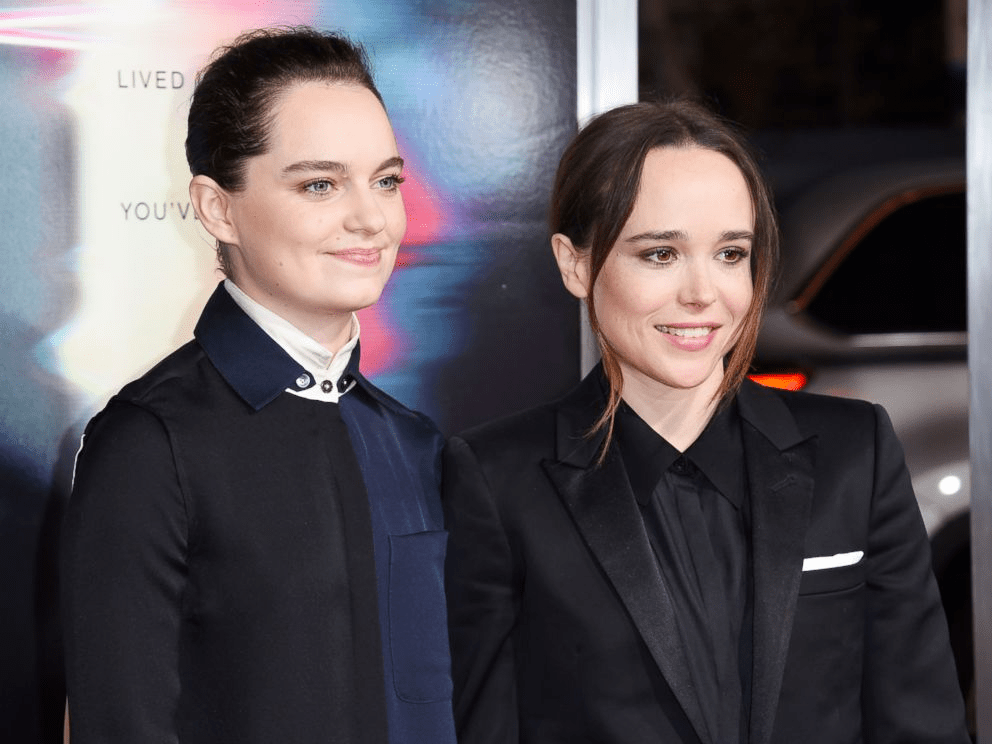
Juno star Ellen Page marries partner Emma Portner – BBC News – Jan. 4, 2018

The couple both hail from Canada
Juno star Ellen Page has married her partner Emma Portner.
The actress shared the news on Instagram with a series of photographs, including one with their hands touching as they display their wedding rings.
The post was captioned: “Can’t believe I get to call this extraordinary woman my wife.”
Portner, who is a dancer, also shared the pictures, along with another photo of her kissing Page’s hand while they are hugging.
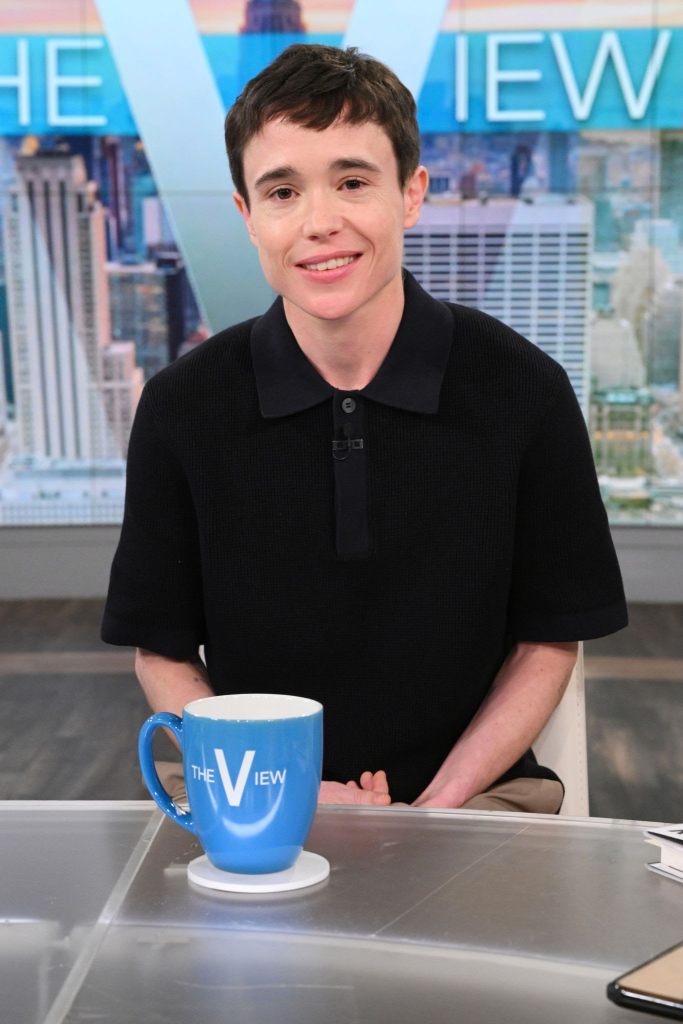
Elliot Page
 Lord Buckbeak: "Will you come into my parlor?," said the Spider to the Fly.
Leave a comment